Choosing the best trucks for camper towing in 2026 is no longer just about maximum towing capacity. Modern campers and travel trailers place enormous demands on stability, payload, braking performance, cooling systems, and long-distance comfort. A truck that looks impressive on paper may still struggle once it faces steep mountain grades, crosswinds, heavy tongue weight, or thousands of highway miles with a fully loaded camper behind it.Finding the best trucks for camper towing is about far more than simply chasing the highest tow rating.
Today’s pickup truck market offers more choices than ever before, from comfortable half-ton trucks designed for family road trips to heavy-duty towing machines built for serious RV owners. The challenge is finding a truck that not only tows confidently but also delivers reliability, comfort, fuel efficiency, and control during real-world driving conditions.
In this guide, we break down the best trucks for camper towing in 2026 based on real-world towing performance, payload capacity, towing stability, engine strength, ownership experience, and overall practicality. Whether you are planning weekend camping adventures or long cross-country trips with a large travel trailer, these trucks stand out as some of the smartest and most capable towing options available today.
Best Trucks for Camper Towing in 2026
Not every truck is built for the same type of camper towing. Some prioritize long-distance comfort and fuel economy, while others focus on maximum towing capability and payload strength. Choosing the right truck depends heavily on the size of your camper, how often you tow, and the type of terrain you regularly drive on.
For most buyers, the ideal camper towing truck balances stability, reliability, engine performance, braking confidence, and everyday usability. A truck that feels relaxed and composed on long highway trips is often far more valuable than one that simply offers the highest tow rating on paper.
Here are some of the best trucks for camper towing in 2026, each excelling in different areas of real-world towing performance:
| Truck | Best For | Max Tow Rating | Why It Stands Out |
|---|---|---|---|
| Ford F-150 | Best overall balance | Up to 13,500 lbs | Excellent towing stability and engine options |
| Ram 1500 | Best ride comfort | Up to 12,750 lbs | Smooth highway driving and premium interior |
| Chevrolet Silverado 1500 | Heavy towing capability | Up to 13,300 lbs | Strong V8 performance and towing tech |
| GMC Sierra 1500 | Luxury towing experience | Up to 13,200 lbs | Premium cabin with excellent trailering features |
| Toyota Tundra | Reliability and durability | Up to 12,000 lbs | Proven dependability and strong hybrid option |
| Ford Ranger | Best midsize towing truck | Up to 7,500 lbs | Great balance for smaller campers |
| Toyota Tacoma | Lightweight camper towing | Up to 6,500 lbs | Off-road capability and long-term reliability |
Each of these trucks approaches camper towing differently, and the best choice ultimately depends on your towing needs, camper size, budget, and long-term ownership priorities. In the following sections, we break down how each truck performs in real-world towing situations and which type of camper owner it suits best.
1. Ford F-150: Best Truck for Camper Towing
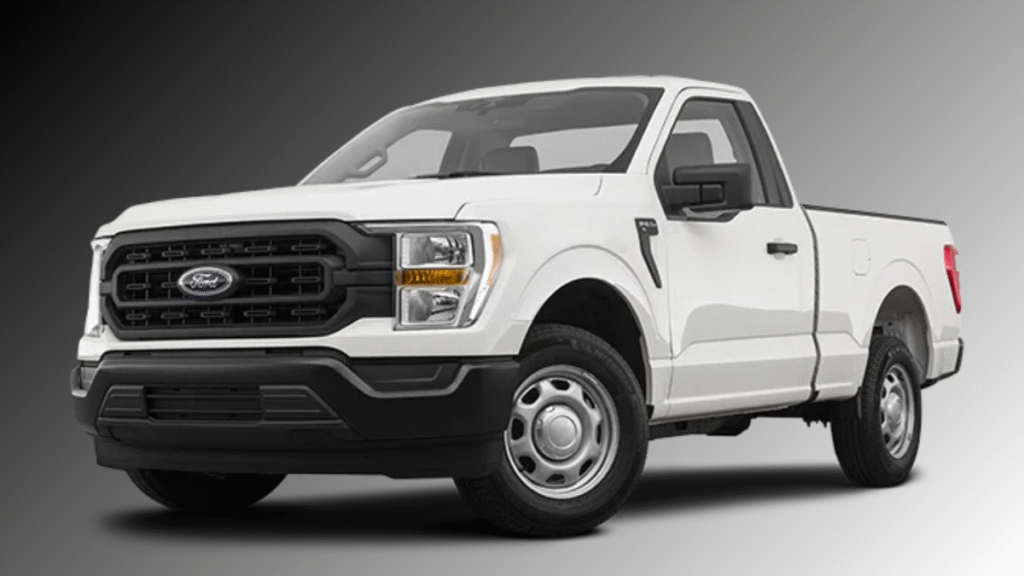
The Ford F-150 remains one of the strongest all-around choices for camper towing in 2026 thanks to its excellent balance of towing capability, comfort, technology, and real-world usability. Unlike some trucks that focus purely on maximum tow ratings, the F-150 feels refined and confidence-inspiring during long towing trips, making it especially attractive for camper owners who spend hours on highways or mountain roads.
Ford offers multiple engine choices for different towing needs, but the 3.5-liter EcoBoost V6 stands out as the best overall option for camper towing. Its strong low-end torque helps the truck pull heavy travel trailers smoothly without constantly struggling for power during climbs or highway merging.
Another reason the F-150 performs so well in real-world towing situations is its advanced towing technology. Features like Pro Trailer Backup Assist, integrated trailer brake controls, towing cameras, and trailer sway control help reduce stress and improve stability, especially for less experienced RV owners.
Inside, the F-150 delivers one of the most comfortable cabins in the segment. Higher trims feel almost luxury-level, while even lower trims provide supportive seating and practical storage solutions for long camping trips. This balance between daily comfort and towing capability is a major reason why the F-150 continues to dominate the half-ton truck market.
Pros
- Excellent towing stability
- Powerful EcoBoost engine options
- Comfortable highway driving
- Advanced towing assistance technology
- Wide range of trims and configurations
Cons
- Fuel economy drops noticeably while towing
- Higher trims become expensive quickly
- Ride quality is not as soft as the Ram 1500
Best For
Buyers looking for the best overall camper towing truck that combines power, technology, comfort, and everyday usability in one package.
2. Ram 1500
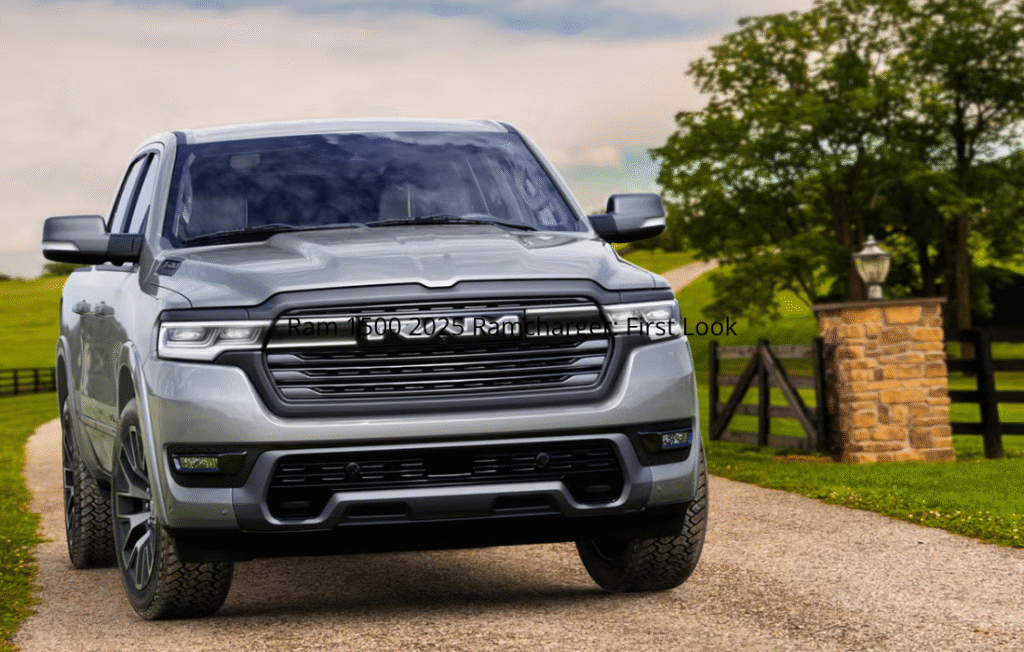
The Ram 1500 has earned a reputation as one of the most comfortable full-size trucks on the market, and in 2026 it continues to be an excellent choice for camper towing, especially for drivers who spend long hours behind the wheel. While some trucks prioritize raw towing numbers, the Ram focuses heavily on ride quality, cabin refinement, and relaxed highway towing manners.
One of the Ram 1500’s biggest advantages is its smooth suspension setup. Compared to many competitors, the truck absorbs rough pavement and highway imperfections far better, making long-distance camping trips noticeably less tiring. This becomes especially valuable when towing larger travel trailers over hundreds of miles.
The available turbocharged Hurricane inline-six engine delivers impressive torque and strong acceleration while towing, replacing the older HEMI V8 with a more modern and efficient setup. Power delivery feels smooth and confident, particularly during highway merging, mountain climbs, and heavy-load situations.
Inside, the Ram 1500 offers one of the best interiors in the truck segment. Higher trims feel genuinely luxurious, with premium materials, large infotainment displays, comfortable seating, and excellent cabin insulation. Families using their truck as both a daily driver and a weekend camper hauler will appreciate how refined the Ram feels compared to many traditional work-focused pickups.
When properly equipped, the Ram 1500 handles medium and large campers confidently, although buyers still need to pay close attention to payload limits depending on trim and suspension configuration.
Pros
- Outstanding ride comfort
- Quiet and premium interior
- Strong towing torque
- Excellent long-distance driving manners
- User-friendly technology
Cons
- Payload capacity can be lower than rivals
- Higher trims become very expensive
- Not as sporty to drive as some competitors
Best For
Drivers who prioritize comfort, luxury, and relaxed long-distance camper towing without sacrificing serious towing capability.
3. Chevrolet Silverado 1500
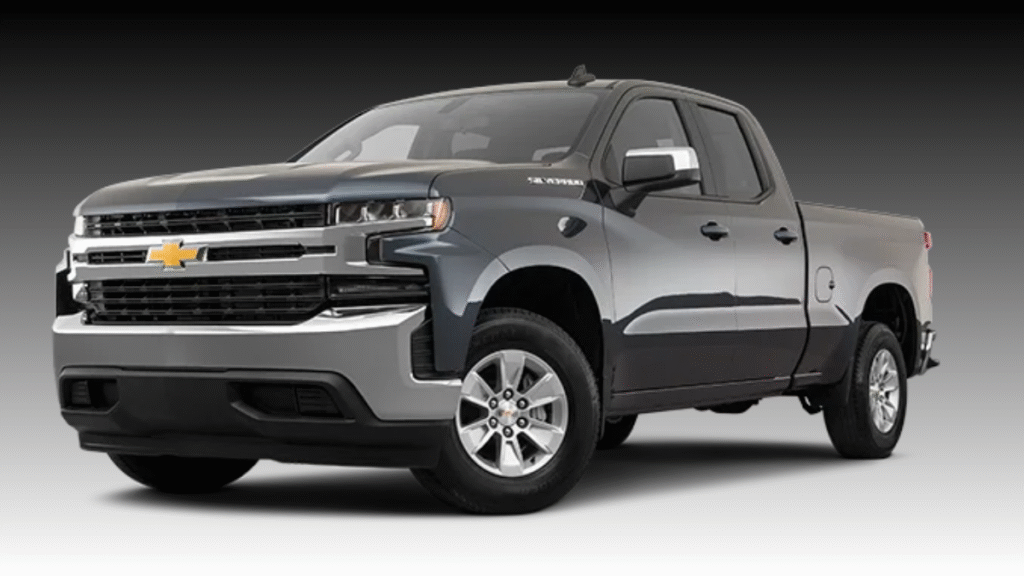
The Chevrolet Silverado 1500 remains one of the strongest choices for camper towing in 2026, particularly for buyers who prioritize serious towing capability and traditional V8 truck performance. While some rivals focus more on luxury or comfort, the Silverado continues to appeal to drivers who want a confident, powerful towing experience with fewer compromises under heavy loads.
One of the Silverado’s biggest strengths is its engine lineup. The available 6.2-liter V8 delivers impressive towing confidence and strong acceleration even with larger campers attached. Chevrolet also offers efficient turbocharged and diesel options for buyers who regularly tow long distances and want better fuel economy during highway travel.
In real-world camper towing situations, the Silverado feels stable and planted, especially when properly equipped with the Max Trailering Package. The truck handles highway towing confidently and performs well during steep climbs or heavy payload situations. Chevrolet’s towing technology has also improved significantly in recent years, offering multiple towing camera views, trailer monitoring systems, and integrated towing assistance features that simplify trailer management.
The Silverado’s cabin focuses more on practicality than luxury in lower trims, although higher trims provide a much more refined experience with larger screens, upgraded materials, and improved comfort. Storage space is generous, making the truck highly practical for road trips, camping gear, and long-distance travel.
While the Silverado may not offer the same smooth ride quality as the Ram 1500, it compensates with strong towing confidence, excellent engine performance, and impressive capability for buyers who frequently tow larger campers or travel trailers.
Pros
- Excellent towing capability
- Powerful V8 engine options
- Strong highway towing stability
- Good towing technology
- Spacious and practical interior
Cons
- Ride quality can feel firm
- Lower trims feel less premium
- Fuel economy drops heavily under towing loads
Best For
Buyers who want a traditional full-size truck with strong towing power, proven V8 performance, and excellent capability for larger campers and travel trailers.
4. GMC Sierra 1500
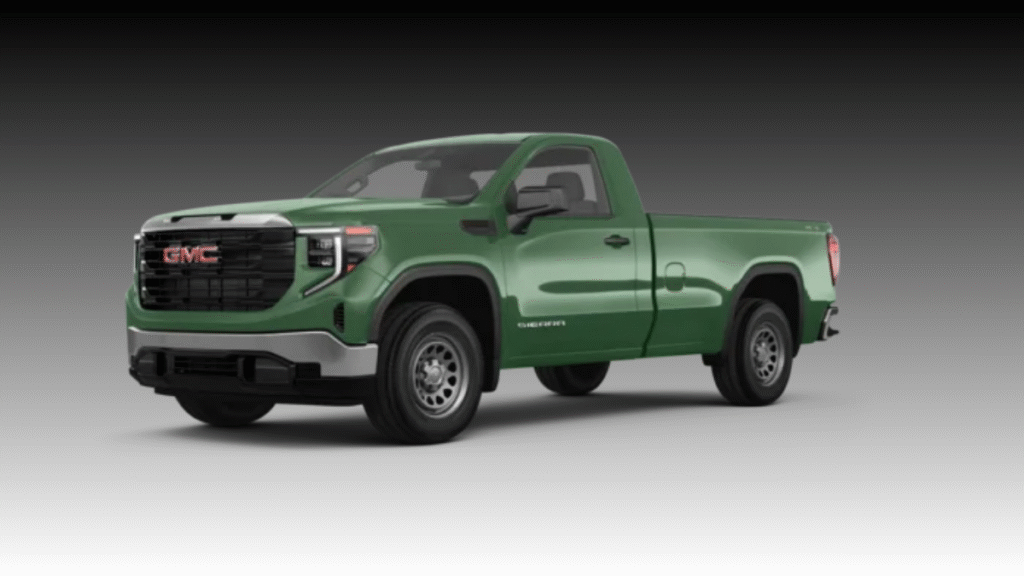
The GMC Sierra 1500 approaches camper towing from a more premium angle, combining strong towing capability with a noticeably more upscale driving experience. In 2026, it remains one of the best choices for buyers who want serious towing performance without giving up luxury, comfort, and advanced technology.
Mechanically, the Sierra shares much of its foundation with the Chevrolet Silverado 1500, including powerful engine options and impressive towing capability. However, GMC positions the Sierra as the more refined and premium alternative, especially in higher trims like the Denali and Denali Ultimate.
For camper towing, the Sierra feels stable and composed on long highway drives. Its available adaptive suspension systems help improve ride quality while maintaining good trailer control, especially when towing heavier travel trailers or larger campers. The truck’s steering feels predictable and confidence-inspiring, which becomes important during crosswinds or long-distance towing situations.
The available 6.2-liter V8 and Duramax diesel engines are particularly well suited for towing duties. Both provide strong low-end torque and relaxed highway performance, allowing the truck to tow larger campers without constantly feeling strained.
Inside, the Sierra offers one of the most premium cabins in the full-size truck segment. Higher trims feature high-quality materials, large infotainment displays, excellent seating comfort, and advanced towing technology. Features like transparent trailer view cameras, trailer monitoring systems, and integrated towing assistance tools help simplify the towing experience for both experienced and first-time camper owners.
While the Sierra is more expensive than many rivals, its blend of capability, comfort, and refinement makes it especially attractive for buyers who use their truck for both long family road trips and regular towing duties.
Pros
- Premium interior quality
- Excellent towing stability
- Powerful engine options
- Advanced towing technology
- Comfortable long-distance driving
Cons
- Expensive in higher trims
- Fuel economy suffers while towing
- Less off-road focused than some rivals
Best For
Buyers looking for a premium full-size truck that combines luxury-level comfort with strong camper towing capability and advanced towing technology.
5. Toyota Tundra for Camper Towing
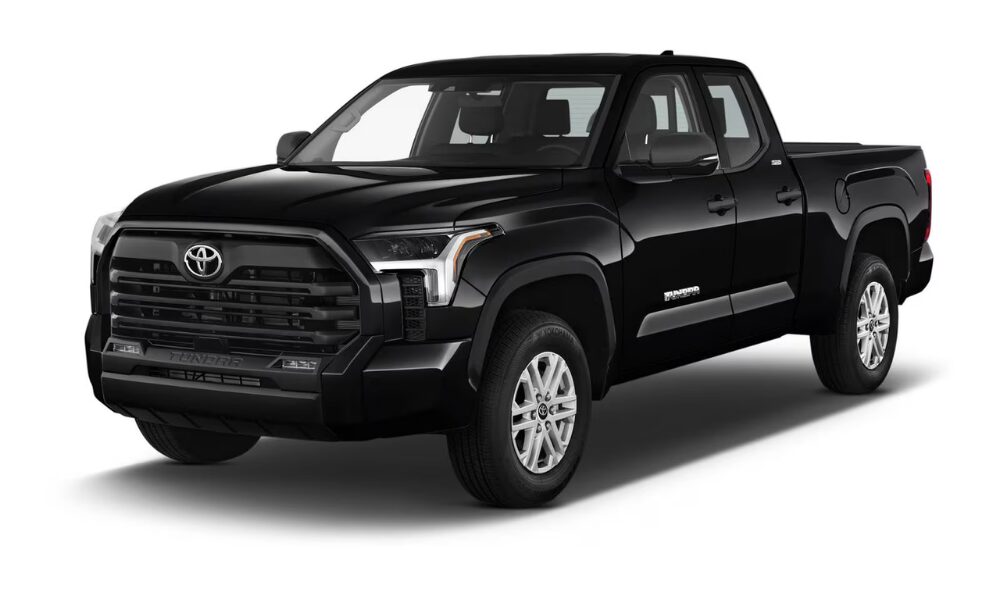
The Toyota Tundra continues to stand out in 2026 as one of the most dependable full-size trucks for camper towing, particularly for buyers who prioritize long-term reliability and durability over maximum towing numbers. While it may not always lead the segment in raw capability, the Tundra offers a balanced and confidence-inspiring towing experience that appeals to many RV owners and outdoor enthusiasts.
One of the Tundra’s biggest strengths is Toyota’s hybrid twin-turbo V6 powertrain, which delivers strong low-end torque and smooth power delivery while towing. The engine feels responsive during highway acceleration and performs well when climbing steep grades with a loaded camper attached. Unlike some older naturally aspirated setups, the Tundra’s modern powertrain provides strong pulling power without constantly feeling overworked.
On the road, the Tundra feels stable and predictable during towing. Its suspension setup focuses more on comfort and control than aggressive sportiness, making it well suited for long-distance camping trips and family travel. Toyota’s towing assistance systems, including trailer backup guidance, trailer sway control, and multiple camera views, also help reduce stress during difficult towing situations.
Inside, the Tundra offers a spacious and modern cabin with user-friendly technology and solid build quality. Higher trims provide premium materials and large infotainment screens, while even lower trims feel durable and practical for everyday ownership. Toyota’s reputation for reliability remains a major selling point, especially for buyers planning to keep their truck for many years.
Although the Tundra’s towing capacity is slightly lower than some domestic rivals, its combination of dependability, comfort, and strong hybrid performance makes it one of the smartest choices for camper owners who value long-term ownership confidence.
Pros
- Excellent long-term reliability
- Strong hybrid torque delivery
- Comfortable and quiet cabin
- Stable towing behavior
- User-friendly technology
Cons
- Lower maximum towing capacity than rivals
- Fuel economy while towing is still average
- Payload ratings vary significantly by trim
Best For
Buyers who prioritize reliability, durability, and comfortable long-term camper towing ownership over maximum towing numbers alone.
6. Ford Ranger Camper Towing Review
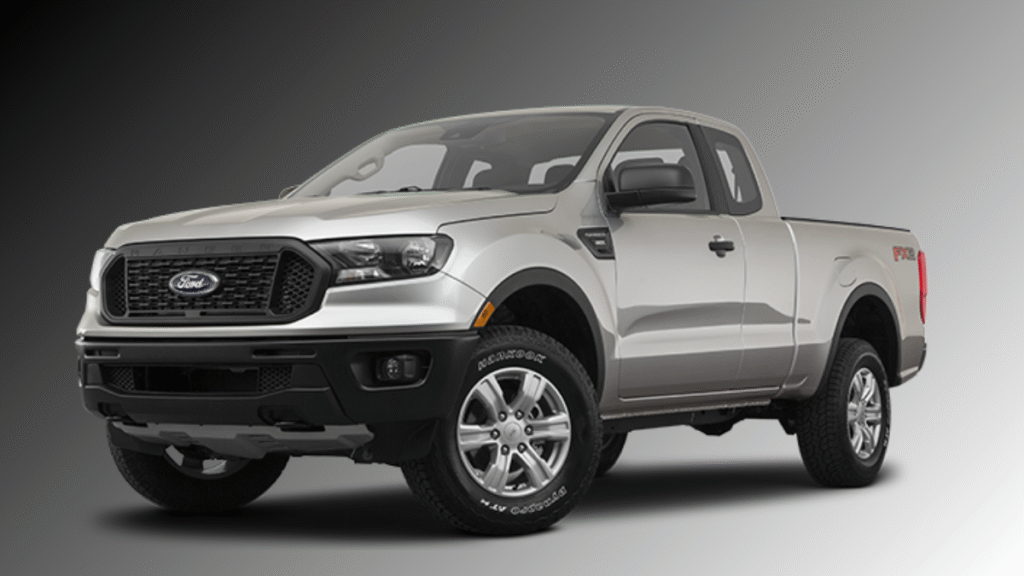
The Ford Ranger has become one of the strongest midsize trucks for camper towing in 2026, offering an impressive balance between towing capability, maneuverability, fuel efficiency, and everyday practicality. For buyers who do not need a massive full-size truck but still want confident towing performance for smaller campers and travel trailers, the Ranger makes a compelling case.
One of the Ranger’s biggest advantages is its manageable size. Unlike larger full-size trucks, the Ranger feels easier to drive in cities, tighter campgrounds, parking lots, and narrow mountain roads. This makes it especially appealing for weekend campers and outdoor enthusiasts who regularly travel through crowded campgrounds or off-road areas.
Under the hood, Ford’s turbocharged EcoBoost engine delivers strong torque for a midsize truck, helping the Ranger tow surprisingly well for its size. The truck feels responsive during highway acceleration and remains stable when towing lightweight campers or smaller travel trailers. Its towing technology also helps simplify the experience for less experienced camper owners.
Another area where the Ranger performs well is fuel efficiency. Compared to larger V8-powered trucks, the Ranger is generally more economical during everyday driving, making it a smarter option for buyers who only tow occasionally but still need strong towing capability on weekends or vacations.
Inside, the Ranger offers a functional and modern cabin with solid technology and comfortable seating. While it does not feel as luxurious as some full-size trucks, it provides enough comfort and practicality for long road trips and camping adventures.
The Ranger’s main limitation is overall towing size. It performs best with lightweight or medium-sized campers rather than very large travel trailers or heavy fifth-wheel setups.
Pros
- Easier to drive than full-size trucks
- Strong towing capability for a midsize truck
- Good fuel efficiency
- Excellent maneuverability
- Practical for daily driving
Cons
- Smaller cabin than full-size rivals
- Less payload and towing capacity overall
- Ride quality can feel firm on rough roads
Best For
Drivers who want a practical midsize truck capable of towing lightweight campers and travel trailers without the size and fuel costs of a full-size pickup.
7. Toyota Tacoma
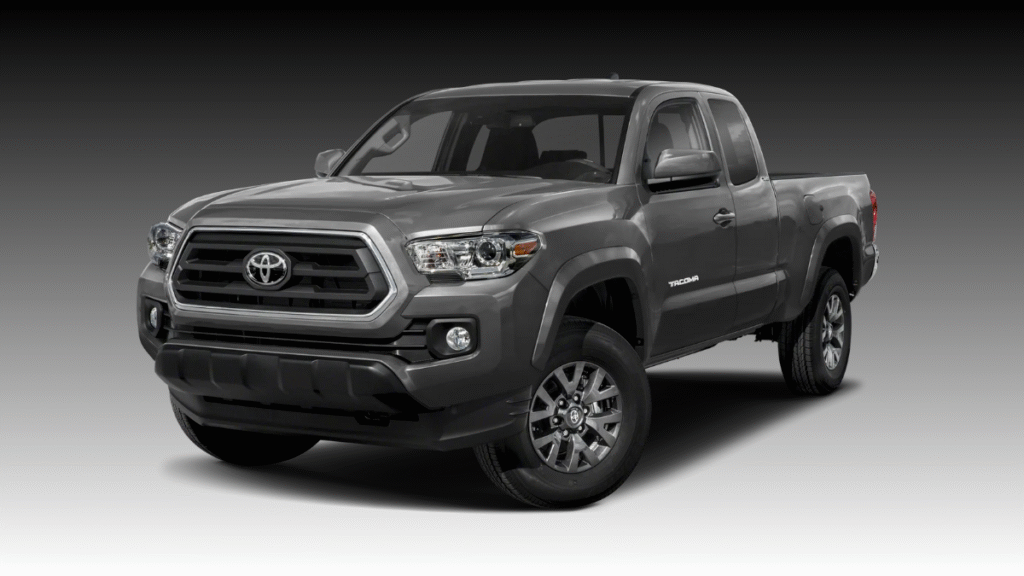
The Toyota Tacoma remains one of the most popular midsize trucks in America, and in 2026 it continues to be an excellent option for lightweight camper towing and outdoor-focused adventures. While it cannot match the heavy towing capability of full-size trucks, the Tacoma offers something many larger pickups struggle to deliver: simplicity, maneuverability, durability, and proven long-term reliability.
For camper owners towing smaller travel trailers, teardrop campers, pop-up campers, or lightweight off-road setups, the Tacoma feels agile and easy to manage. Its smaller footprint makes it particularly useful on narrow trails, tight campgrounds, mountain roads, and urban environments where larger trucks can quickly become difficult to maneuver.
Toyota’s updated turbocharged powertrain delivers stronger low-end torque than previous Tacoma generations, helping improve towing confidence during highway driving and uphill climbs. While the Tacoma still feels more comfortable with lighter trailers, it handles moderate towing duties surprisingly well when properly equipped.
Off-road capability remains one of the Tacoma’s biggest advantages. Versions like the TRD Off-Road and TRD Pro are especially attractive for buyers who combine camping with overlanding, trail driving, and outdoor exploration. Few trucks in this segment blend off-road capability and camper practicality as effectively as the Tacoma.
Inside, the Tacoma now feels significantly more modern than older generations, with improved infotainment systems, better seating comfort, and upgraded technology features. However, rear-seat space and overall cabin size remain smaller than full-size trucks, which may matter for families planning longer road trips.
Despite its limitations in heavy towing, the Tacoma continues to attract buyers who value reliability, resale value, off-road capability, and manageable ownership costs over maximum towing numbers.
Pros
- Excellent long-term reliability
- Strong resale value
- Great off-road capability
- Easier to maneuver than full-size trucks
- Ideal for lightweight campers
Cons
- Limited towing capacity compared to larger trucks
- Smaller rear-seat space
- Less comfortable for heavy long-distance towing
Best For
Outdoor enthusiasts and camper owners looking for a reliable midsize truck capable of handling lightweight trailers, off-road camping, and everyday driving with ease.
What Matters Most in the Best Trucks for Camper Towing
Choosing the right truck for camper towing involves far more than simply looking at maximum tow ratings. Many buyers focus heavily on the largest towing number advertised by manufacturers, but real-world towing performance depends on several critical factors that directly affect safety, stability, comfort, and long-term reliability.
According to SAE towing standards, proper payload management and trailer weight distribution are critical for safe towing performance.
One of the most important factors is payload capacity. A truck may technically tow a heavy camper, but once passengers, cargo, camping gear, fuel, and trailer tongue weight are added, payload limits can quickly become a serious issue. Exceeding payload ratings is one of the most common mistakes made by first-time camper owners.
Wheelbase also plays a major role in towing stability. Longer trucks generally feel more stable at highway speeds and handle crosswinds more confidently, especially when towing larger travel trailers. Short-wheelbase trucks may feel easier to maneuver around cities and campgrounds, but they can become less stable with heavier campers attached.
Another major factor is trailer sway control and braking confidence. Modern towing technology has improved dramatically in recent years, and features like integrated trailer brake controllers, towing cameras, blind-spot trailer monitoring, and sway control systems can make a huge difference during long trips or emergency maneuvers.
Engine torque is equally important. Trucks with strong low-end torque feel more relaxed while towing uphill, merging onto highways, or accelerating with heavy loads. This is one reason turbocharged and diesel engines remain popular choices among experienced RV owners.
Cooling systems are often overlooked as well. Towing large campers puts enormous stress on engines and transmissions, especially during hot weather or mountain driving. Trucks equipped with heavy-duty cooling packages tend to maintain performance and reliability far better under constant towing stress.
comfort matters more than many people expect. Long-distance camper towing can quickly become exhausting if the truck has poor seat support, excessive cabin noise, or a harsh suspension setup. A truck that feels comfortable after eight hours on the highway is often a far better ownership choice than one that simply offers the highest towing number on paper.
Common Camper Towing Mistakes to Avoid
Even the best towing truck can become unsafe or uncomfortable if the camper is loaded incorrectly or if important towing basics are ignored. Many towing problems are caused not by the truck itself, but by simple mistakes that place excessive stress on the suspension, brakes, tires, and drivetrain.
One of the most common mistakes is focusing only on maximum towing capacity while ignoring payload limits. Many truck owners discover too late that passengers, cargo, hitch equipment, and trailer tongue weight can quickly push the truck beyond its safe payload rating. This is especially common with half-ton trucks towing larger travel trailers.
Another major mistake is improper weight distribution. Poorly balanced campers can create dangerous trailer sway at highway speeds, particularly during crosswinds or sudden lane changes. A quality weight distribution hitch and proper trailer loading can dramatically improve towing stability and driver confidence.
Tire pressure is another frequently overlooked issue. Underinflated tires increase heat buildup, reduce stability, and place additional stress on both the truck and trailer during long trips. Many experienced RV owners check tire pressure before every major drive because proper tire inflation plays a critical role in towing safety.
Some drivers also underestimate the importance of trailer brake controllers. Heavy campers place enormous strain on a truck’s braking system, especially during downhill driving or emergency stops. Integrated trailer brake systems help distribute braking force more effectively and reduce stopping distances significantly.
Overloading the truck bed with unnecessary cargo is another common problem. Excessive gear, generators, coolers, fuel containers, and camping equipment can reduce payload capacity quickly and negatively affect handling and suspension performance.
many first-time camper owners choose trucks that are technically capable of towing their trailer but leave very little safety margin for real-world conditions. Strong headwinds, mountain grades, hot weather, and fully loaded campers can place far more stress on a truck than basic towing numbers might suggest.
Understanding these common mistakes is just as important as choosing the right truck, especially for buyers planning long-distance camping trips or frequent towing throughout the year.
Final Verdict: Which Truck Is Best for Camper Towing in 2026?
The best truck for camper towing ultimately depends on the type of camper you own, how often you tow, and what kind of driving experience you want during long trips. Some buyers prioritize maximum towing power, while others care more about comfort, reliability, fuel efficiency, or off-road capability.
For most buyers, the Ford F-150 remains the best overall truck for camper towing in 2026 thanks to its excellent balance of towing stability, engine performance, advanced towing technology, and everyday comfort. It handles a wide range of camper sizes confidently while remaining practical as a daily driver.
Drivers who prioritize ride comfort and premium interior quality will likely prefer the Ram 1500, especially for long highway road trips and family camping adventures. Meanwhile, the Chevrolet Silverado 1500 and GMC Sierra 1500 are excellent choices for heavier towing duties and buyers who regularly haul larger travel trailers.
The Toyota Tundra stands out for long-term reliability and ownership confidence, making it a smart option for buyers planning to keep their truck for many years. For smaller campers and lighter travel trailers, midsize trucks like the Ford Ranger and Toyota Tacoma offer impressive capability without the size and fuel costs of a full-size pickup.
No matter which truck you choose, successful camper towing is about far more than raw towing numbers alone. Payload capacity, towing stability, braking confidence, comfort, cooling systems, and real-world usability all play critical roles in creating a safe and stress-free towing experience.These are some of the best trucks for camper towing for RV owners who want confidence, stability, and long-distance comfort in 2026.
As campers and travel trailers continue to grow in popularity, choosing the right truck has become one of the most important decisions for RV owners and outdoor enthusiasts. The right truck can turn long-distance towing into a comfortable adventure, while the wrong one can quickly become exhausting and frustrating on the road.
FAQ
Are Half-Ton Trucks Good for Camper Towing?
For most lightweight and mid-size travel trailers, modern half-ton trucks like the Ford F-150, Ram 1500, and Chevrolet Silverado 1500 provide more than enough towing capability. However, payload capacity, passenger weight, cargo, and trailer tongue weight still need to be carefully considered before towing larger campers.
Which Are the Best Trucks for Camper Towing Long Distances?
The Ram 1500 remains one of the most comfortable trucks for long-distance towing thanks to its smooth suspension, quiet cabin, and premium interior quality. It performs especially well during highway road trips and extended camping travel.
Are Midsize Trucks Good for Camper Towing?
Midsize trucks like the Ford Ranger and Toyota Tacoma work very well for lightweight campers, pop-up trailers, and smaller travel trailers. However, larger campers often require the added stability, payload capacity, and towing confidence of a full-size truck.
What matters more: towing capacity or payload?
Many first-time camper owners focus only on towing capacity, but payload is equally important. Camper tongue weight, passengers, cargo, hitch equipment, and fuel all count toward payload limits, and exceeding those limits can negatively affect safety and stability.
Do hybrid trucks tow well?
Modern hybrid trucks can tow surprisingly well thanks to their strong low-end torque. Trucks like the Toyota Tundra Hybrid and Ford F-150 PowerBoost offer smooth towing performance while maintaining better everyday fuel efficiency than many traditional V8 trucks.
What is the safest truck setup for towing a camper?
A properly equipped truck with integrated trailer brake controls, towing mirrors, trailer sway control, weight distribution hitch systems, and correctly balanced payload typically provides the safest towing experience. Matching the truck correctly to the camper is far more important than simply choosing the truck with the highest tow rating.