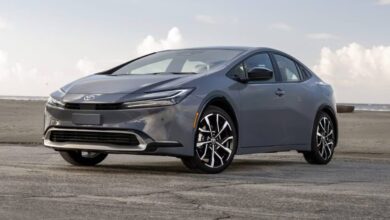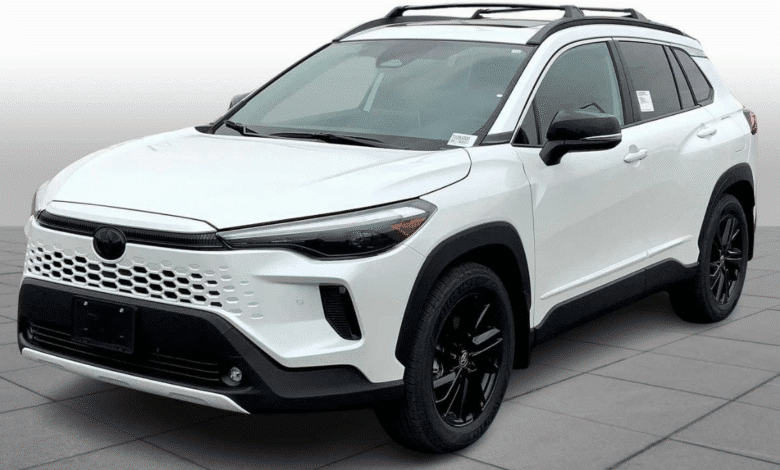
Toyota Corolla Cross XSE: It’s easy to forget why sedans once ruled the roads. These days, crossovers and SUVs have taken over parking lots and driveways everywhere, proudly towering above the traffic. But for those who still choose the sleek, understated shape of a sedan, there’s a very simple reason: fuel economy. The logic is timeless: less weight, less drag, less fuel burned.
While some drivers make their choice for environmental reasons, reducing emissions and leaving a smaller carbon footprint, most sedan owners simply enjoy visiting the gas station less often. And that’s the beauty of it: practicality wrapped in a classic design.
Physics tells the rest of the story. A crossover is, by definition, bulkier and boxier than a sedan. It sits higher off the ground, often weighs a few hundred pounds more, and pushes more air out of the way as it moves forward. Those differences may sound small on paper, but they add up every single time you drive. More mass means more energy required to move it; a taller, squarer profile means more resistance against the wind. Add the two together, and you’ve got the perfect recipe for higher fuel consumption.
Manufacturers try to balance things out with clever engineering. They’ll fit smaller crossovers with the same engines as their sedan counterparts or even introduce hybrid options. Yet, even then, there’s no escaping the basic laws of motion. A larger body needs more power, and more power means more fuel. The equation is as old as the automobile itself.
Take, for example, the typical compact pair: a sedan with a modest 1.8-liter engine and its SUV sibling fitted with a larger 2.0-liter version. The difference might not sound dramatic, but it’s often the gap between 139 horsepower and nearly 200. That added strength gives the crossover more muscle for acceleration and hauling, but it also comes at a cost. Step on the gas, and the heavier, more powerful SUV burns noticeably more fuel to keep up the pace.
It’s not that SUVs are bad far from it. They offer the space, the versatility, and the elevated seating position that modern drivers crave. They make families feel secure, travellers feel adventurous, and weekend warriors feel ready for anything. But somewhere along the way, we’ve started treating sedans like relics of a bygone era, when in reality, they still make perfect sense for a huge number of people.
If you drive mostly in cities, commute daily, or simply prefer a lighter, nimbler feel behind the wheel, a sedan can still be the smarter choice. They cut through the air more efficiently, use less gas, and often cost less upfront, not just to buy, but to maintain over time. The smooth, low stance isn’t just for style; it’s a design that actually saves you money every mile you drive.
SUVs have stolen the spotlight, sure. They dominate marketing campaigns and car lots alike. But beneath all the hype, the humble sedan quietly keeps doing its job, delivering comfort, dependability, and unbeatable efficiency. It’s the sensible choice that doesn’t need to shout to be heard.
So while the world continues to chase the next big crossover, there’s still something deeply satisfying about a car that simply works, one that slips through traffic gracefully, sips fuel sparingly, and reminds you that sometimes, smaller really is smarter.
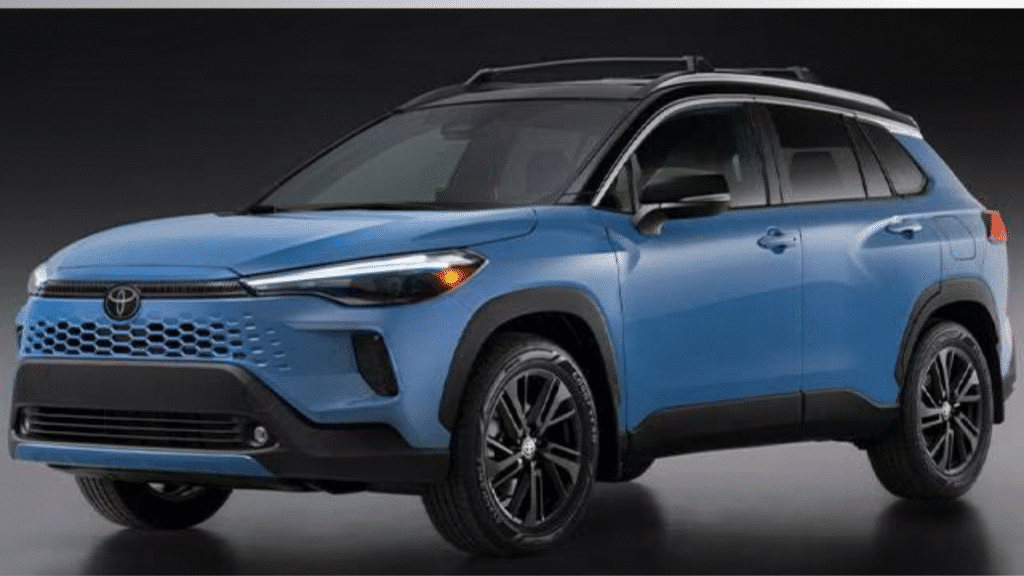
Why Real-World Fuel Efficiency Rarely Matches the Official Ratings
When it comes to fuel efficiency, most drivers have noticed one frustrating truth: the numbers on paper rarely match what you see on your dashboard. Except for a few rare cases, like the Toyota Corolla and its SUV sibling, the Corolla Cross, reality tends to tell a different story.
Let’s be honest: testing fuel economy in real-world conditions is almost impossible to do with complete accuracy. On the highway, it’s fairly simple to drive the same route, at the same speed, under similar weather conditions, and you can get a somewhat fair comparison. But once you move into city driving, all predictability disappears. Traffic congestion, the time you spend idling at stoplights, and how aggressively or smoothly you accelerate all of these tiny variables play a massive role in how efficiently your car burns fuel.
Even two identical vehicles can produce different results simply because no two trips are ever truly the same. A gust of wind, the weight of passengers or luggage, the type of fuel used, or even tyre pressure can change the outcome. That’s why laboratory testing exists to remove those unpredictable human and environmental factors.
Official fuel economy ratings are measured using sophisticated systems that simulate driving on “artificial roads.” These tests are conducted by computers connected to dynamometers, which mimic real-world resistance and road conditions under strict, repeatable parameters. This ensures that every vehicle is tested in the exact same way, allowing for fair comparisons between models.
However, this also means that the numbers are best viewed as benchmarks, not guarantees. They show what a vehicle is capable of under ideal conditions, but not necessarily what you’ll experience in daily life. That’s why some cars, like the Toyota Corolla and Corolla Cross, stand out; they come remarkably close to their official fuel ratings, even in everyday driving.
For most cars, though, the difference between lab results and real-world performance remains an unavoidable reality. It’s not that the tests are inaccurate; they’re just conducted in a world where traffic jams, sudden braking, and red lights don’t exist, something every driver knows is far from the truth.
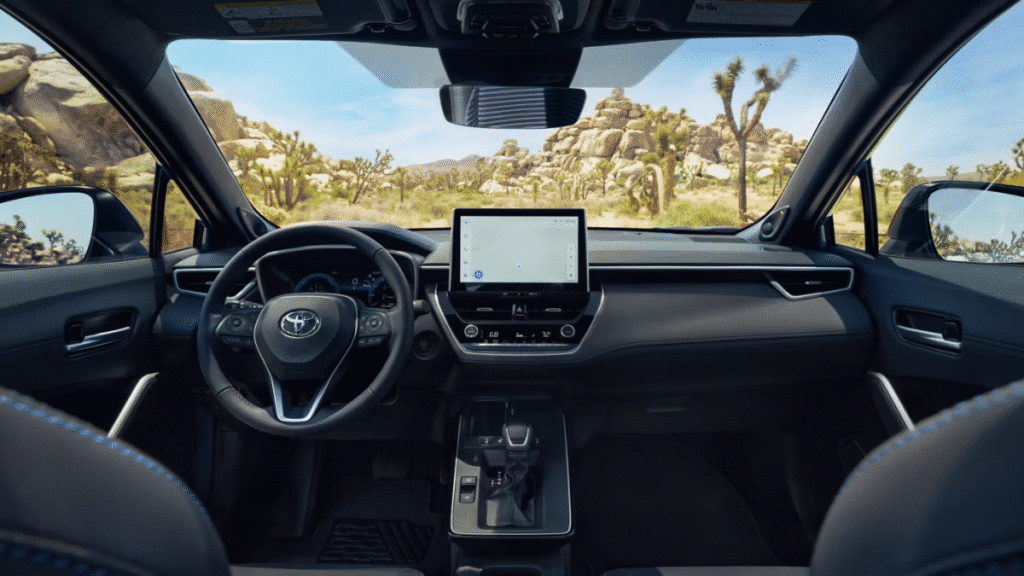
Toyota RAV4 Prime 2023
Real-World Efficiency: The Corolla Cross Hybrid Defies Expectations
Despite everything that’s usually said about SUVs being less efficient than sedans, my experience with the Corolla Cross Hybrid told a different story. Over several days of mixed driving, the compact crossover averaged 5.8 L/100 km combined, just 0.2 L/100 km higher than what I managed with the Corolla Hybrid sedan. Considering that a larger portion of my route this time included slow, stop-and-go city traffic (the natural habitat for hybrids), and that I may have driven a bit more conservatively on Highway 401, the results were genuinely surprising.
Normally, we auto journalists like to remind readers that style often comes with a cost and choosing the more fashionable SUV variant means sacrificing a bit of fuel efficiency. But in this case, that assumption didn’t hold up. The Corolla Cross Hybrid proved that practicality and efficiency can absolutely coexist.
The official rating for the Corolla Cross Hybrid stands at 5.6 L/100 km overall, meaning my real-world result of 5.8 L/100 km was nearly identical. That kind of accuracy is rare and highlights just how consistent Toyota’s hybrid systems truly are. Few automakers deliver such repeatable, trustworthy fuel-efficiency figures across different models.
It’s also worth noting that, depending on the trim level, the Corolla Cross Hybrid weighs only 35 to 45 kilograms more than its sedan counterpart a negligible difference that likely helps keep its efficiency so close. In short, Toyota continues to prove that hybrids don’t just shine in the lab they perform just as well out on real roads.
Surprising Balance: How the Corolla Cross Hybrid Blends Power, Space, and Efficiency
During my week with the 2026 Toyota Corolla Cross Hybrid, the reason behind its exceptional efficiency became clear. Much of my driving took place in slower urban environments, the ideal setting for Toyota’s Hybrid Energy System to shine. At those low speeds, the twin electric motors handled most of the propulsion duties, allowing the gasoline engine, though slightly larger and potentially thirstie,r to remain idle for long stretches. In short, the car didn’t need to rely on the engine enough to burn significantly more fuel.
I’m almost certain that if we were to compare the gas-only Corolla sedan with the gas-only Corolla Cross, the difference in fuel economy would be far more noticeable. But the hybrid changes that equation completely.
Adding to the surprise, the Corolla Cross Hybrid isn’t just efficient, it’s also more powerful. Producing 196 horsepower, it easily outpaces the 139-hp Corolla Hybrid sedan. While it may not be a performance SUV by any stretch, it feels lively and responsive enough to make city and highway driving enjoyable. Think of it as the rare crossover that manages to be both quicker and just as economical as its sedan sibling a combination that’s genuinely impressive in the hybrid segment.
Of course, one of the main reasons people choose SUVs and crossovers is for the extra space, and the Corolla Cross doesn’t disappoint there either. It offers 609 litres of cargo room behind the rear seats compared to the sedan’s 371 litres, and an expansive 1,750 litres with the rear seats folded down. Thanks to its higher roofline, headroom also improves by about 25 to 50 millimetres, giving passengers a more open, comfortable cabin feel.
That said, there are still some surprises in the dimensions. The Cross actually rides on a 60-mm shorter wheelbase and is about 140 millimetres shorter overall than the sedan, which makes it a bit more compact than you might expect. Even so, Toyota has managed to package the space smartly, maintaining the Corolla’s trademark balance of practicality, comfort, and efficiency all wrapped in a slightly sportier, more capable form.
If you’re exploring more Toyota models and ownership insights, these related reviews may offer useful comparisons:
- Toyota Mirai 2025 Hydrogen Power Refined
- 2026 Toyota Corolla Cross XSE Review
- Toyota Sienna 2023
- 2022 Toyota 4Runner review
- Toyota GR Supra Coupe 2022 Review
- Toyota Camry-2023:Review
- Toyota Venza 2023 review
- Toyota Grand Highlander 2024 Review
- Toyota Corolla Cross: 2022
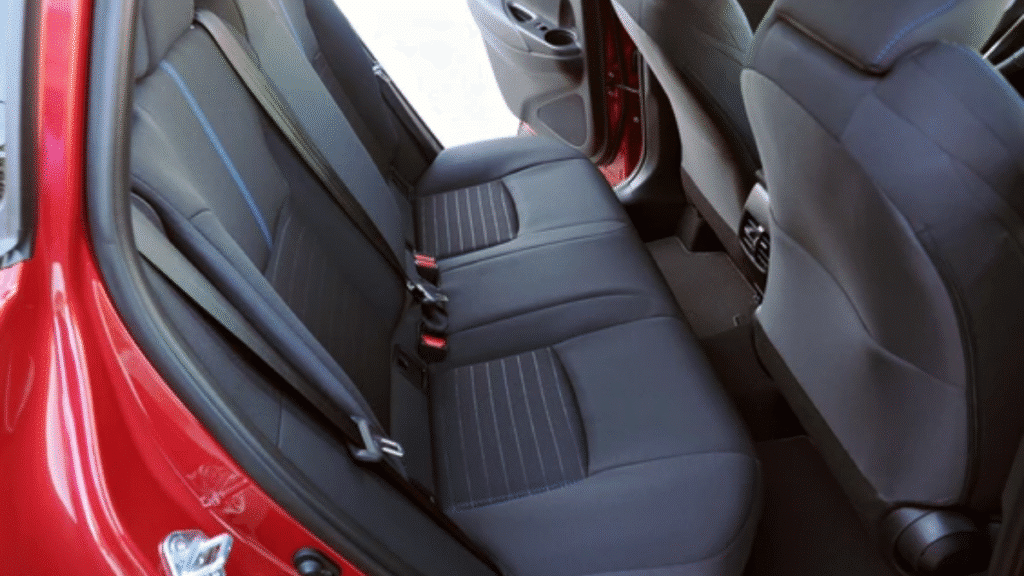
Corolla vs. Corolla Cross Hybrid: Which Toyota Hybrid Deserves Your Drive?
While the Toyota Corolla Cross Hybrid stands out as a fuel-efficient SUV alternative, it doesn’t completely eclipse its sedan sibling when it comes to interior space. Shoulder and hip room are both slightly reduced in the crossover, and though Toyota doesn’t officially publish rear legroom measurements, it’s clear that rear passengers get a bit less foot space compared to the standard Corolla sedan. In essence, while the Cross delivers SUV-style versatility with no real fuel economy penalty, it doesn’t offer the full spaciousness buyers might expect from a crossover.
Both vehicles can be equipped with all-wheel drive, though the Corolla Hybrid sedan also offers a front-wheel-drive configuration, giving budget-conscious drivers more flexibility. The trim structure also highlights their differences. The Corolla Hybrid comes in four trims, including an affordable base LE and an LE AWD, while the Corolla Cross Hybrid is available only in two higher-end versions: SE and XSE.
That limited lineup means a noticeable gap in pricing. The most affordable Corolla Hybrid starts at just $27,740, while the entry-level Corolla Cross Hybrid SE begins at $35,810. When comparing equivalent trims, the price difference becomes even more interesting: the Cross SE costs about $4,275 more than the Corolla SE sedan ($35,810 vs. $31,535), while the top XSE trims are separated by only $1,420 ($38,635 vs. $37,215).
Part of the reason behind the higher price of the Cross SE lies in the extra tech features — it comes standard with a 10.5-inch touchscreen and an upgraded audio system, while the sedan makes do with a smaller display and simpler setup. However, the Cross counters with smaller 17-inch wheels and a simpler gauge cluster, leaving the value debate open to interpretation.
At the top of the range, both XSE models come nearly identical: 18-inch wheels, a digital instrument cluster, a power-adjustable driver’s seat, and heated rear seats. In fact, much of their interior design is virtually identical, from the dashboard layout to the button placement. The main differences are in trim packaging rather than design or quality.
So, which one should you buy — the Corolla Hybrid sedan or the Corolla Cross Hybrid?
If your priorities are affordability, a lower center of gravity, and slightly better handling, the sedan remains the smart choice. But if you value a higher driving position, extra cargo space, and available all-wheel drive, the Corolla Cross Hybrid justifies its higher price with practicality and comfort — all while maintaining Toyota’s legendary fuel efficiency.
For drivers who place a premium on design and road presence, the Corolla Cross easily takes the lead. Its updated styling for 2026 particularly the refreshed front fascia gives it a more assertive, modern appeal that fits perfectly within today’s crossover trend. It’s the kind of vehicle that turns heads in the driveway and subtly signals a step up in both practicality and sophistication.
Still, the Corolla sedan continues to represent outstanding value, offering much of the same Toyota reliability and hybrid efficiency at a noticeably lower price point. From the base trims all the way up to the XSE, the sedan remains the budget-conscious buyer’s best friend. Yet, the Corolla Cross counters with clear advantages: more headroom, additional cargo space, and a noticeably stronger powertrain that makes everyday driving more engaging.
When everything is considered, the decision comes down to priorities. Those looking to save money and who don’t mind a slightly more modest performance will find the Corolla Hybrid sedan perfectly satisfying. On the other hand, buyers who want more power, extra space, and a higher seating position without a big hit to fuel economy will likely prefer the Corolla Cross Hybrid.
And for those eyeing the top XSE trim, the choice becomes even clearer. The Cross delivers nearly everything the sedan does and more. It offers better overall versatility, all-wheel drive, and only a minimal fuel economy trade-off of just 0.2 L/100 km, despite its 57-horsepower advantage. With a price difference of roughly $1,400, it’s easy to see why the Corolla Cross Hybrid has become one of Toyota Canada’s best-selling SUVs.
Pros
✔ Strong performance without sacrificing efficiency
✔ Excellent cargo capacity and headroom
✔ Well-equipped interior with available AWD
Cons
✘ Slightly reduced rear legroom compared to the sedan
✘ Higher starting price and less overall value for budget buyers
FAQ
The biggest differences come down to body style, performance, and space. The Corolla Cross XSE is a compact SUV with a higher ride height, more cargo room, and a stronger 196-hp hybrid engine. The Corolla Hybrid sedan, on the other hand, is more affordable and slightly more fuel-efficient, but offers less power and rear-seat space.
Yes surprisingly so. During real-world testing, the Corolla Cross Hybrid averaged around 5.8 L/100 km, which is nearly identical to the Corolla Hybrid sedan’s consumption. Toyota’s hybrid system keeps efficiency high even with the added weight and power of the SUV body.
The Corolla Cross XSE provides 609 litres of cargo room behind the rear seats and up to 1,750 litres with them folded down. That’s a significant jump from the Corolla sedan’s 371 litres, making it far more practical for families and road trips.
Toyota offers the Corolla Cross Hybrid in two trims: SE and XSE. Both come well-equipped, with the XSE adding larger 18-inch wheels, an upgraded digital display, and a power-adjustable driver’s seat.
If you value more power, all-wheel drive, and extra cargo space, the XSE is absolutely worth the premium. It costs roughly $1,400 CAD more than the top Corolla Hybrid sedan, yet delivers stronger performance, better tech, and SUV practicality — all while maintaining excellent fuel economy.
Buyers who need more versatility, a taller driving position, and livelier performance will appreciate the Corolla Cross XSE. But if your priority is saving money and maximizing fuel efficiency, the Corolla Hybrid sedan remains the smarter, budget-friendly pick.
You may also want to explore these Toyota reviews to get a broader understanding of the lineup:
- Toyota 4Runner-2023 review
- Toyota Highlander 2023 Review
- Toyota Grand Highlander 2024
- Toyota Sequoia Review (Updated for 2025) – Power, Space, and Hybrid Performance
- Toyota bZ4X SUV (2022)
Continue discovering more automotive insights on Toyota.