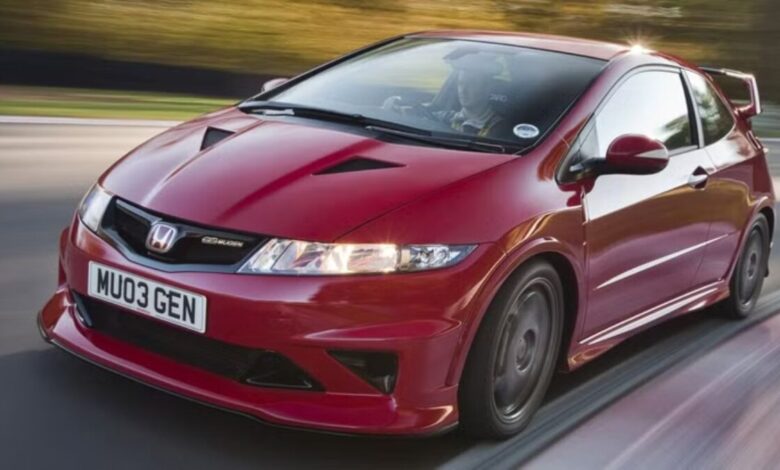
The Honda Civic Type R FN2, produced between 2007 and 2011 exclusively for Europe and Australia, remains one of the most debated models in the Type R bloodline. While every generation before and after it gained wide praise for razor-sharp chassis tuning and track-bred engineering, the FN2 arrived with a radically different philosophy. Instead of targeting uncompromising performance, Honda aimed to blend everyday usability with hot-hatch excitement. That shift instantly split the fanbase.
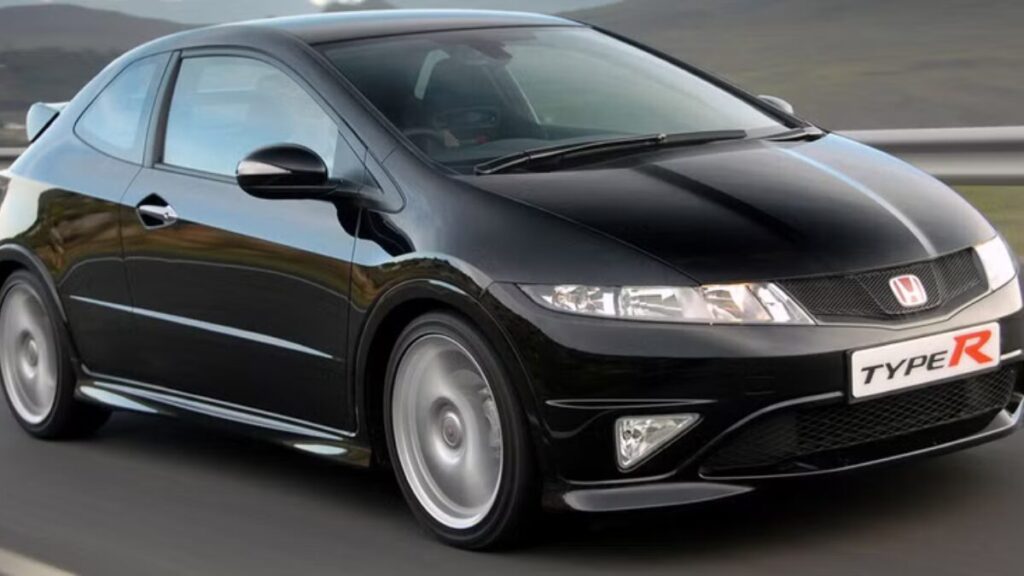
At first glance, the FN2 looks every bit the part of a Type R. Its futuristic wedge-shaped body, dramatic split rear window, and center-mounted triangular exhaust give it a visual personality that aged far better than expected. Yet many purists dismissed the FN2 at launch due to a single controversial change: Honda swapped the former double-wishbone rear suspension for a torsion-beam setup. For many, that decision alone was enough to label the FN2 “the worst Type R ever.”
But the FN2’s reputation tells only half the story. Beneath the criticism lies one of Honda’s most charismatic naturally aspirated engines, a cabin that still feels special today, and a character that rewards drivers who understand what the car is rather than what it isn’t. It may not be as hardcore as the EP3 or as polished as later models like the FK2 and FK8, but it offers a unique personality that modern turbocharged hot hatches often lack.
The FN2 never pretended to be a track monster. Instead, it delivers an old-school, high-revving Honda driving experience wrapped in a futuristic shell. With the right modifications, it becomes dramatically better enough to surprise anyone who dismissed it at first glance. This is why the FN2 deserves a deeper, more balanced look, especially as it is becoming a collectible modern classic.
Pros
- Legendary K20 engine with high-revving, naturally aspirated character
- Unique futuristic styling that still stands out today
- Engaging steering feel and a mechanical driving experience
- Interior with dual-tier digital display and sporty Type R ergonomics
- Strong reliability and affordable running costs
- Excellent mod-friendly platform; suspension upgrades transform the car
- Practical hatchback layout despite the sporty intent
Cons
- Torsion-beam rear suspension limits agility in stock form
- Firm, sometimes harsh ride on rough European roads
- Less track-capable out-of-the-box compared to other Type R generations
- Engine carried over from EP3 with no major performance gains
- Rear visibility compromised by the split rear glass
What’s New
- New three-door futuristic architecture compared to EP3
- Radical dashboard with split digital display
- Redesigned suspension layout (torsion beam)
- New aggressive exterior lines, aero profiles, and integrated rear spoiler
- Enhanced chassis rigidity for daily usability rather than track focus
Overview
The FN2 occupies an unusual position in the Type R family. It retained the beloved K20 engine but shifted toward a more lifestyle-oriented hot hatch experience. Rather than sharpening the chassis to extremes, Honda engineered the FN2 to be an everyday companion capable of spirited driving without demanding constant attention. This approach created a car that feels fast, reliable, and highly involving, but not as raw or track-obsessed as its siblings.
The 2.0-liter K20Z4 engine remains the FN2’s crown jewel. Its linear power delivery, soaring 8,000 rpm redline, and unmistakable VTEC transition remind drivers just how special naturally aspirated Hondas can be. Paired with a slick 6-speed manual, the drivetrain still holds its own in a world of turbocharged torque-heavy rivals.
Inside, the FN2 feels more premium and futuristic than many hatchbacks of its era. The dual-tier digital gauge cluster, heavily bolstered seats, and aluminum shift knob make it feel like a cockpit built around the driver. Space is surprisingly generous, and the cabin ergonomics still hold up well today.
Is it perfect? No. But the FN2 offers something rare , a blend of reliability, character, and design flair that strengthens its position as a modern classic. And with a few smart upgrades, its dynamic weaknesses can be effectively eliminated.
Competitors to Consider
When the FN2 entered the European hot-hatch scene, it walked straight into one of the toughest segments of the late 2000s. Cars like the Volkswagen Golf GTI Mk5, Ford Focus ST, Renault Mégane R26, Mini Cooper S, and Suzuki Swift Sport had already carved out strong identities, each dominating a specific corner of the market. The GTI, for example, built its reputation on balance, everyday refinement, and a suspension setup that absorbed imperfect European roads with a calmness the FN2 simply couldn’t match. It was not the most thrilling car to push hard, but it played the “all-rounder” role so convincingly that buyers trusted it more than they trusted Honda’s radical-looking newcomer.
The Focus ST, meanwhile, represented the opposite philosophy: brute torque, drama, and straight-line punch. Its 2.5-liter turbo engine made every drive feel muscular, but the weight over the front axle and well-known torque steer issues robbed it of precision. Compared with the FN2’s sharp throttle response and clean, high-revving power delivery, the ST often felt like a muscle car squeezed into a hatchback body rather than a finely tuned driver’s tool.
RenaultSport’s Mégane R26 raised the bar for handling purity. With its mechanical LSD, aggressive chassis tuning, and serious cornering capability, it dominated track days and magazine comparison tests. But it also demanded the kind of commitment , and maintenance budget , that many everyday buyers didn’t want to deal with. The FN2, while less extreme, delivered a simpler, more robust ownership experience without the fragility that sometimes came with high-strung RenaultSport models.
The Mini Cooper S added charm, premium styling, and playful steering, making it an attractive alternative for drivers seeking personality over outright speed. Yet the R56 generation suffered from recurring mechanical problems that frustrated owners. This is where the FN2 quietly overperformed: Honda’s reliability made it a long-term companion instead of a short-term thrill.
Even smaller players like the Suzuki Swift Sport added pressure to the FN2 by offering lightweight agility and low running costs. Though far less powerful, the Swift reminded enthusiasts that a good hot hatch doesn’t need big numbers , it needs balance. The FN2, while heavier and more mature, countered with stronger acceleration and a far more emotional high-rpm character.
In a segment full of turbo torque, European handling philosophies, and practical refinement, the FN2 occupied a lane of its own. It wasn’t the torque champion, nor the soft daily driver, nor the hardcore track tool. Its identity rested on something more elemental: a naturally aspirated engine that begged to be revved, a design that looked like nothing else on the road, and a reliability record most competitors couldn’t touch. That uniqueness is exactly why the FN2 still attracts enthusiasts today, even if it was misunderstood when new.
If you’re exploring more options from the 2022 and 2023 SUV market, CarDrav offers a rich collection of in-depth reviews that provide valuable context for shoppers comparing different segments and performance levels. Full size shoppers can take a closer look at alternatives such as the 2022 GMC Yukon and the 2022 Nissan Armada, both offering strong capability and three-row versatility. Drivers who prefer more rugged, off-road-oriented options may find the 2022 Toyota 4Runner appealing for its durability and proven reliability in demanding conditions.
For families seeking refinement and balanced utility in a midsize package, reviews of the 2022 Cadillac XT6, 2023 Chevrolet Traverse, and 2022 Ford Edge provide helpful comparisons. Cross shoppers who want to explore newer electric or tech-forward SUVs can also learn from models like the 2023 Nissan Ariya, 2023 Chevrolet Bolt EUV, and the 2023 Honda Passport, each offering a different take on efficiency, comfort, and everyday practicality.
Those comparing lifestyle-focused SUVs may also find the 2023 Nissan Kicks, 2023 Nissan Murano, 2023 Ford Explorer, and 2023 GMC Acadia useful when evaluating what matters most in space, technology, and driving character.
Driving Experience
The FN2 delivers a driving experience built around the purity of a high-revving naturally aspirated engine. From the moment the car moves, the K20Z4 shows its character with a clean, immediate throttle response that feels more organic than any turbocharged rival of its time. Power builds progressively as the revs rise, and once VTEC crosses over, the engine takes on a sharper tone and a renewed urgency that encourages the driver to push harder. It is not about raw numbers or mid-range thrust, but about the satisfaction of working the engine, choosing the right gear, and feeling the car come alive as it approaches its 8,000 rpm redline.
The steering is one of the standout elements of the FN2’s character. The hydraulic setup provides constant communication through the wheel, giving the driver a clear sense of how the front tires are loading up in corners. On tight roads, the car feels eager to change direction and surprisingly light on its feet, the kind of agility that rewards smooth inputs and committed driving. Even at moderate speeds, the feedback and immediacy of the controls make the FN2 feel engaging in a way that modern hot hatches often struggle to replicate.
The main limitation appears when the road surface becomes uneven. The torsion-beam rear suspension can introduce small but noticeable movements at high speed, which reduces the sense of stability compared to the EP3 and later Type R models. The chassis remains predictable, yet it lacks the planted feeling that multi-link rivals offered during the same era. Despite this, the FN2 still maintains composure on well-paved roads, and its balance improves dramatically once owners upgrade to quality coilovers, a stronger rear anti-roll bar, and more performance-oriented alignment settings. With these refinements, the FN2 transforms into a far more capable machine, one that reflects the potential many enthusiasts believe Honda should have unlocked from the factory.
In its most authentic form, the FN2 is less about chasing perfect lap times and more about providing a mechanical, connected, and rewarding experience. It invites the driver to participate, to explore the upper rev range, and to enjoy a type of engagement that only a naturally aspirated Honda engine can deliver. Even with its shortcomings, the FN2 retains an old-school charm that continues to resonate with drivers who value feel over force.
Comfort
For a car built on performance heritage, the FN2 delivers a level of comfort that is more refined than many expect. Honda engineered the cabin to feel tight and supportive without crossing into the harsh, punishing territory common among hardcore hot hatches of the same era. The Type R bucket seats are the centerpiece of this balance. They offer deep bolstering that keeps the driver firmly planted during spirited driving while still providing enough cushioning for long journeys. The seating position is slightly higher than what most enthusiasts anticipate from a performance hatchback, but it contributes to excellent outward visibility and makes daily commutes easier and more relaxed.
Ride quality depends heavily on the road surface. On smooth pavement, the FN2 feels composed and stable, with a controlled firmness that communicates what the chassis is doing without overwhelming the occupants. On rough or broken roads, however, the torsion-beam rear suspension can introduce more sharpness than ideal, sending occasional bumps into the cabin. It never becomes unbearable, but the car clearly prioritizes responsiveness over softness. Compared with turbocharged rivals like the Focus ST or Megane R26, the FN2 strikes a middle ground: more comfortable than the track-focused Renault, less plush than the GTI, but undeniably livelier and more engaging.
Noise levels are also well managed for a high-revving naturally aspirated hatchback. The K20 engine is quiet and civilized during normal driving, then grows progressively more vocal as the revs climb, adding character rather than annoyance. Wind and road noise remain moderate at highway speeds, making the FN2 a surprisingly pleasant long-distance companion. The overall sense is of a car designed to deliver driving excitement without sacrificing everyday usability. It may sit on the firmer end of the spectrum, but it retains enough refinement to function as a practical daily driver, which is part of what makes the FN2 appealing to so many owners who want both performance and livability.
Interior
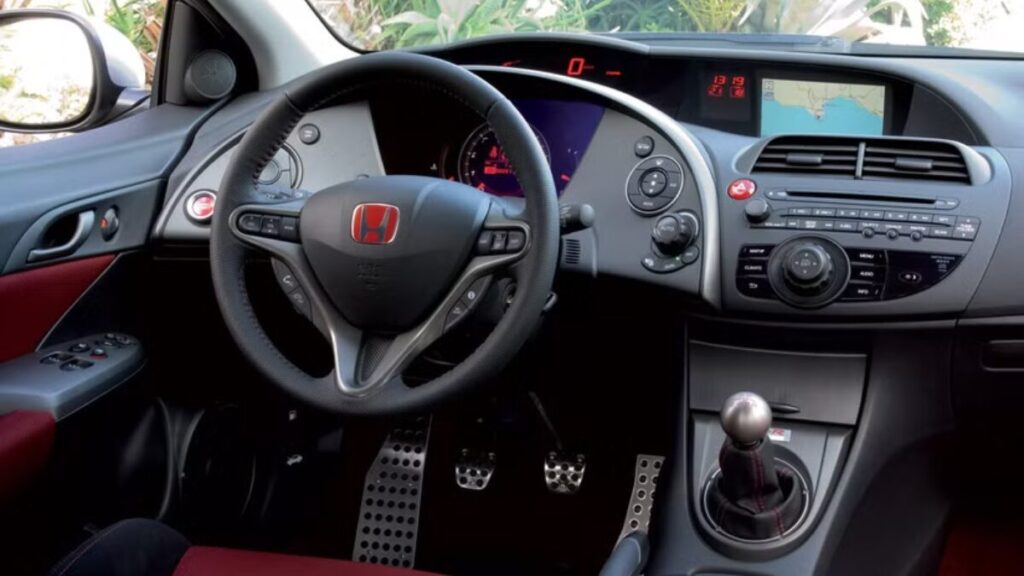
The interior of the FN2 is one of its most distinctive strengths, offering a design that still feels unconventional and forward-thinking even years after its release. Honda approached the cabin with a clear intention to make the driver the focal point, and that philosophy is evident the moment you sit behind the wheel. The dual-tier dashboard layout creates an immediate sense of depth and modernity. The upper digital speed display sits directly in the driver’s line of sight, allowing quick glances without shifting focus, while the lower tier houses a large, centrally positioned tachometer that emphasizes the engine’s high-rev personality. This arrangement feels intuitive, sporty, and unlike anything else in its class at the time.
Material quality is solid, with a level of durability that reflects Honda’s reputation for long-lasting interiors. The red-and-black Type R seats are not just visually striking; they also provide firm lateral support that holds the driver and passenger securely in place during aggressive cornering. The aluminum shift knob, purposeful pedal positioning, and grippy steering wheel all contribute to a cockpit-like atmosphere that encourages spirited driving. These details combine to deliver a tactile, mechanical feel that resonates strongly with enthusiasts.
Practicality remains surprisingly good for a performance-focused hatchback. Rear seating is usable thanks to a well-sculpted roofline and good legroom for the class, making the FN2 more accommodating than some of its rivals. The hatch design provides excellent cargo flexibility, allowing the car to transition easily from daily commuting to weekend trips without compromising usability. Storage areas around the cabin, from the center console to the door pockets, are thoughtfully placed, adding to the FN2’s overall versatility.
the FN2’s interior blends driver-centric design with everyday practicality in a way that gives the car its own identity. It feels futuristic without being gimmicky, functional without being plain, and sporty without sacrificing comfort. It is one of the main reasons many owners feel connected to the FN2 long after more modern alternatives arrive on the market.
In-cabin Tech
The FN2’s in-cabin technology reflects a transitional era in automotive design, blending early digital innovation with traditional analog functionality. While it predates the touchscreen-dominated interiors of modern hot hatches, the FN2 still delivers a surprisingly engaging and practical tech experience for its time. The dual-level digital instrument cluster is the centerpiece of this approach. The upper digital speedometer offers quick, distraction-free readability, while the lower tier’s large central tachometer reinforces the car’s performance focus. This setup gives the cabin a futuristic character without relying on gimmicks or unnecessary complexity.
The factory audio system provides respectable clarity and balance, performing better than many stock units from competing hot hatches of the same period. Steering-wheel-mounted controls add convenience by allowing drivers to adjust volume, change tracks, or switch radio stations without taking their hands off the wheel. Higher-spec models introduced optional built-in navigation, which, although basic by modern standards, offered straightforward menus and reliable functionality during its era.
Because the FN2’s cabin architecture is clean and logically arranged, modernizing it is easy. Many owners upgrade the head unit to incorporate Apple CarPlay or Android Auto, transforming the interior’s usability without disrupting its original design language. The clean dashboard lines and well-integrated center console make aftermarket systems look natural rather than forced, allowing the FN2 to bridge old-school driving feel with contemporary tech convenience.
Storage
The FN2 offers a level of storage practicality that stands out for a performance-focused hatchback. Honda designed the car with everyday usability in mind, ensuring the cabin and rear cargo area deliver enough space for real-world needs without compromising the Type R character. The hatchback layout plays a major role here. It opens wide and provides a deep, well-shaped cargo bay that easily accommodates groceries, luggage, gym bags, or even weekend road-trip gear. The loading height is practical, and the space itself is more usable than what many hot hatches of its era provided, especially those with tighter rear designs or intrusive suspension layouts.
The rear seats fold down in a straightforward manner, expanding the cargo capacity significantly and creating a flat, versatile surface. This flexibility makes the FN2 far more adaptable than its sporty image suggests. Whether it’s transporting larger items, hauling equipment, or simply dealing with daily errands, the FN2 manages tasks that some of its rivals struggle with due to their more aggressive or compromised packaging.
Inside the cabin, thoughtful storage solutions further enhance practicality. The center console is spacious enough to hold small personal items, the door pockets are well-sized for bottles or accessories, and the dashboard layout includes cleverly placed compartments for essentials such as phones, wallets, or sunglasses. Even with its driver-centric design and performance-oriented seats, the FN2 doesn’t feel cluttered or restrictive. Instead, it maintains a balance between functionality and sportiness, showing that a Type R can be genuinely practical without abandoning its performance identity.
In everyday use, this practicality is one of the FN2’s quiet strengths. It allows owners to enjoy high-rev excitement without sacrificing the convenience expected from a hatchback. That duality is part of what keeps the FN2 appealing as a long-term, do-it-all performance companion.
MPG
The FN2 delivers fuel economy that is respectable for a naturally aspirated performance hatchback. In typical mixed driving, owners can expect results in the mid-20s mpg, with highway cruising often producing slightly better numbers thanks to the engine’s efficient gearing at steady speeds. Around town, consumption rises as the K20Z4 prefers higher revs and rewards spirited driving, but even then it remains more efficient than many turbocharged rivals of its era.
Because the engine is naturally aspirated and mechanically straightforward, MPG consistency depends heavily on driving style. Smooth throttle inputs and timely gear changes keep fuel use controlled, while frequent VTEC engagement naturally increases consumption. Regular maintenance, high-quality oil, and clean air filters help the FN2 maintain stable efficiency over the long term.
the FN2 balances performance and economy well. It is not a frugal commuter, but it avoids the heavy fuel penalties common in turbocharged competitors, offering a predictable and manageable running cost for daily use.
Wildcard
The FN2’s most unexpected strength is how dramatically it improves with the right modifications. Few cars in the hot-hatch world respond to upgrades as well as this chassis does. In stock form, its torsion-beam rear suspension limits ultimate precision, but once upgraded, the entire character of the car changes in a way that feels almost transformative. High-quality coilovers immediately tighten body control and eliminate the nervousness that appears on uneven roads. Adding a thicker rear anti-roll bar introduces the rotation the stock setup lacks, giving the FN2 a sharper, more confident cornering attitude.
What makes this transformation special is that it unlocks the potential many enthusiasts believe the FN2 always had but never fully expressed from the factory. The steering feels even more alive, the car becomes eager to turn in, and the engine’s naturally aspirated power delivery feels perfectly matched to the newfound agility. With performance tires and improved bushings, the FN2 begins to approach the dynamic capability of far more expensive hot hatches, all without compromising its everyday drivability or long-term durability.
This mod-friendly nature gives the FN2 a unique place in the Type R lineage. It becomes a car that grows with its owner. Drivers can start with a reliable, charismatic, completely usable daily hatchback, then gradually tune it into something far sharper, more track-ready, or more personalized. Each upgrade amplifies its core strengths rather than masking weaknesses, creating a rewarding ownership experience that evolves over time.
That adaptability is the FN2’s wildcard: the ability to feel like two different cars in one. It can be a dependable commuter during the week and an enthusiast’s machine on weekends, simply by choosing the right modifications. Few hot hatches offer such a broad and satisfying growth curve, and it’s one of the reasons the FN2 continues to gain appreciation years after it first split opinions.
Trim Level Differences
The FN2 lineup was relatively simple, but the differences between trims had a meaningful impact on day-to-day usability and long-term desirability. All versions shared the same core mechanical package, including the high-revving K20Z4 engine and six-speed manual transmission, so performance remained identical across the range. What separated the trims was the level of equipment, interior comfort, and small upgrades that shaped the ownership experience.
The standard Type R offered the purest expression of the FN2 formula. It came with the signature red-and-black bucket seats, the dual-tier digital dashboard, and the classic aluminum shift knob that defined the model’s driver-focused layout. This trim appealed to enthusiasts who valued simplicity and wanted the lightest, most straightforward version of the car. It lacked some of the convenience features available in higher trims, but it stayed closest to the original Type R ethos.
The Type R GT added a layer of everyday usability without diluting the FN2’s performance character. Dual-zone climate control, ambient interior lighting, upgraded audio, and cruise control made long trips more comfortable and increased the appeal for buyers planning to use the car as a daily driver. These additions didn’t change how the car drove, but they made the FN2 easier to live with while maintaining the visual and dynamic personality that defined the model.
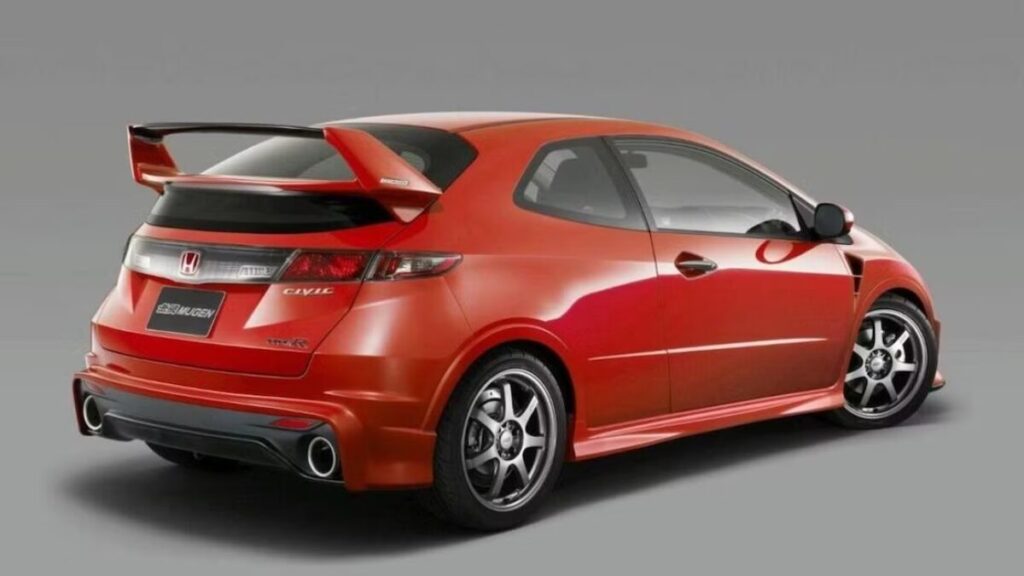
A handful of special editions arrived in select markets, most notably the Championship White versions and limited Mugen-enhanced variants. The Championship White models carried unique paint, red badges, and a more collectible identity tied to Honda’s Type R heritage. Mugen editions, although extremely rare, offered bespoke styling touches and upgraded components that elevated the FN2’s visual impact and exclusivity. These versions remain highly sought after today due to their scarcity and connection to Honda’s performance subculture.
Overall, the trim structure of the FN2 allowed buyers to choose between a purist, a more comfortable daily driver, or a collectible variant with added visual prestige. Regardless of trim, the heart of the car remained the same, ensuring that every FN2 delivered the essential Type R experience.
Which Trim Does CarDrav Recommend?
CarDrav recommends the Type R GT as the ideal choice for most buyers, simply because it strikes the best balance between everyday comfort and the raw, engaging personality that defines the FN2. Since all trims share the same engine, transmission, and core performance tuning, there’s no mechanical advantage in choosing the base model. What the GT adds, however, significantly improves day-to-day livability without compromising the high-rev experience or the car’s driver-focused nature.
The dual-zone climate control makes long drives more manageable, especially in varying weather conditions. Cruise control is a valuable addition for highway driving, turning the FN2 from a pure weekend toy into a genuinely usable daily companion. The upgraded audio system and ambient interior lighting enhance the cabin atmosphere, making the driving experience feel more polished without adding unnecessary complexity. These upgrades may seem small on paper, but in practice they elevate the FN2’s usability and comfort in ways that owners appreciate over years of ownership.
For enthusiasts searching for long-term investment potential, the Championship White special editions are also worth considering. Their rarity, iconic paint, and heritage appeal give them a collector edge that the standard models don’t carry. However, they often come at a higher price, and the added cost doesn’t translate into improved performance, only exclusivity.
For the best all-around ownership experience, the Type R GT remains the sweet spot. It preserves everything that makes the FN2 special while adding practical features that make the car easier to live with every single day. It captures the emotional fun of a high-rev Type R without forcing compromises in comfort or usability, making it the trim that most buyers will enjoy the most.