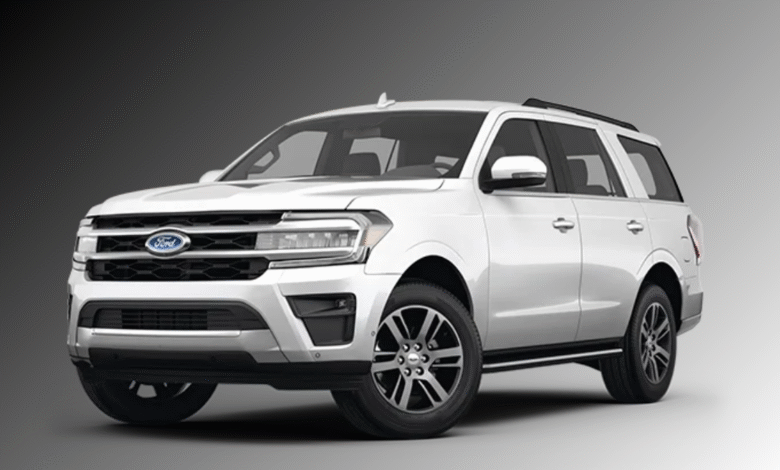
The Ford Expedition is the largest and most powerful SUV made by the Blue Oval as of 2023, but it wasn’t always that way. An even bigger Excursion in the early 2000s was based on the powerful F-250 truck. However, Ford replaced the enormous Excursion in 2007 with the vast Expedition Max, a lengthened version of the third-generation Expedition that accomplished the same tasks more effectively. Since then, the couple has survived, and in 2017, they welcomed their fourth generation. After a significant modification last year, the Expedition will remain the same until 2023.
The XL, XLT, Limited, Timberline (new in 2022), King Ranch, and Platinum trim levels of the 2023 Expedition are available. Four-wheel drive is an option throughout the range, while rear-wheel drive is standard. The Timberline is excluded from the Max’s expanded length, which begins with XLT. The twin-turbocharged 3.5-litre V6 in every Expedition has a different output depending on the setup. The Limited variant has 400 horsepower and 480 pound-feet of torque compared to the other trims’ 380 horsepower and 470 pound-feet.
Newcomers to this well-established class are few and far between, but Jeep’s Wagoneer redefined the jumbo-sized SUV category last year. The new Toyota Sequoia, GMC Yukon and Yukon XL, and Chevrolet Suburban and Tahoe are more options buyers could consider. Though Ford offers competitive features compared to rival SUVs, the Expedition’s exterior and interior have seen better days. Although Ford recently improved the Expedition’s infotainment system, all its rivals offer more modern interiors and more advanced electronics.
The Expedition should be the first choice for Ford lovers who need the ability to transport passengers and freight. It has three rows of roomy seats and, by default, a comfortable second-row bench. Captain’s chairs on the second row reduce sitting capacity by one while providing more excellent storage and moving room. There is still enough space in the third row, but GM and Jeep offer more because of their recent designs and independent rear suspensions. They also manoeuvre a bit better. It is still outstanding, similar to how Jeep and Toyota have surpassed the Expeditions’ former class-leading 9,300-pound towing capability.
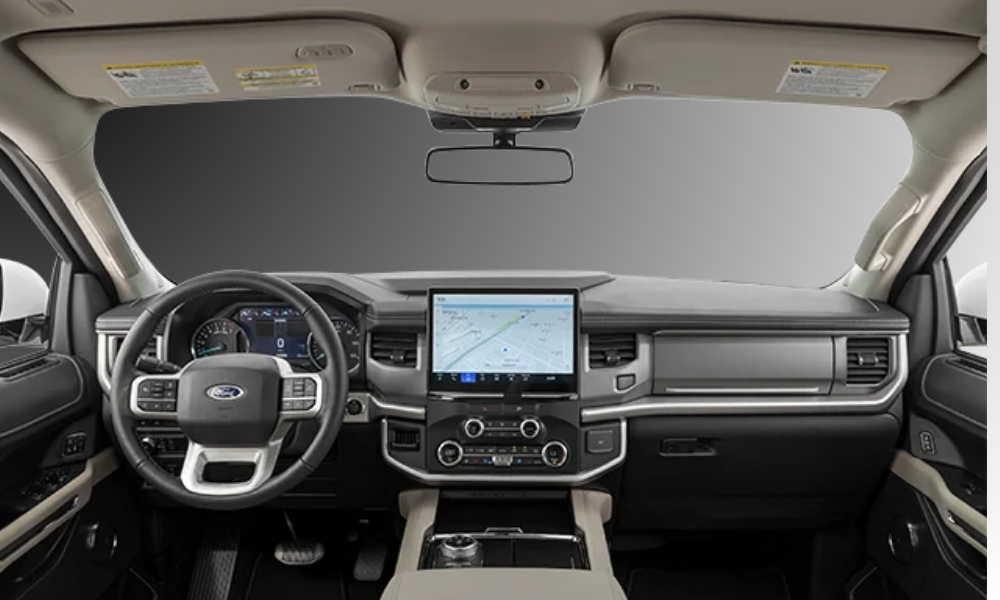
Ford includes a 12-inch infotainment screen as standard equipment that runs the excellent Sync 4 user interface. Users may interact with the temperature and settings while using other software on the vast touchscreen, such as the widely used wireless Apple CarPlay and Android Auto. Customers can upgrade with a Bang & Olufsen sound and a 15.5-inch display that is even larger and taken from Ford’s electric Mustang Mach-E.
Adaptive cruise control, lane keep assist, lane departure alerts, active park aid, blind spot monitoring with rear cross-traffic alerts, and automated emergency braking with forward collision warnings are all included in Ford’s comprehensive list of standard safety features. With expenses excluded, the basic XL begins at $54,155 for rear-wheel drive and tops at $86,615 for an all-wheel Max Platinum. The mid-line Limited has enough additional amenities to make the price less than $70,000 reasonable.
Performance: Ford Expedition
Thanks to the quick 10-speed automatic transmission, the twin-turbo V6 in the Expedition never seems underpowered. Strong and smooth acceleration are also characteristics of the giant SUV, which often retains a pleasant ride quality. The Limited variant has 400 horsepower and 480 pound-feet of torque compared to the other trims’ 380 horsepower and 470 pound-feet.
In most variants, towing is up to 9,300 pounds; in the extended Max configuration, it is 9,000 pounds.
The power and hauling capabilities of the Expedition surpass those of the mighty Chevy Suburban. With a towing capacity of 8,100 pounds, the basic V8 engine produces 355 horsepower and 383 pound-feet of torque. With a 9,850-pound towing capacity, the Jeep Grand Wagoneer can haul more than the Expedition.
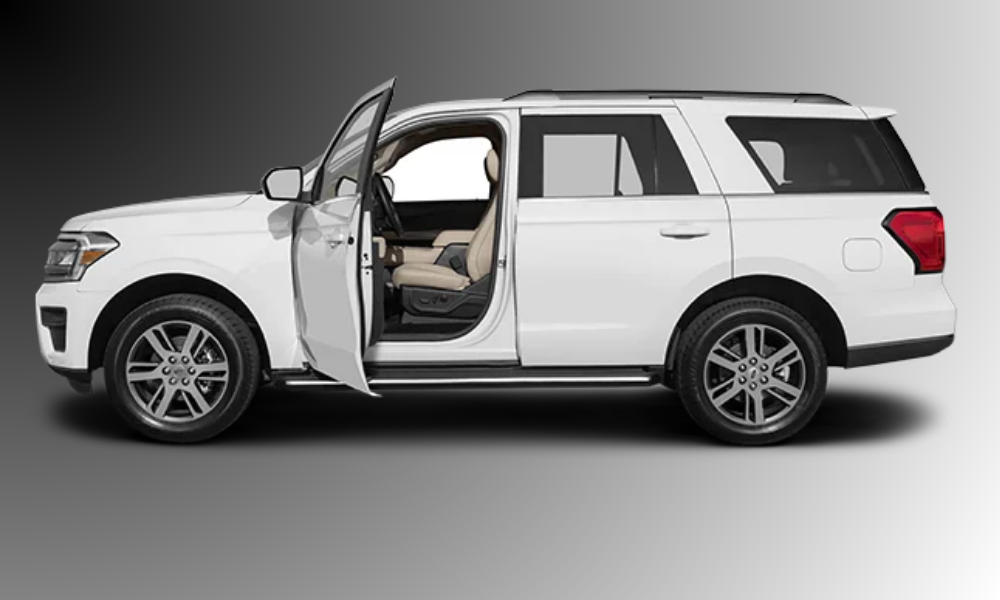
Fuel efficiency: Ford Expedition
The standard rear-drive Ford Expedition model, which achieves 17 mpg in the city, 23 mpg on the interstate, and 19 mpg overall, is the most economical. These figures are somewhat lower with all-wheel drive, coming in at 16 mpg in the city, 22 mpg on the interstate, and 18 mpg overall. The least efficient Timberline variant has combined fuel economy ratings of 17 mpg, 19 mpg on the interstate and 16 mpg in the city. The Max with four-wheel drive loses two mpg on the interstate and one mpg overall.
Regarding fuel efficiency, the capable V6 in the Expedition trumps the standard 5.3-liter V8 in the Chevrolet Suburban. The EPA estimates its fuel economy to be 15 mpg in the city, 20 mpg on the highway, and 17 mpg overall. The Jeep Grand Wagoneer’s most efficient version achieves combined fuel economy ratings of 17 mpg, 20 mpg on the road, and 14 mpg in the city.
If you’re exploring more in-depth reviews across segments, CarDrav offers a wide range of detailed guides that help you compare everything from compact crossovers to performance SUVs and next-generation EVs. Many readers continue with the updated 2025 Hyundai Tucson, the expressive 2025 Alfa Romeo Tonale, or the refined 2026 Buick Encore GX. Families often look toward the spacious 2025 Chrysler Pacifica, while performance-oriented shoppers gravitate to the powerful 2025 BMW Alpina XB7 or the sporty 2026 Acura MDX Type S. Those considering smaller SUVs frequently explore the stylish 2025 Nissan Kicks, the electric sophistication of the 2025 Audi A6 Sportback e-tron, or the balanced 2026 Honda Civic Sedan. Electrified and hybrid options like the 2025 Mitsubishi Outlander PHEV, the efficient 2026 Toyota RAV4, and the luxury-focused 2025 Lexus RX also attract strong interest.
Shoppers comparing sedans and premium models often check the 2026 Cadillac CT5, the hybrid-minded 2026 Ford Escape Plug-in Hybrid, or the ever-popular 2026 Tesla Model Y. Performance enthusiasts may enjoy diving into the commanding 2026 BMW X6 M, while future-focused readers explore Toyota’s electric direction in the 2026 Toyota bZ. Value-seekers frequently turn to the 2025 Chevrolet Trax, and three-row SUV buyers study the 2026 Kia Telluride. If innovation or alternative powertrains interest you, the hydrogen-powered 2025 Toyota Mirai offers a unique look at emerging technology. Compact luxury shoppers often continue with the 2025 Audi A3, those exploring new EV brands review the 2025 Vinfast VF 9, and drivers looking for a balanced luxury-compact experience usually examine the 2025 Acura ADX.
Safety & Driver Support
Ford includes a long list of essential safety equipment and offers several enhancements despite the Expedition not having recently undergone crash testing. Ford’s BlueCruise, a hands-free driving assistance that operates on highways and other major routes in North America, is an option for the Expedition.
Many of the Expedition’s rivals also don’t have current crash test results, but this just shows how hard it is to test every make and model, not a reflection of how safe they are. The majority come standard with the same safety features, and some may be ordered with other types of hands-free driving assistance, such as the GMC Yukon, which can be called GM’s Super Cruise system.
Comfort & Room:
There is plenty of room, and Ford cleverly arranged the large Expedition interior. The seats up front are comfortable, deep, and well-padded. Top embellishments include heating or ventilation as well as soft, lush leather. Although the captain’s chairs are more shaped and supportive, second-row passengers still have plenty of room and may choose from any of the two seating choices that give excellent comfort. The Max increases space in every area, and the third-row seats suit adults.
It has somewhat larger third-row legroom (36.1 inches) than Chevy and GMC (36) and higher second-row legroom (42.6 inches) than the Suburban (42). Although the Expedition’s front bucket seats are notably roomier than the Jeep’s, the Wagoneer and Grand Wagoneer also provide somewhat superior space in the rear rows. Others, like the Chevy Tahoe, which is almost similar to the Expedition, are significantly closer regarding seating capacity. However, the Tahoe does have a larger cargo area.
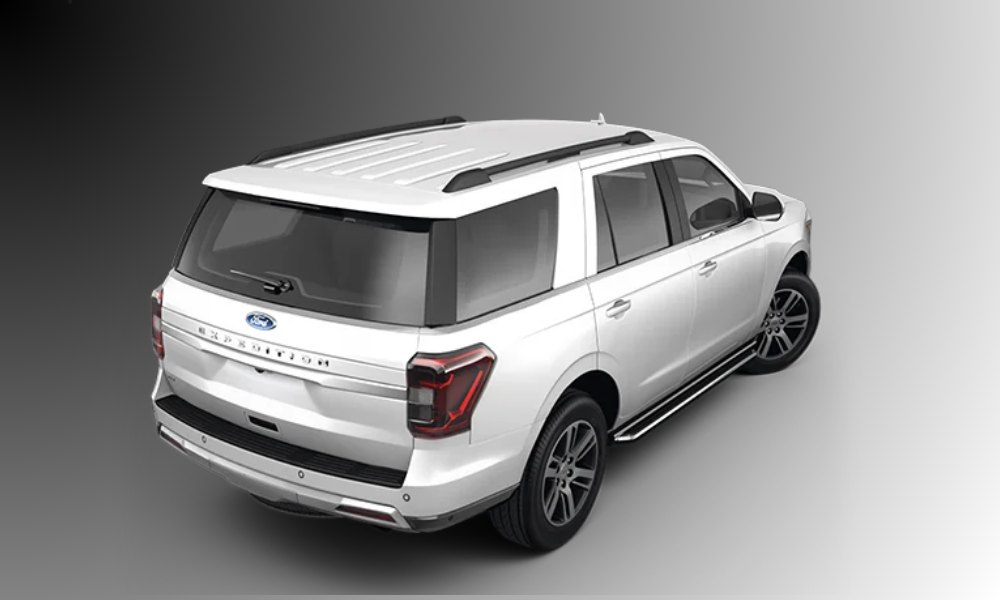
Infotainment: Ford Expedition
Ford provides a sizeable 15.5-inch touchscreen that debuted on the electrified Mustang Mach-E and a 12-inch touchscreen that comes standard. Both options offer snappy navigation and clear images, so there is no incorrect decision. One of the finest user interfaces is Ford’s Sync infotainment system, which offers clear menus and fantastic functions. There is a larger screen version of the most recent Sync 4A. Bluetooth, SiriusXM radio, HD radio, wireless Apple CarPlay, Android Auto, and more are all standard.
A 22-speaker Bang & Olufsen music system is also offered, with eight USB ports spread around the cabin and an ai-Fi hotspot. The top three models also have a rear-seat entertainment kit for families with children in the back seats.
Jeep provides its Uconnect infotainment system, one of the few on the market that can surpass Ford’s Sync, for the Wagoneer and Grand Wagoneer. The most recent design is less annoying, easier to navigate, and more straightforward.
Storage & Cargo Space:
The standard Expedition has a maximum volume behind the third-row seats of 20.9 cubic feet, a total volume behind the second-row seats of 63.6 cubic feet, and a massive book with all seats folded flat of 104.6 cubic feet. The Expedition Max, which increases those figures to 36, 79.6, and 121.5, is an option for buyers.
Even with those figures, the Expedition is outperformed in cargo space by several of its main competitors. The Tahoe provides 123 cubic feet of space when all seats are folded, while the Wagoneer gives 117 cubic feet. Although the Expedition Max competes with those two SUVs, the base model is much less spacious in some crucial areas.
Design: Ford Expedition
There’s no doubting the Expedition’s age, but Ford has made updates and new models throughout the years to help keep it fresh. Customers looking for the most cutting-edge style won’t be happy with the Expedition since it isn’t as angular or striking as its Jeep and General Motors competitors. The same is true inside, where there are more harsh plastics and pieces with a poor appearance than there ought to be in an SUV priced at about $50,000.
Is the 2023 Ford Expedition Worth it?
The most sought-after full-size SUV from Ford is not inexpensive. For the Expedition’s benefit, its rivals may become even more costly. Nevertheless, with a few extras and the more extended Max configuration, the Ford quickly surpasses $90,000. The basic XL begins with rear-wheel drive at $54,155 (fees not included). The Limited trim starts at slightly over $68,000 and has enough luxury features to accomplish the job without seeming wildly pricey, so that’s our choice. It goes up to $59,190 for the XLT. The price for the most opulent trims increases to $78,115 for King Ranch and $80,565 for Platinum. The starting price of the Timberline with just four wheels is $71,110.
The lengthier Max, which begins at $62,190 in rear-drive and tops out at $83,565 at the start, is an option for those who want extra room for passengers and cargo. An additional $3,000 is added for all-wheel drive.
The Jeep Wagoneer starts more costly than the Expedition at under $61,000, but it provides a more up-to-date, luxurious ride. It’s also simple to push the price beyond $90,000, but at that level, the Jeep offers far more technology and a luxurious interior that the Expedition lacks.
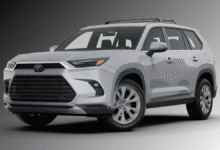
How Much Does a 2023 Ford Expedition Insurance Cost?
The cost of insurance for the 2023 Ford Expedition is comparable to most of its competitors. Although this figure covers all 50 states, a typical 30-year-old female driver with a clean record should anticipate an average yearly premium that rises to almost $2,400. The starting price for a Jeep Wagoneer is $2,400, while the starting price for a GMC Yukon and Chevrolet Suburban are $2,300 and $2,170, respectively.
Ford Expedition models
Fourth Generation
2018 to Present
For the 2018 model year, the Expedition’s fourth generation was unveiled. Its body was made of aluminium, similar to the Ford F-150 truck. Despite being heavier than the previous, aluminium construction helped minimize it. Compared to the previous model, its dimensions rose, and it was available in an expanded length.
Third Generation
2007 to 2017
An updated interior arrived with a motorized liftgate, upmarket centre stack, and optional navigation. It kept the same 5.4-liter V8 engine from the last generation but eventually got a new 3.5-liter turbocharged V6 that generated 365 horsepower instead of the V8’s 300 horsepower. It had a six-speed gearbox attached to it.
Second Generation
2003 to 2006
The second-generation Expedition’s look and handling were improved, but the V8 engines and four-speed gearbox remained the same. Both an updated trim walk and an independent rear suspension were included.
First Generation
1997 to 2002
When the Expedition debuted in 1997, it was designed for customers who desired the seating, storage, and towing capacity of full-size SUVs without the enormous size. A front-row bench could accommodate nine passengers and was offered with 4.6- and 5.4-liter V8 engines.
Verdict
The 2023 Ford Expedition puts up a good fight against older and more wealthy competitors in the vast SUV market, but its high price and poor fuel efficiency don’t help matters much. Still, the large Ford is a good option for hauling and transporting passengers. However, as the price rises, buyers become less tolerant of its flaws, and at higher price ranges, an SUV from Jeep, Chevrolet, or GMC is preferable.
If you’re exploring more options from the 2022 and 2023 SUV market, CarDrav offers a rich set of in-depth reviews that help place the BMW X7 within a broader context. Full size shoppers can take a closer look at alternatives such as the 2022 GMC Yukon and the 2022 Nissan Armada, both offering strong capability and three-row versatility. Drivers who prefer more rugged, off-road-oriented options may find the 2022 Toyota 4Runner appealing for its durability and proven reliability in demanding conditions.
For families seeking refinement and balanced utility in a midsize package, reviews of the 2022 Cadillac XT6, 2023 Chevrolet Traverse, and 2022 Ford Edge provide helpful comparisons. Cross shoppers who want to explore newer electric or tech-forward SUVs can also learn from models like the 2023 Nissan Ariya, 2023 Chevrolet Bolt EUV, and the 2023 Honda Passport, each offering a different take on efficiency, comfort, and everyday practicality.
Those comparing lifestyle-focused SUVs may also find the 2023 Nissan Kicks, 2023 Nissan Murano, 2023 Ford Explorer, and 2023 GMC Acadia useful when evaluating what matters most in space, technology, and driving character. Altogether, these reviews create a clearer understanding of how the BMW X7 fits into the modern luxury SUV landscape and where competing models may serve different needs and priorities.