Consider engine oil as inexpensive insurance. Regular oil changes prevent carbon and sludge from building up, improving engine life. It makes sense to protect against thousands of dollars in damage for the comparatively little expense of oil changes, but what makes one engine oil superior to the others?
Oil forms a protective layer between an engine’s rotating or moving elements, which occur hundreds of times per minute. An engine oil’s unique additives protect with the least resistance in an ultra-thin environment where every molecule counts. Power and fuel efficiency increase when drag on the engine’s moving components decreases. The longer the oil is chemically stable, the longer it will be able to ward off friction efficiently.
Each oil company claims to safeguard its patented chemical formulae longer, better, and over various environmental conditions while keeping them a tightly guarded trade secret. The one that is best for your car might differ just as much since various engines, driving styles, and vehicle uses need multiple fixes. We selected five exceptional engine oils renowned for offering cost-effective, dependable protection. Each is appropriate for a particular service.
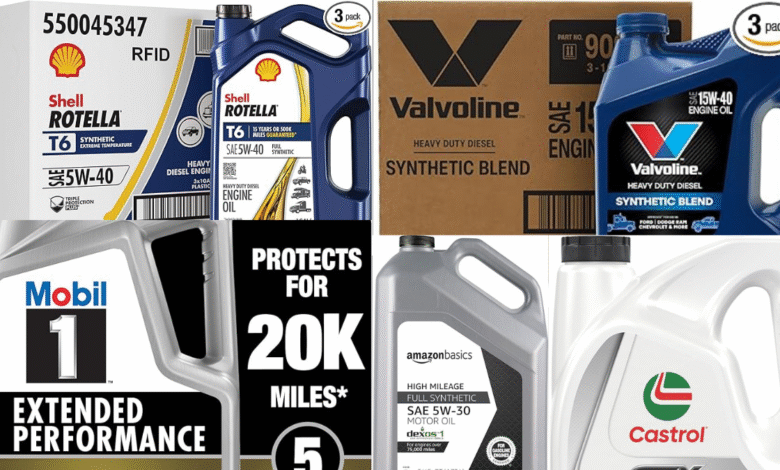
Mobil 1 Extended Performance
Mobil 1 is the industry standard for synthetic motor oils. Mobil 1 has long been the recommended factory fill for high-performance engines because of its reputation as a detergent. Under ideal driving circumstances, the Extended Performance formulation protects up to 20,000 kilometres. As demand has grown, prices have progressively decreased, making Mobil 1 Extended Performance our top pick for engine oils that provide the most outstanding value overall.
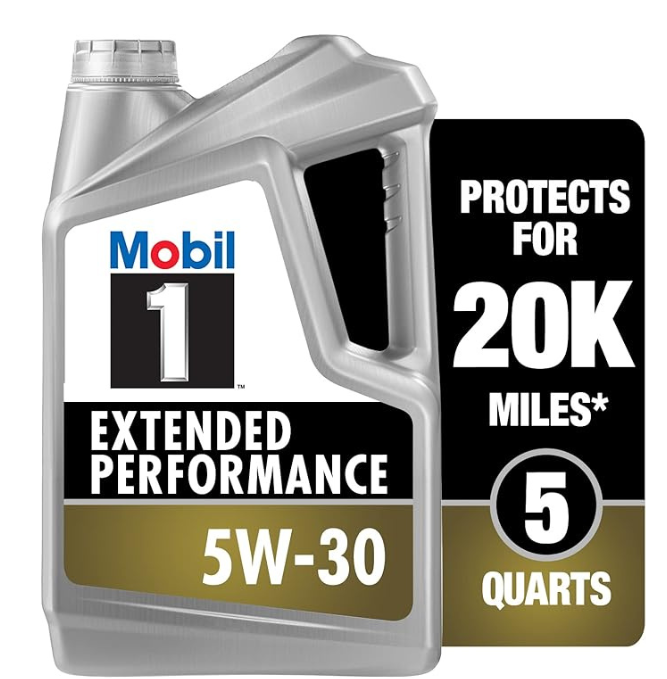
AmazonBasics Full Synthetic High Mileage Motor Oil
Yes, Amazon does market its synthetic engine oil, and most customers find it a reasonable option. Although it isn’t a well-known brand name, most viscosities supplied under Amazon’s label meet the DexOS standard developed by General Motors. DexOS-rated oils fulfil a wide range of technical criteria. They are subject to quality control, so many automakers have chosen this standard to prove an engine oil’s protective and detergent qualities. To ensure the oil satisfies this requirement, check the bottle’s front for the DexOS emblem before placing your purchase. We only advocate oils with a DexOS rating.
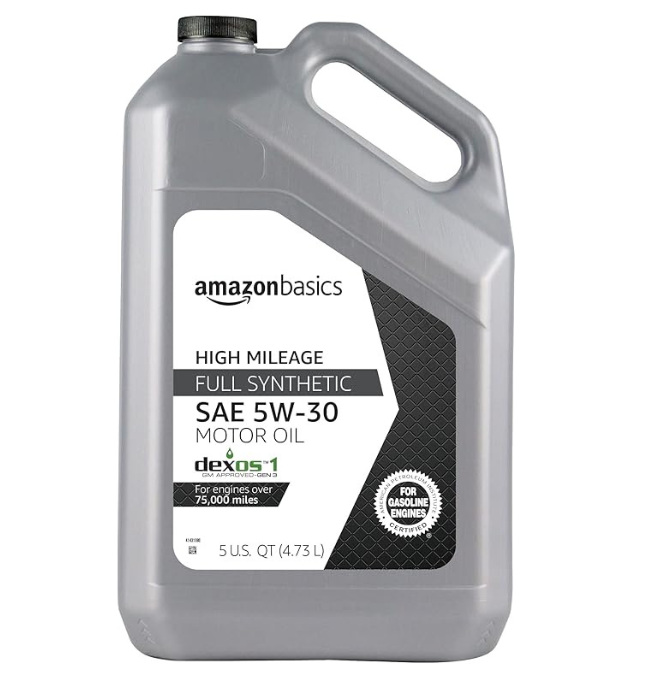
Castrol GTX
Keep in mind that certain engines are still better suited to traditional oils even when the price of synthetic oil approaches that of conventional oil. The particular additives included in traditional oils may be required by older cars or engines that have used conventional oil for hundreds of thousands of kilometres to stop seal leaks. Traditional oil is necessary for rotary engines, and Mazda expressly advises against using synthetic oil in vehicles like the RX-7 and RX-8. High-quality conventional oil like Castrol GTX keeps older engines running smoothly and burns rather cleanly when it does reach the combustion chamber due to worn rings or seals, preventing early fouling of the spark plugs.
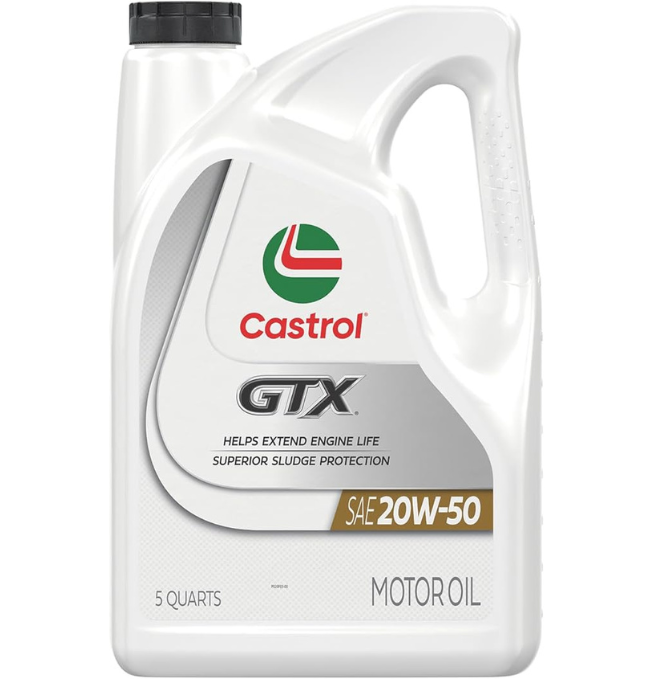
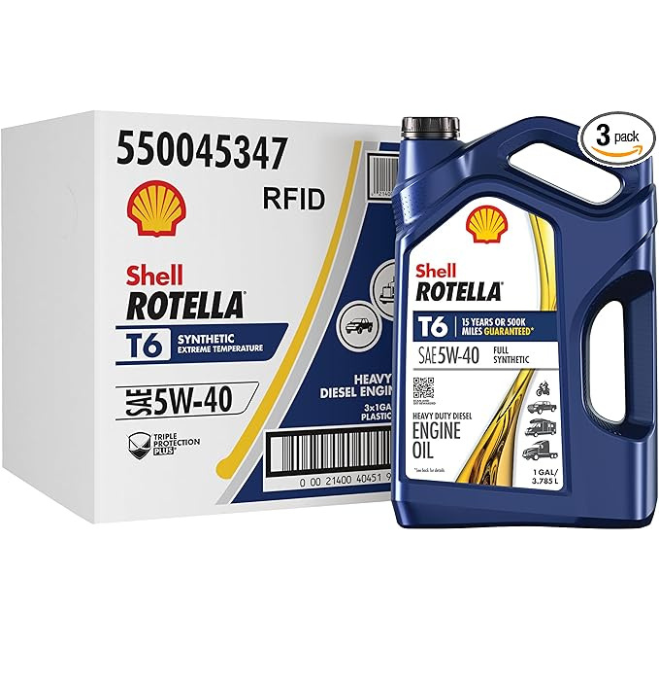
Shell Rotella T6 Diesel Engine Oil
Whether a truck pulling hefty cargo or a long-range diesel automobile travelling for hours without stopping, diesel engines often put in more effort and work longer than their gasoline equivalents. Choosing a high-quality oil is essential since prolonged heat cycles, longer service intervals, and the sheer cost of a diesel oil change make it necessary. Shell Rotella is less prone to leak from worn seals or older engines because it has a greater pour point than some other oils, which is the temperature at which the oil loses its flow characteristics. One piece of advice: For vehicles that need significant numbers, purchasing individual gallons may be less expensive than purchasing a bulk three-gallon bundle.
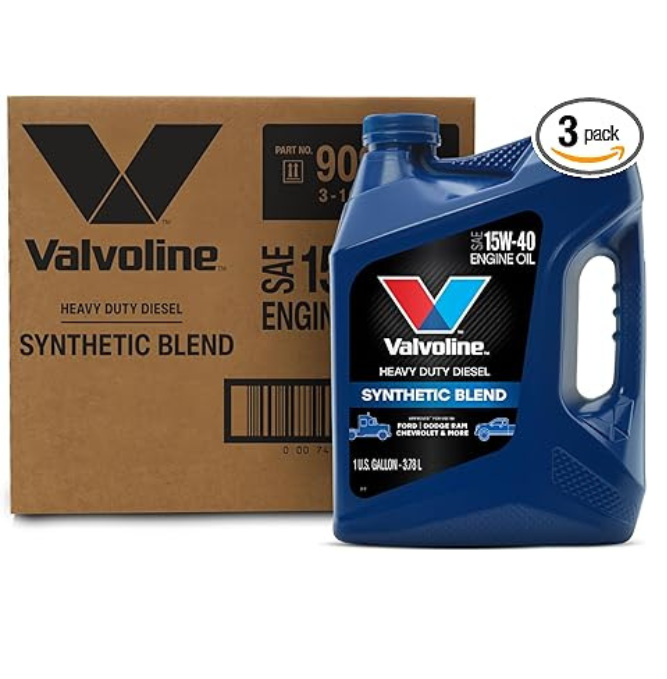
Valvoline Heavy Duty 15W-40 Diesel Oil (3 x 1 Gal)
This Heavy-Duty Synthetic Blend Engine Oil is formulated with advanced additive technology to provide critical component protection under extreme operating conditions and temperatures. It delivers up to 35% better wear protection compared to the industry standard, proven through rigorous Cummins ISB engine testing.
Superior Wear Protection: 35% better performance versus standard oils, extending engine life and reliability.
Extended Oil Life: Designed to maintain optimal viscosity and performnce even in high-heat, high-load conditions.
Advanced Additive System: Controls wear, deposits, and oil breakdown for cleaner, smoother engine operation.
Emission System Compatibility: Meets low-emission requirements, helping engines stay compliant and efficient.
Engine Longevity: Proven formulation that maximizes diesel engine life and reduces maintenance downtime.
.
Conventional vs. Synthetic Oil
Crude oil is the precursor of both synthetic and conventional oil. To reach the necessary viscosity range, conventional oils employ additives, but when these chemicals degrade, the oil’s capacity to adjust to changing temperatures is reduced. To generate synthetic oils, crude oil is broken down at the molecular level and rebuilt with a certain intrinsic and homogeneous structure that almost precludes degradation. However, since engine oil naturally absorbs dangerous contaminants like dirt, carbon, and metal shavings, replacing the oil and filter regularly is crucial.
Compared to regular oil, synthetic tends to last longer. Cost used to be synthetic oil’s primary drawback, but since synthetic oil has become standard in the majority of new contemporary automobiles, costs have decreased. Although synthetic oil typically outperforms traditional oil in terms of engine protection and chemical stability, it doesn’t burn as well if it enters the combustion chamber, which may happen in older cars with worn seals or piston rings. Synthetic oil is thinner than traditional oil and may travel more readily through already-existing worn seals or leaks, which might worsen the underlying problems even if it doesn’t cause seals to deteriorate.
How often should my oil be changed?
Always abide by the instructions provided in the owner’s handbook by the vehicle’s manufacturer. Even with extended performance oils, manufacturers can revoke a vehicle’s engine warranty if the maintenance plan is not adhered to. It’s crucial to routinely check the oil level at the dipstick to keep track of the oil level and colour since many engines continue to use oil between oil changes. When in doubt, err on caution since oil changes are affordable insurance against inexpensive problems.
What kind of oil is recommended for ancient or high-mileage engines?
Engine oils with high mileage formulas of the conventional, synthetic mix, and full synthetic have compounds that may condition seals, assisting in preventing leaks, and additives that can combat sludge. Piston rings and other internal parts may seize up as engines age. High mileage oil mixes with special detergent packages keep engine parts moving easily, boosting oil flow and extending engine life.
Can I combine synthetic and regular oil?
In a pinch, yes. Topping up with synthetic oil is acceptable when the corresponding oil is unavailable since they are compatible with traditional oils. It is best to choose synthetic or traditional oil and stay with it owing to variations in additives that may interact with one another. Over time, synthetic and traditional oil mixtures may produce varnish or sludge.
Can I use an oil viscosity other than the one suggested by the manufacturer?
Every engine manufacturer recommends a certain brand and viscosity called the oil weight. A lesser-weight oil than the manufacturer recommends will not adequately protect against wear, while a higher-weight oil than recommended will put too much strain on internal engine components. Using the engine oil recommended by the car manufacturer for your environment and use is advisable since both may result in costly repairs.