The 2026 Mazda CX-90 PHEV blends the upscale refinement and driver-focused character of the standard CX-90 with the added efficiency of a plug-in hybrid powertrain. It stands out in a segment where electrified options remain relatively limited, giving it a unique position among midsize three-row SUVs. Mazda has clearly aimed to deliver a vehicle that doesn’t force buyers to choose between premium comfort and forward-looking efficiency.
Inside, the CX-90 PHEV carries the same near-luxury cabin experience that defines the lineup, with high-quality materials, thoughtful design, and a layout that feels more tailored than many rivals in this class. On the road, it retains the brand’s signature athletic feel, offering a level of engagement that’s often missing from larger family SUVs. Steering is precise, and the chassis feels composed, making it more enjoyable to drive than most competitors.
However, the plug-in hybrid system introduces a trade-off. While it delivers improved fuel efficiency and the ability to drive short distances on electric power alone, its power delivery lacks the refinement expected at this level. Transitions between electric and gasoline power can feel less seamless, especially when compared to the exceptionally smooth and responsive inline-six engine found in the standard CX-90. As a result, drivers who prioritize performance and fluid acceleration may find themselves wishing for the more polished experience offered by the non-hybrid version.
Pros
- Strong power and confident, sporty handling for a three-row SUV
- Smooth and comfortable ride, especially on highways
- Refined, premium-leaning interior with high-quality materials
- Better fuel economy than most competitors in its class
Cons
- Cargo space is below average compared to rivals
- Third-row seating is tight and best for occasional use
- Noticeable delay in power response under hard acceleration
- Infotainment system feels outdated with limited touchscreen use
What’s New
- Preferred trim now comes with more standard features
- Expanded seating options, including wider availability of second-row bench
- Turbo S Premium Sport replaces the previous Turbo S Premium trim
- Continues as part of the first CX-90 generation introduced in 2024
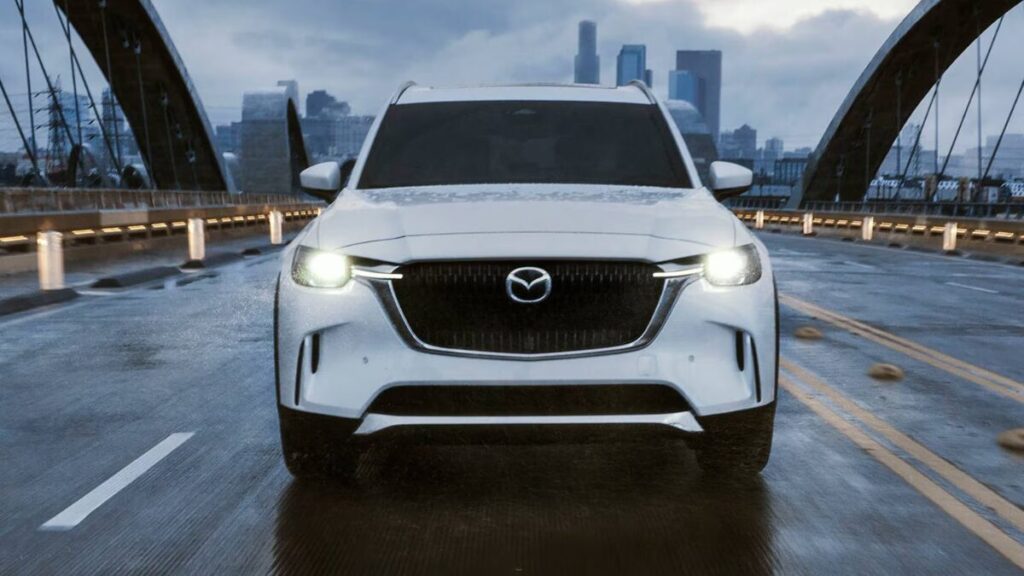
Overview
The 2026 Mazda CX-90 positions itself as a compelling alternative for buyers who want a near-luxury experience without stepping into the higher price brackets of established premium brands. It manages to bridge the gap between mainstream and luxury segments by offering a more refined driving character and upscale feel, while still maintaining a relatively accessible price point. This balance makes it particularly appealing for buyers who want something more distinctive than the typical family SUV.
On the road, the CX-90 delivers a driving experience that leans more toward engagement than most vehicles in this category. It feels composed and confident, with a sense of control that isn’t always present in larger three-row SUVs. At the same time, it doesn’t sacrifice everyday usability, maintaining a smooth and compliant ride that works well for daily commutes and longer trips alike. This dual character is one of its strongest qualities, giving it a personality that stands out in a crowded segment.
However, this approach comes with a noticeable compromise. Compared to many of its competitors, particularly those from non-luxury brands, the CX-90 places less emphasis on maximizing interior space. The third row is more limited in size, and overall cargo capacity falls short of what some buyers may expect from a vehicle in this class. For individuals or smaller families, this may not be a significant concern. But for those who prioritize maximum passenger space and storage flexibility, it could be a deciding factor when comparing alternatives.
Diverse powertrain choices
One of the standout aspects of the 2026 Mazda CX-90 lineup is the variety of powertrain options available, giving buyers the flexibility to choose what best suits their driving priorities. Whether the focus is on traditional performance, enhanced efficiency, or a balance of both, Mazda has structured the CX-90 range to cover a wide spectrum of needs.
At the core of the lineup is the 3.3 Turbo model, which features a turbocharged 3.3-liter inline-six engine producing 280 horsepower and 332 lb-ft of torque. This setup delivers smooth and consistent power, making it well-suited for everyday driving while still offering enough strength for highway merging and passing. For those seeking a more spirited driving experience, the Turbo S variant takes things a step further. Using the same inline-six foundation, it increases output to 319 horsepower and 369 lb-ft of torque on regular fuel, with even stronger performance when using premium gasoline. The result is a noticeably more responsive and energetic character without sacrificing refinement.
For buyers who prioritize efficiency, the plug-in hybrid variant introduces a different approach. The CX-90 PHEV combines a turbocharged four-cylinder engine with an electric motor system, delivering a total output of 323 horsepower and 369 lb-ft of torque. This setup allows the vehicle to operate on electric power alone for short distances, with an estimated range of up to 25 miles on a full charge. For daily commutes or short city trips, this can significantly reduce fuel consumption and running costs. Once the battery is depleted, the system seamlessly transitions into hybrid operation, allowing the vehicle to function much like a conventional hybrid SUV.
However, the hybrid system is not without its drawbacks. While the concept is appealing on paper, the execution falls short in terms of refinement. The transition between electric and gasoline power can feel abrupt and less polished than expected, particularly when compared to more established hybrid systems in the market. This lack of smoothness slightly undermines the otherwise strong appeal of the PHEV, especially for drivers who value a consistently refined driving experience.
Competitors to consider
The 2026 Mazda CX-90 PHEV occupies a somewhat unique position in its segment, which makes direct comparisons a bit more nuanced. For buyers specifically interested in a hybrid three-row SUV, options remain relatively limited. Toyota is one of the few brands offering strong alternatives, particularly with the Toyota Highlander and the larger Toyota Grand Highlander. The Grand Highlander stands out by offering two hybrid configurations, one focused on maximizing fuel efficiency and another designed to deliver a more balanced mix of power and economy, giving buyers more flexibility depending on their priorities.
For those who are drawn to the CX-90’s upscale feel but aren’t necessarily focused on electrification, there are compelling choices in the mainstream segment. Models like the Hyundai Palisade and Kia Telluride have built strong reputations for delivering a near-luxury experience at a competitive price point. Both offer spacious interiors, user-friendly technology, and a focus on comfort that appeals to families looking for practicality without sacrificing refinement.
On the other hand, if driving engagement is a top priority, the Acura MDX becomes a natural alternative. It leans more heavily into performance and driver involvement, while still maintaining a premium interior and a price that remains more accessible than many European luxury SUVs. This makes it a strong option for buyers who want a more dynamic driving experience without moving into significantly higher price brackets.
if you’re exploring more options across the 2025 and 2026 model years, there’s a wide selection of detailed reviews that might catch your attention. You can start with the performance-focused 2026 Acura MDX Type S or take a closer look at the stylish and practical 2025 Nissan Kicks. EV shoppers will appreciate in-depth coverage of models like 2025 Audi A6 Sportback e-tron, 2026 Tesla Model Y, and the compact electric newcomer 2026 Kia EV3.
For drivers seeking dependable everyday comfort, strong choices such as 2026 Honda Civic Sedan, 2025 Mitsubishi Outlander PHEV, and the refined 2026 Toyota RAV4 offer plenty to consider. Luxury enthusiasts can explore the craftsmanship behind 2025 Lexus RX, while those craving performance might gravitate toward the athletic 2026 BMW X6 M.
Additional highlights include the forward-thinking 2026 Toyota bZ, the value-friendly 2025 Chevrolet Trax, and the versatile 2026 Kia Telluride with its full trim breakdown. European-inspired options appear through models like 2025 Vauxhall Frontera Hybrid and the sophisticated 2025 Audi A3. You’ll also find unique perspectives on vehicles such as 2025 Vinfast VF 9, the compact-luxury 2025 Acura ADX, and the hydrogen-powered 2025 Toyota Mirai. Altogether, this collection offers a broad look at what today’s market has to offer, helping you discover the right fit for your driving needs.
Driving experience
How does the 2026 Mazda CX-90 PHEV feel from behind the wheel? In many ways, it stays true to Mazda’s reputation for building SUVs that are more engaging to drive than most in their class. Despite its electrified setup, this plug-in hybrid delivers performance that closely matches the standard CX-90, offering strong acceleration when both the gasoline engine and electric motor are working together. In testing, it reaches 60 mph in just 6.6 seconds, which puts it ahead of many V6-powered competitors and gives it a confident edge in everyday driving situations.
However, the experience changes noticeably when relying solely on electric power. In EV mode, acceleration is significantly more relaxed, taking around 14.8 seconds to reach 60 mph. This makes it well-suited for calm city driving but less ideal when quick responses are needed. In fact, the slower acceleration often encourages drivers to press the throttle harder, which in turn brings the gasoline engine into play. This transition, while functional, isn’t always as smooth as expected, and can feel slightly abrupt at times, particularly at lower speeds.
When operating in hybrid mode, the CX-90 PHEV strikes a more balanced character. It has enough power on tap to handle highway merging and overtaking with ease, and it rarely feels underpowered in real-world conditions. That said, some refinement issues remain noticeable. Gear changes at lower speeds can feel less polished compared to when the engine is already fully engaged, which slightly detracts from the otherwise composed driving experience.
Where the CX-90 truly shines is in its handling. Even in PHEV form, it feels more controlled and responsive than most three-row SUVs. The steering is well-weighted and accurate, giving the driver a strong sense of connection to the road. Body roll is kept in check through corners, and the vehicle maintains a planted, confident stance even when pushed harder than expected for a family SUV. Braking performance is strong overall, though the pedal can feel overly sensitive, requiring a bit of adjustment to achieve smooth stops.
Ride quality is another highlight. Despite the added weight of the hybrid system, the CX-90 PHEV remains composed and comfortable over a variety of road surfaces. It absorbs imperfections effectively without feeling overly soft, maintaining a balance that suits both daily commuting and longer trips.
Visibility is generally good, making the vehicle easy to place on the road. However, the long hood can make tight parking situations slightly more challenging until you get used to its dimensions. On the technology side, driver assistance features come standard and are well-executed. Systems like adaptive cruise control, lane-keeping assistance, and blind-spot monitoring work reliably, with the adaptive cruise control in particular standing out for its smooth and consistent behavior compared to some competitors.
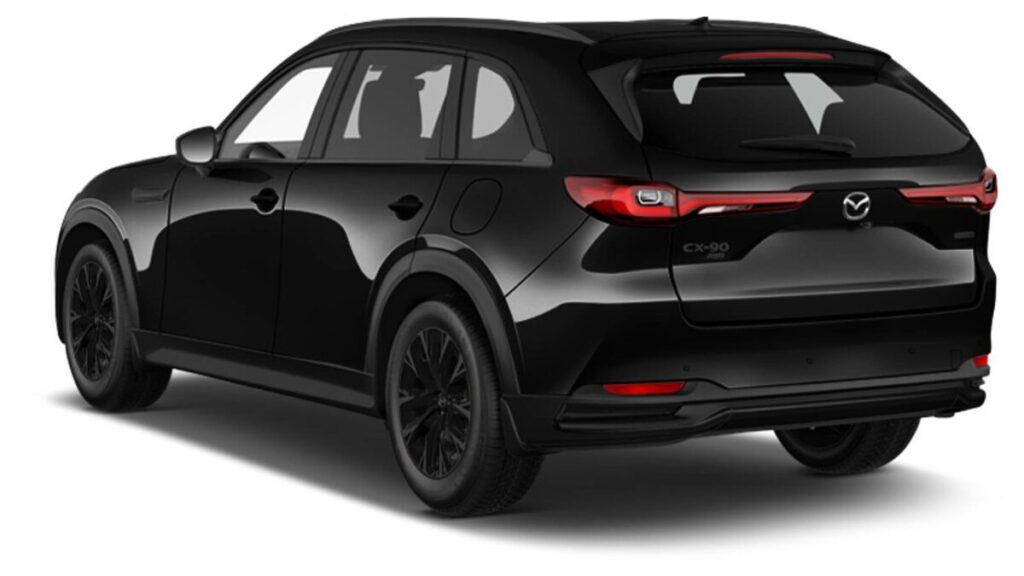
Comfort
How comfortable is the 2026 Mazda CX-90 PHEV in daily use? Overall, it delivers a solid level of comfort, though not without a few compromises that become more noticeable over longer drives. The front seats are supportive and well-shaped, offering a comfortable position for most drivers during typical commutes and shorter trips.
However, on extended journeys, some may find the seat design slightly narrow, which can lead to occasional adjustments to maintain long-term comfort.
It’s not a dealbreaker, but it’s something drivers with broader builds may want to pay attention to during a test drive.
Cabin quietness is generally well-managed, especially when it comes to wind noise, which remains minimal even at highway speeds. That said, road and tire noise are more noticeable than expected in a vehicle that leans toward a premium experience. This slightly reduces the sense of isolation you might expect from a near-luxury SUV, particularly on rougher road surfaces. As for the powertrain, the four-cylinder engine in the PHEV doesn’t deliver the same smooth and refined sound as the inline-six found in other CX-90 variants. Fortunately, this is mostly noticeable under heavy acceleration, while everyday driving remains relatively subdued.
Visually and physically, the cabin creates a strong impression. Materials look and feel upscale, with soft-touch surfaces and a clean, well-organized layout that reinforces Mazda’s push toward a more premium identity. Beyond aesthetics, usability is also a strong point. The presence of physical buttons for key controls such as climate and audio functions makes everyday interaction simple and intuitive. Everything is clearly labeled and easy to reach, which enhances overall convenience, especially while driving.
In terms of passenger space, the CX-90 PHEV offers flexibility with seating configurations for either seven or eight occupants, depending on the trim. However, space in the second and third rows doesn’t quite match the roominess offered by some competitors. While passengers won’t feel cramped in normal use, those who prioritize maximum legroom and the ability to stretch out on longer trips may find alternatives like the Hyundai Palisade or Volkswagen Atlas more accommodating.
For families, practicality remains a strong point in certain areas. The rear doors open wide, making it easier to access the second row and install child seats without unnecessary hassle. This small but important detail adds to the overall usability of the vehicle, especially for those with younger children.
In-cabin tech
How does the technology inside the 2026 Mazda CX-90 PHEV hold up in everyday use? At first glance, the cabin presents a clean and modern look, highlighted by a slim, low-profile center display that blends neatly into the dashboard design.
On higher trims, a fully digital instrument cluster adds to the upscale feel, offering sharp graphics and a layout that’s easy to read at a glance. One standout detail is the unique visual presentation in Sport mode, which gives the gauges a more dynamic and engaging appearance without becoming distracting.
Audio performance is another area where the CX-90 aims to elevate the experience. The available 12-speaker Bose sound system delivers decent overall quality, with balanced output across different types of music. However, it doesn’t quite reach the level of clarity or richness you might expect from a premium-branded system right out of the box. Getting the best sound often requires some manual adjustment through the settings, which may not appeal to users looking for a more plug-and-play experience.
Where the CX-90 begins to show its age is in the infotainment interface itself. The system’s native design feels somewhat dated compared to newer, more visually engaging interfaces found in competitors. Interaction is handled primarily through a rotary control knob located on the center console. While the knob is well-built, nicely weighted, and gives a premium tactile feel, it may not suit everyone’s preferences, especially for those accustomed to direct touchscreen input.
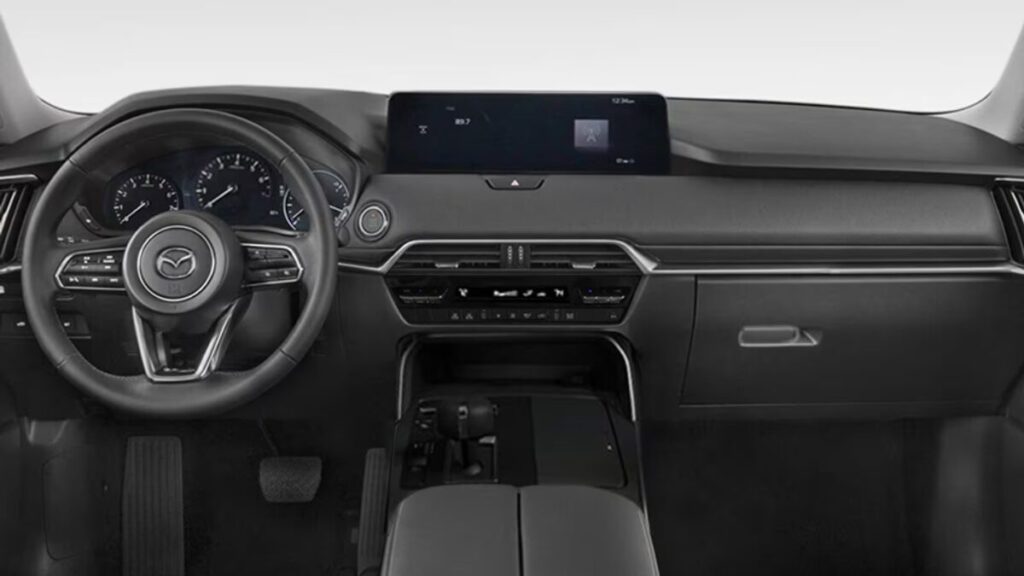
Interestingly, touchscreen functionality is available, but only when using smartphone integration features like Apple CarPlay and Android Auto. This creates a slightly inconsistent user experience, where the system feels more intuitive in some situations than others. Additionally, the position of the screen, set further away from the driver, reinforces Mazda’s intent to minimize distraction but also makes touch interaction less practical even when it is available.
Buying Tips for the 2026 Mazda CX-90 (April 2026)
If you’re planning to buy the 2026 Mazda CX-90, timing and negotiation strategy can make a noticeable difference in the final price. Based on current market data from Cardrav, there are several opportunities buyers can take advantage of to secure a better deal.
Expect Pricing Below MSRP
According to Cardrav True Market Value estimates, the CX-90 is currently selling for around 2.9% below its MSRP. In practical terms, that translates to potential savings of roughly $1,400 or more, depending on the trim and configuration. This gives buyers a solid starting point when negotiating, as paying full sticker price is often unnecessary in the current market.
High Inventory Means More Negotiation Power
Availability is another key factor working in the buyer’s favor. With more than 16,000 units currently in dealer inventory, supply is strong across most regions. This level of availability reduces pressure on buyers and gives you more flexibility to compare offers, negotiate pricing, and potentially secure better incentives from dealerships looking to move stock.
Take Advantage of Cash Incentives
Mazda is currently offering customer cash incentives that can reach up to $1,500 on select trims. In some cases, additional bonuses, such as a $500 incentive for military personnel, may also apply. These offers can be combined with negotiated discounts, further reducing the overall purchase price.
Look for Special Financing Offers
Financing deals can also play a major role in overall savings. Promotional APR offers may provide rates significantly below the market average, with potential savings equivalent to around 6% over the life of the loan.
Well-qualified buyers may even secure rates as low as 0.9% for a 60-month term, making financing a more attractive option than standard loans.
Leasing Remains a Viable Option
For those considering leasing instead of buying, the CX-90 remains competitively positioned. Typical lease deals currently average around $680 per month, with approximately $4,800 due at signing for a standard lease term. While exact figures vary by location and trim, these numbers provide a reasonable benchmark when evaluating lease offers.
Final Tip
As always, the best deal comes from combining multiple advantages, negotiating below MSRP, applying available incentives, and choosing the right financing option. Taking the time to compare offers across multiple dealers can easily save you thousands over the course of your purchase.
Storage & cargo
How practical is the 2026 Mazda CX-90 PHEV when it comes to storage and cargo space? One positive point right away is that the plug-in hybrid system doesn’t eat into cargo capacity, which is something that can’t always be said for electrified SUVs. The battery is well-integrated, allowing the CX-90 to retain the same general cargo layout as its non-hybrid counterparts.
That said, overall cargo space is still on the modest side for this segment. Behind the third row, you get up to 15.9 cubic feet of space, which is enough for a few grocery bags or smaller items but can feel limited for larger family needs. Folding down the third row expands capacity to 40.1 cubic feet, making it more usable for everyday hauling. With all rear seats folded, total cargo space reaches 75.2 cubic feet, which is decent but still falls short of larger and more space-focused competitors like the Honda Pilot، Kia Telluride، and Volkswagen Atlas.
Up front, storage solutions are functional but not particularly generous. There’s enough room for daily essentials such as phones, wallets, and small personal items, but the overall layout doesn’t maximize available space as effectively as some rivals do. The center console, in particular, feels shallower than expected given the size of the cabin, which slightly limits its usefulness for larger items.
For buyers who plan to tow, the CX-90 PHEV comes with a notable limitation. Its maximum towing capacity is capped at 3,500 pounds, which is relatively modest for a three-row SUV and no better than what’s offered by smaller models like the Mazda CX-50. This makes the plug-in hybrid version less suitable for heavier towing needs, and those with more demanding requirements may want to consider the non-hybrid variants instead.
Value
Is the 2026 Mazda CX-90 PHEV a good value? The answer depends largely on what you’re looking for in a three-row SUV. One of the biggest strengths of the standard CX-90 is its ability to deliver a near-luxury experience at a relatively accessible price point. However, the plug-in hybrid version shifts that equation slightly, as its pricing moves closer to established luxury competitors.
In fact, the CX-90 PHEV sits in a price range similar to models like the Acura MDX and Lincoln Aviator. While neither of these offers a plug-in hybrid setup, both deliver a more traditionally luxurious experience, along with stronger brand recognition in the premium segment. This makes the CX-90 PHEV a slightly tougher sell for buyers who prioritize badge prestige and a fully polished luxury feel.
That said, the CX-90 PHEV still holds a unique advantage in the market. For buyers specifically looking for a three-row SUV with plug-in hybrid capability, options are extremely limited. Alternatives like the Volvo XC90 Recharge do exist, but they come at a significantly higher price point. In this context, the Mazda becomes a more practical entry into electrified three-row ownership, offering a balance between cost and efficiency that few rivals can match.
To truly get the most value out of the CX-90 PHEV, regular charging is essential. Owners who consistently take advantage of its electric driving capability can reduce fuel costs and improve overall efficiency, making the higher upfront price easier to justify over time. Without frequent charging, however, much of the hybrid advantage is diminished.
When it comes to ownership costs, warranty coverage is fairly standard for the segment but doesn’t stand out. Competitors like Hyundai and Kia continue to lead in this area with longer and more comprehensive coverage. The CX-90 includes roadside assistance for three years or 36,000 miles, which is in line with expectations, but it does not offer complimentary scheduled maintenance, something that could have added extra appeal at this price point.
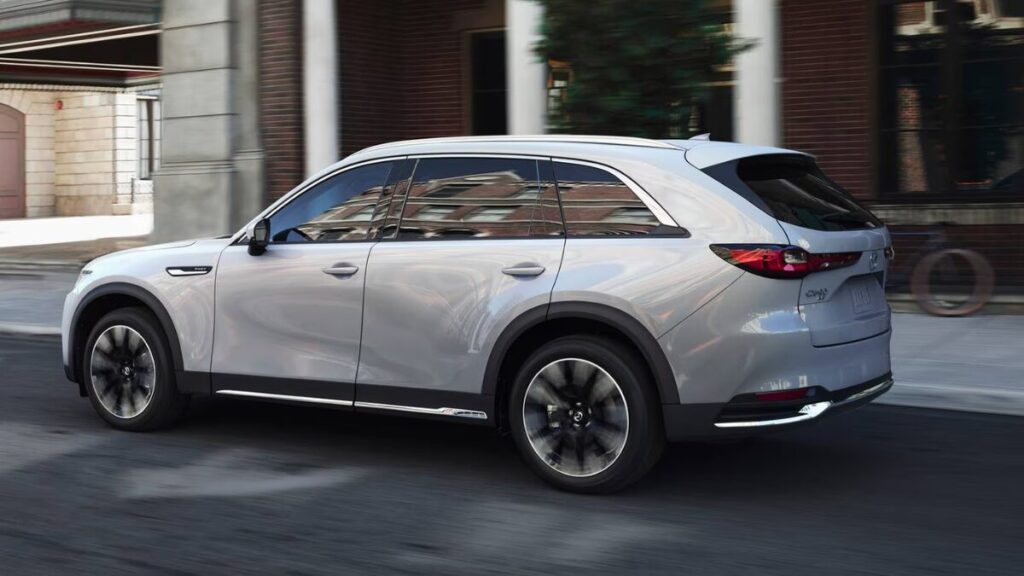
MPG & electric range
How efficient is the 2026 Mazda CX-90 PHEV in real-world use? According to EPA estimates, the plug-in hybrid delivers around 26 mpg in combined city and highway driving when operating in hybrid mode. This places it slightly ahead of many traditional three-row SUVs in terms of fuel economy, giving it a modest efficiency advantage in day-to-day driving. Based on real-world observations, this estimate holds up well, which adds a level of confidence for buyers who rely on official figures when comparing options.
However, the margin isn’t as large as some might expect. The standard gasoline-powered CX-90 achieves around 25 mpg combined, which means the difference in fuel economy is relatively small when the plug-in hybrid system isn’t being fully utilized. This highlights an important point: the real efficiency gains of the PHEV depend heavily on how it’s used.
The key advantage lies in its ability to drive on electric power alone. With an estimated all-electric range of about 27 miles on a full charge, the CX-90 PHEV can handle many short daily trips without using any gasoline at all. For drivers with predictable routines, such as commuting or running local errands, this can significantly reduce fuel consumption and lower overall running costs.
That said, maximizing this benefit requires consistency. Regular charging is essential to take full advantage of the electric range. Without it, the vehicle behaves more like a conventional hybrid, where the efficiency gains are far less pronounced. In other words, the CX-90 PHEV rewards disciplined use, but doesn’t dramatically outperform its gasoline counterpart if the battery is frequently left uncharged.
Wildcard
The 2026 Mazda CX-90 PHEV brings with it a set of core strengths that remain consistent across the lineup, regardless of powertrain choice. Its standout design, both inside and out, combined with a driving experience that leans toward engagement rather than pure isolation, gives it a distinct personality in a segment often defined by practicality alone. These qualities are not diminished by the addition of the plug-in hybrid system, and they continue to be key reasons why the CX-90 stands out.
However, the PHEV variant introduces a more complex equation. While it adds the promise of improved efficiency and short-distance electric driving, it doesn’t quite match the overall refinement of the standard inline-six engine. The hybrid system’s transitions and overall behavior can feel less polished, which slightly disrupts the otherwise cohesive driving experience the CX-90 is known for.
There’s also the question of efficiency once the electric range is depleted. Without regular charging, the PHEV doesn’t deliver a meaningful advantage over the gasoline models, making its added complexity harder to justify. In that sense, this version of the CX-90 is best suited for buyers who are committed to integrating charging into their daily routine.
For everyone else, the conventional engine lineup may ultimately offer a more balanced and satisfying ownership experience, combining smoother performance with fewer compromises.
Trim level differences
The 2026 Mazda CX-90 is offered as a midsize three-row SUV with seating for up to eight passengers, but understanding its trim structure requires a closer look. The lineup is more complex than usual, mainly because it’s built around three different powertrain options, each with its own set of trims and feature availability. This creates a wider range of choices, but it can also make the decision process a bit less straightforward for buyers.
Each powertrain, whether it’s the standard turbocharged inline-six or the plug-in hybrid system, comes with its own progression of trims that build on one another in terms of features, materials, and technology. As you move up the range, you’ll find upgrades in interior finishes, advanced driver assistance systems, larger displays, and premium audio options. Higher trims also tend to introduce more refined design elements and additional convenience features that enhance the overall ownership experience.
Seating configurations can also vary depending on the trim. Buyers can typically choose between a second-row bench seat for maximum passenger capacity or captain’s chairs for improved comfort and easier access to the third row. This flexibility allows the CX-90 to cater to different needs, whether it’s transporting more passengers or prioritizing a more spacious second-row experience.
Because of the overlap between trims and powertrains, the best approach is to first decide which engine setup fits your priorities, then narrow down the trim based on desired features and budget. Taking the time to compare configurations carefully can make a significant difference in getting the right combination of performance, comfort, and value.
Which trim does CarDrav recommend?
For buyers looking to get the most complete experience from the 2026 Mazda CX-90, CarDrav recommends the 3.3 Turbo S Premium Sport trim.
While it sits near the top of the pricing range, this trim justifies its cost by delivering a noticeably more refined and powerful driving experience. The upgraded version of the inline-six engine provides a substantial boost in performance, making acceleration feel stronger and more responsive, which aligns better with the CX-90’s premium ambitions.
Beyond performance, this trim also includes nearly all of the available features offered across the lineup. From higher-end interior materials to advanced technology and convenience features, it minimizes the need for additional upgrades or compromises. For buyers who want a well-rounded SUV that blends performance, comfort, and a near-luxury feel, this trim offers one of the most complete packages in the range.
Ultimately, while lower trims may offer better initial value, the Turbo S Premium Sport stands out as the option that best captures what the CX-90 is capable of when fully equipped.
FAQ
Is the 2026 Mazda CX-90 a good car?
The 2026 Mazda CX-90 is a well-rounded midsize SUV that offers a blend of performance, premium design, and everyday practicality. According to testing by CarDrav, it earns a solid overall rating of 6.0 out of 10, reflecting a balance between its strengths and a few noticeable compromises. Key factors such as driving dynamics, fuel efficiency, interior quality, and feature availability all contribute to its appeal. For buyers seeking a more engaging driving experience than most three-row SUVs, it stands out as a strong contender.
What’s new in the 2026 Mazda CX-90?
For 2026, Mazda has made a few targeted updates to refine the CX-90 lineup:
The Preferred trim now includes more standard equipment
Additional trims offer a second-row bench seat, with captain’s chairs remaining optional
The Turbo S Premium Sport trim replaces last year’s Turbo S Premium
The CX-90 continues as part of its first generation introduced in 2024
These updates focus on improving value and flexibility rather than introducing major structural changes.
Is the Mazda CX-90 reliable?
Reliability for the Mazda CX-90 appears to be in line with expectations for the segment, though long-term ownership data is still developing given the model’s relatively recent introduction. Based on insights from CarDrav, owner feedback and early impressions suggest a generally positive experience, but as with any vehicle, it’s important to review real-world owner reports and recurring issues over time. Comparing reliability ratings with competitors is also a smart step before making a final decision.
How much should I pay for a 2026 Mazda CX-90?
Pricing for the 2026 Mazda CX-90 PHEV starts at approximately $50,495, including destination charges. This positions it competitively within the segment, especially considering its plug-in hybrid capability.
Here’s a quick breakdown of starting prices for key PHEV trims:
- PHEV Preferred: from $50,495
- PHEV Premium Sport: from $55,300
- PHEV Premium Plus: from $58,500
Final pricing may vary depending on location, dealer incentives, and optional features.
What are the different Mazda CX-90 models?
The CX-90 lineup offers several configurations, particularly within the plug-in hybrid range. Key PHEV models include:
- PHEV Preferred AWD
- PHEV Premium Sport AWD
- PHEV Premium Plus AWD
Each trim builds on the previous one by adding more features, upgraded materials, and additional technology. Choosing the right model depends on your budget and the level of comfort, performance, and features you expect from your SUV.
How practical is the Mazda CX-90 for cargo and daily use?
The CX-90 offers up to 15.9 cubic feet of cargo space behind the third row, which is enough for everyday errands but smaller than some competitors. Folding the rear seats expands the available space significantly, making it more versatile for larger loads. For families who prioritize maximum cargo capacity, it’s worth comparing this figure with rivals in the segment.