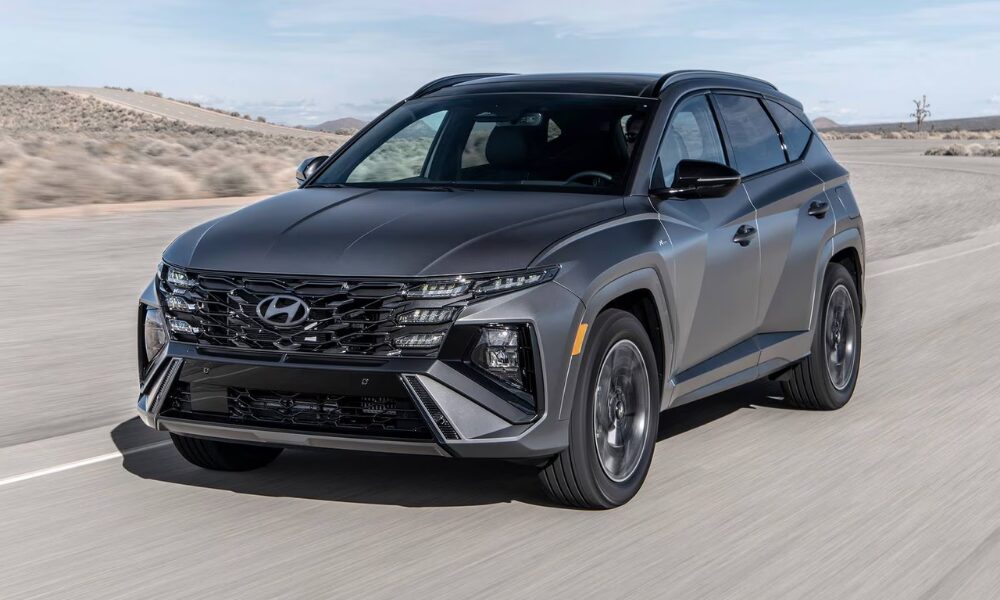
The 2025 Hyundai Tucson enters the compact SUV segment with a clear mission, offering strong value in a market that keeps raising the bar. Hyundai has built a reputation for blending practicality, style, and technology, and the 2025 Tucson continues that formula with confidence. From the moment you step inside or take it for a quick drive, it becomes obvious that this SUV aims to be more than just a budget-friendly option. It strives to be the kind of daily companion that feels refined, well-equipped, and easy to live with, even if you never check a single upgrade box.
A big part of the Tucson’s appeal comes from how much you get for the money. Hyundai loads the 2025 model with a long list of standard features that many rivals keep locked behind higher trims. Large displays, modern connectivity, advanced driver assistance technology, and smart cabin ergonomics make even the base version feel surprisingly upscale. Add Hyundai’s impressive long-term warranty coverage, and the Tucson becomes a serious value leader, especially for buyers who want peace of mind and long-term reliability.
The refreshed design for 2025 adds a more polished appearance, with updates that give the Tucson a cleaner, more modern presence on the road. Hyundai didn’t reinvent the model, but it refined the formula in a way that makes the SUV feel more mature. The new infotainment interface is easier to use and more visually appealing, while the updated interior controls give the cabin a more organized and intuitive layout. These enhancements improve the overall daily driving experience without complicating the learning curve.
Inside, the Tucson’s cabin feels spacious for a compact SUV, offering an excellent seating position, generous headroom, and one of the more accommodating cargo areas in the class. The suspension tuning prioritizes comfort, delivering a smooth, composed ride that absorbs rough pavement in a way that makes long trips feel effortless. While acceleration from the standard 2.5-liter engine isn’t especially brisk, it’s adequate for everyday driving. Buyers seeking stronger passing power or improved efficiency may find the hybrid and plug-in hybrid variants more satisfying.
With its refreshed features, smart packaging, and proven reliability, the 2025 Tucson stands out as a well-rounded choice for families, commuters, and anyone who wants a modern SUV that delivers excellent value. It doesn’t rely on flashy gimmicks or complicated systems; instead, it excels by offering the essentials in a polished and user-friendly package. For many shoppers, that’s exactly what makes it such an appealing pick.
2025 Hyundai Tucson SUV
Pros
- Smooth, comfortable ride that keeps daily commuting relaxed
- Generous suite of standard technology and driver assistance features
- Spacious cabin with supportive front seats and smart storage solutions
- One of the strongest warranties in the compact SUV segment
Cons
- Base 2.5-liter engine feels underpowered during strong acceleration or highway passing
- Hybrid models deliver good efficiency, but still fall short of class-leading fuel economy
What’s New
- Updated exterior styling for 2025
- New infotainment system with improved graphics and responsiveness
- Revised interior controls for better usability
- Continues as part of the fourth Tucson generation introduced in 2022
Overview
The Hyundai Tucson has consistently earned recognition as one of the most well-rounded compact SUVs on the market, thanks to its balance of comfort, technology, and value. The 2025 update builds on that foundation with enhancements designed to keep the Tucson competitive against newer and more aggressive rivals. Although the model was already redesigned just a few years ago for the 2022 model year, Hyundai has taken the opportunity to refine areas that matter most to everyday drivers.
The hybrid and plug-in hybrid versions continue to be standouts, offering stronger power delivery and a more dynamic driving feel while maintaining impressive efficiency. Even the gas-only model remains a top choice in its segment, placing high among the best compact SUVs due to its user-friendly nature, roomy interior, and attractive pricing. These strengths make the Tucson lineup one of the most complete offerings in the class, giving buyers options that suit everything from short city errands to long-distance commuting.
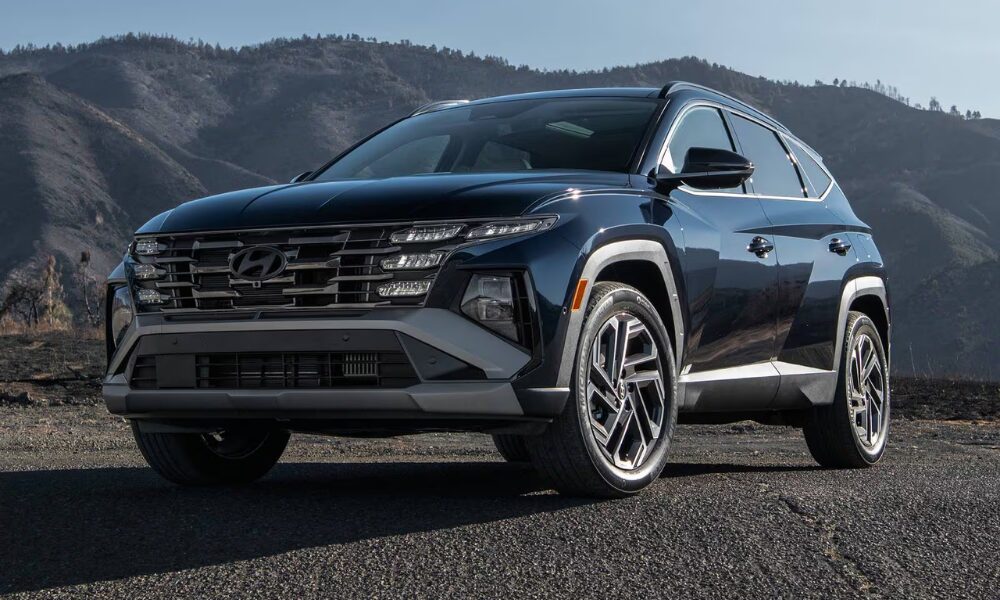
For 2025, Hyundai added subtle yet meaningful improvements. The updated front fascia and lighting elements modernize the exterior without moving away from the bold geometric aesthetic introduced in 2022. Inside, the cabin benefits from a redesigned interface featuring new infotainment software, streamlined controls, and cleaner dashboard organization. These refinements not only improve usability but also elevate the sense of quality, helping the Tucson feel more premium than many of its mainstream competitors.
While the base 2.5-liter engineisn’t the most spirited in terms of acceleration, the overall driving experience remains smooth, predictable, and comfortable, qualities that many buyers prioritize far more than raw power. Combined with Hyundai’s long warranty coverage and strong reputation for reliability, the 2025 Tucson positions itself as a practical and confident pick in a crowded segment.
Whether you’re comparing hybrids, looking for maximum value, or simply want a compact SUV that performs well in all the right places, the refreshed 2025 Tucson continues to shine as one of the most compelling choices available today.
Interior Upgrades
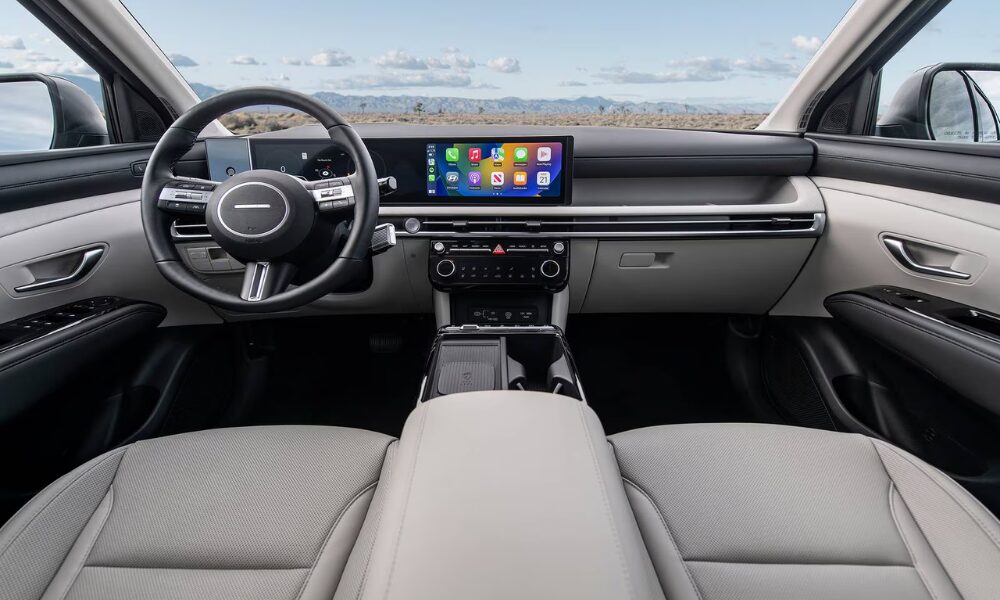
The 2025 Hyundai Tucson benefits from one of the most meaningful cabin updates Hyundai has introduced in recent years, pushing the SUV further into premium territory. The most noticeable addition is the new dual-display setup, available as an option on the SEL and Hybrid Blue trims and standard on the N Line and Limited models. This panoramic-style layout integrates a 12.3-inch digital instrument cluster with a matching 12.3-inch infotainment touchscreen, creating a clean, futuristic look that elevates the entire driving experience.
This upgraded display system doesn’t just look good; it also represents a notable step forward in usability. Graphics are sharper and more vibrant, menu transitions feel smoother, and the overall interface is more intuitive. The new software finally brings standard wireless Apple CarPlay and Android Auto to every 2025 Tucson, eliminating the previous inconsistency where some trims still required a physical cable. The ability to connect wirelessly makes daily use feel more seamless, especially for drivers who depend on navigation apps, music streaming, and hands-free messaging.
Beyond the improved screens, Hyundai has given the Tucson’s cabin several thoughtful refinements aimed at everyday practicality. A redesigned steering wheel with better ergonomics provides a more confident grip, while the revised center console and storage areas create more functional space for phones, small items, and travel essentials. These adjustments may seem subtle, but they make the Tucson feel more polished and convenient during commutes and long road trips.
Another notable upgrade is the new driver drowsiness monitoring system. This smart safety feature uses vehicle data and driver behavior patterns to detect signs of fatigue, offering helpful alerts to encourage breaks when needed. Combined with Hyundai’s robust suite of driver assistance features, this addition further strengthens the Tucson’s appeal as a family-friendly and safety-focused SUV.
Competitors to Consider
The compact SUV category is packed with strong contenders, and shoppers exploring the 2025 Tucson will find several rivals worth considering. Each brings a distinct personality, making it easier for shoppers to match their priorities with the right model.
At the top of the list is the Mazda CX-50, a crossover known for its engaging driving dynamics and upscale cabin. For 2025, Mazda adds a hybrid variant that blends efficiency with the brand’s signature sporty character, making the CX-50 an appealing choice for drivers who prioritize sharp handling without sacrificing comfort.
The Honda CR-V remains one of the most balanced options in the segment, offering roomy seating, excellent cargo capacity, and a strong reputation for long-term reliability. It also delivers a polished driving experience and one of the better hybrid powertrains in the class, making it a favorite among practical-minded buyers.
Shoppers looking for strong value will appreciate the Kia Sportage, which mirrors many of the Tucson’s strengths. With bold styling, generous interior space, and an impressive roster of standard technology, the Sportage is one of the closest direct competitors to the Tucson. It also offers hybrid and plug-in hybrid choices that appeal to efficiency-focused drivers.
For buyers who want something slightly larger without jumping into the midsize category, Hyundai’s own 2025 Santa Fe stands out with its dramatic new design, expansive interior, and upgraded tech features. It may cost a bit more, but it rewards shoppers with a more commanding presence and additional versatility.
Together, these rivals highlight just how competitive the compact SUV market has become. Yet, even among such strong alternatives, the 2025 Tucson continues to shine due to its refined interior, rich standard features, and multiple powertrain choices. For many buyers, it remains one of the most well-rounded SUVs available today.
If you’re exploring more options across the 2025 and 2026 model years, there’s a wide selection of detailed reviews that might catch your attention. You can start with the performance-focused (2026 Acura MDX Type S) or take a closer look at the stylish and practical (2025 Nissan Kicks). EV shoppers will appreciate in-depth coverage of models like (2025 Audi A6 Sportback e-tron), (2026 Tesla Model Y), and the compact electric newcomer (2026 Kia EV3).
For drivers seeking dependable everyday comfort, strong choices such as (2026 Honda Civic Sedan), (2025 Mitsubishi Outlander PHEV), and the refined (2026 Toyota RAV4) offer plenty to consider. Luxury enthusiasts can explore the craftsmanship behind (2025 Lexus RX), while those craving performance might gravitate toward the athletic (2026 BMW X6 M).
Additional highlights include the forward-thinking (2026 Toyota bZ), the value-friendly (2025 Chevrolet Trax), and the versatile (2026 Kia Telluride) with its full trim breakdown. European-inspired options appear through models like (2025 Vauxhall Frontera Hybrid) and the sophisticated (2025 Audi A3). You’ll also find unique perspectives on vehicles such as (2025 Vinfast VF 9), the compact-luxury (2025 Acura ADX), and the hydrogen-powered (2025 Toyota Mirai). Altogether, this collection offers a broad look at what today’s market has to offer, helping you discover the right fit for your driving needs.
Driving Experience
The 2025 Hyundai Tucson isn’t engineered for drivers seeking quick bursts of acceleration or an aggressive, performance-oriented feel. With the standard 2.5-liter gas engine, power delivery is modest, and the SUV reaches 60 mph in about 10.2 seconds, which places it among the slower options in the compact SUV segment. Around town, this level of performance is generally adequate for everyday tasks like accelerating from a stoplight or merging smoothly into traffic, but the engine’s hesitation becomes more noticeable when attempting rapid passes on the highway or climbing steep grades.
Where the Tucson makes up ground is in its composure and refinement. The steering feels direct and predictable, giving the SUV a confident personality whether navigating tight city streets or sweeping suburban roads. Hyundai’s chassis tuning prioritizes comfort without sacrificing stability, resulting in a driving character that feels secure and planted. The suspension, in particular, stands out. It absorbs road imperfections with ease, soaking up potholes, cracked pavement, and expansion joints in a way that many competitors struggle to match. For families and commuters who prioritize a smooth, controlled ride, the Tucson easily ranks among the class leaders.
Visibility is another strong point. The expansive windshield and thin roof pillars allow for a wide, unobstructed view of the road, helping drivers feel more aware of their surroundings. Hyundai enhances this sense of confidence with a well-calibrated suite of driver assistance features. The blind-spot monitoring system proves helpful in dense traffic, while the adaptive cruise control operates smoothly, keeping a safe following distance even during heavy congestion or sudden slowdowns.
Parking is made easier thanks to front and rear sensors and clear camera guidance, though the constant beeping from the sensors can become repetitive in tight spaces. Even so, the Tucson’s day-to-day drivability excels in ways that matter most: comfort, predictability, visibility, and ease of operation. It may not be the quickest SUV in the segment, but it consistently delivers a relaxed, reassuring driving experience that suits a wide range of drivers.
Comfort
The 2025 Hyundai Tucson delivers a comfort experience that edges impressively close to premium territory, especially in upper trims. In the Limited model tested, the front seats stand out as a highlight, offering soft yet supportive cushioning with excellent lateral support and power-adjustable lumbar settings. The materials feel more upscale than you’d expect in this price range, and the overall seating ergonomics strike a smart balance between a car-like posture and the slightly elevated view many SUV buyers prefer.
While the Tucson’s cabin excels in comfort, its reliance on touchscreen-based controls may be polarizing. Most functions, including climate settings and common adjustments, are accessed through a flat, haptic-less display. Everything works smoothly, but drivers who prefer physical knobs and buttons may find the system less convenient while driving.
Where the Tucson truly shines is in space and ease of access. The wide door openings make entering and exiting the vehicle effortless for passengers of any height. Once inside, the cabin feels exceptionally open. Headroom, legroom, and shoulder room are generous in both rows, and passengers as tall as six feet can sit comfortably behind equally tall drivers. The rear seats recline, adding another layer of comfort on long trips, and the abundant space makes installing rear-facing infant seats or bulky child seats significantly easier than in many competing compact SUVs.
Families will also appreciate the thoughtful placement of LATCH anchors, which are tucked neatly between the seat cushions yet remain easy to locate and use. Three top tether anchors on the back of the rear seats provide additional flexibility for child safety installations.
In-Cabin Tech
The 2025 Hyundai Tucson delivers an impressive level of in-cabin technology, offering one of the most polished and intuitive tech experiences in the compact SUV segment. Hyundai has loaded the cabin with features that not only look upscale but also perform with the speed and responsiveness of systems found in more expensive vehicles. The highlight of the tech package is the available 12.3-inch touchscreen, which pairs beautifully with the digital instrument cluster to create a unified, modern display environment. Graphics are crisp, animations are smooth, and the interface reacts instantly to inputs, giving the entire system a premium feel.
Wireless Apple CarPlay and Android Auto come standard across all trims for 2025, eliminating the need for cables and making it easier to jump in and go. Smartphone apps look sharp on the large display, and the wireless connection remains stable even on longer drives. This isn’t always the case with competing systems, so the reliability here is a major plus for commuters and families who rely on navigation apps, streaming services, and hands-free communication.
For those who prefer to use Hyundai’s native infotainment system, the built-in navigation is well-designed and easy to use. The maps feature high-contrast colors, smooth zooming, and clear directional guidance that’s easy to understand at a glance. Real-time traffic information, lane guidance, and point-of-interest suggestions help make longer trips more convenient, reducing the reliance on third-party smartphone apps.
Another standout feature is the improved voice recognition system. Unlike older systems that require rigid phrasing or perfect timing, Hyundai’s voice assistant responds naturally to everyday language. Whether you’re asking for a navigation destination, adjusting the climate controls, or making a hands-free call, the system accurately interprets commands without forcing you to repeat or modify phrases. This makes interactions smoother and safer, especially when driving in heavy traffic.
Additional tech touches include multiple USB ports, available wireless charging, and integrated connected services that allow remote vehicle access and status monitoring through a smartphone app. These features collectively give the Tucson a sophisticated tech advantage, making the cabin feel thoughtful, convenient, and modern from the moment you start the engine.
Storage & Cargo
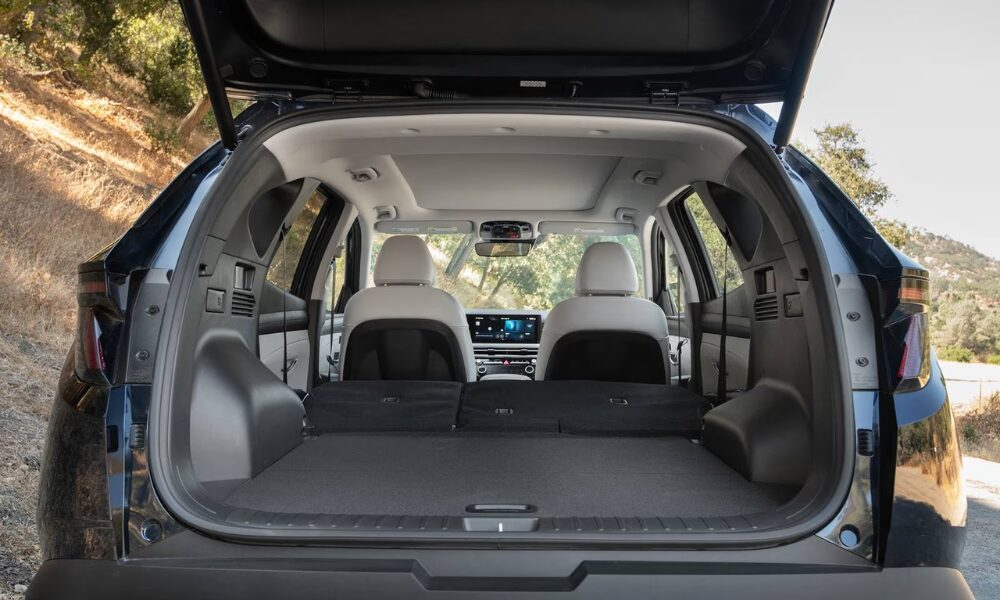
The 2025 Hyundai Tucson excels in practicality, offering one of the most versatile cargo areas in the compact SUV segment. With 38.7 cubic feet of space available behind the rear seats, the Tucson comfortably outperforms many of its rivals, making it an ideal choice for families, outdoor enthusiasts, and anyone who frequently carries bulky gear. Whether you’re loading groceries, sports equipment, strollers, or luggage for a weekend escape, the Tucson’s wide opening and low liftover height make the process noticeably easier and more convenient.
Fold down the rear seats and the Tucson transforms into a genuinely spacious hauler, opening up 74.8 cubic feet of cargo capacity. The flat load floor is a major advantage here, it allows larger items to slide in smoothly and makes it easier to stack boxes, furniture pieces, or holiday gifts without awkward angles or shifting. For apartment moves, DIY projects, or road trips, this kind of utility is a standout benefit.
Inside the cabin, Hyundai has integrated clever small-item storage solutions throughout. The center console includes deep compartments ideal for wallets, sunglasses, chargers, or snacks, while the door pockets can accommodate tablets or larger maps. The cupholders are wide enough to hold oversized water bottles, and the available under-floor storage area provides a hidden spot for emergency kits or valuables. It’s clear that Hyundai considered real-world usability with the Tucson’s layout, giving drivers and passengers everyday convenience without sacrificing comfort or design.
For families needing flexibility, the generous rear-seat space plays a big role in storage practicality. The wide-opening rear doors and reclining seatbacks make loading child seats easier, and there’s plenty of room for bulky infant carriers. The Tucson’s thoughtful approach to storage ensures it remains one of the most capable and user-friendly SUVs in its class.
Value
The 2025 Hyundai Tucson delivers remarkable value by blending competitive pricing with features and refinement that often surpass what rivals offer at similar price points. Compared with popular competitors like the Honda CR-V and Toyota RAV4, the Tucson holds its ground firmly, and in many cases edges ahead, thanks to its rich assortment of standard technology, its polished interior design, and its overall sense of quality.
Hyundai’s cabin materials feel upscale for the segment, with clean lines, smart ergonomics, and textures that create an inviting and modern atmosphere. Even in mid-level trims, the Tucson offers amenities that some competitors reserve for higher-priced models. From its advanced infotainment setup to its comprehensive suite of driver assistance features, the Tucson consistently gives buyers more for their money.
Where the Tucson truly separates itself from the pack is in warranty protection. Hyundai’s industry-leading coverage, 5 years/60,000 miles of basic warranty and 10 years/100,000 miles of powertrain coverage, is unmatched by most mainstream brands. This long-term reassurance significantly reduces ownership costs and enhances the Tucson’s already strong value proposition, especially for buyers planning to keep their SUV for many years.
Factor in the Tucson’s generous interior space, comfortable ride, refined technology, and thoughtful features, and it becomes easy to see why it stands out. The 2025 Tucson offers a level of quality and practicality that aligns with, and sometimes exceeds, its competitors while maintaining an accessible price point. For shoppers seeking a compact SUV that’s both budget-friendly and exceptionally well-equipped, the Tucson delivers value that’s genuinely hard to beat.
MPG
Fuel economy for the 2025 Hyundai Tucson is respectable, though not class-leading. In the all-wheel-drive configuration we tested, the Tucson delivers an EPA-estimated 25 mpg combined (23 mpg city and 28 mpg highway). These numbers are consistent with what we observed in mixed driving conditions, where our real-world results closely mirrored the EPA rating. This reliability is a positive sign for buyers who want predictable fuel costs in day-to-day use.
While the Tucson’s fuel economy is decent for a non-hybrid compact SUV, it does fall slightly behind key competitors. All-wheel-drive versions of the Honda CR-V and Nissan Rogue offer more efficient powertrains, giving them an edge for drivers who prioritize long-distance commuting or frequently travel on highways. Considering the Tucson’s modest acceleration and generally relaxed performance, it would be reasonable to expect stronger fuel efficiency to compensate for the lack of punch.
Still, the numbers remain practical for most owners. The Tucson’s engine is tuned for smoothness rather than excitement, and when driven with a light foot, it returns consistent mileage without sudden dips during city traffic or elevation changes. Combined with Hyundai’s hybrid and plug-in hybrid alternatives, both of which offer significantly better economy, the Tucson lineup gives buyers multiple pathways to choose the balance of performance and efficiency that fits their lifestyle.
Wildcard / X-Factor
The 2025 Hyundai Tucson brings a playful spirit to the compact SUV segment, and that personality shows in its bold styling and creative technology. The distinctive exterior design, with its angular lines, illuminated grille accents, and seamlessly integrated headlights, helps the Tucson stand out immediately, especially in a segment crowded with safer, more conservative designs. Inside, Hyundai continues this expressive approach with futuristic touches such as redesigned touchscreen interfaces, crisp dual displays, and unique menu layouts that give the cabin a tech-forward vibe.
Hyundai even includes features that feel lifted from higher-tier vehicles, such as the remote smart parking system that allows the SUV to move in and out of tight spots without the driver behind the wheel. These playful additions make the Tucson feel innovative, almost experimental at times, and they certainly add flair to the ownership experience.
But for all its personality and innovation, the Tucson’s biggest limitation remains its powertrain. The standard engine’s sluggish response undermines the SUV’s otherwise modern character, especially when combined with a transmission that feels hesitant unless you’re driving gently. The Tucson wants to look futuristic and dynamic, but the mechanical performance doesn’t always match the confidence of its design language.
the Tucson still delivers plenty of appeal. Its generous tech features, rich standard equipment list, spacious cabin, and standout design make it memorable in ways many rivals simply aren’t. The SUV may not deliver thrill-seeker driving dynamics, but it offers an enjoyable ownership experience built on style, comfort, and smart functionality. For buyers who care more about features, design, and day-to-day usability than outright speed, the Tucson carries a unique charm that helps it shine.
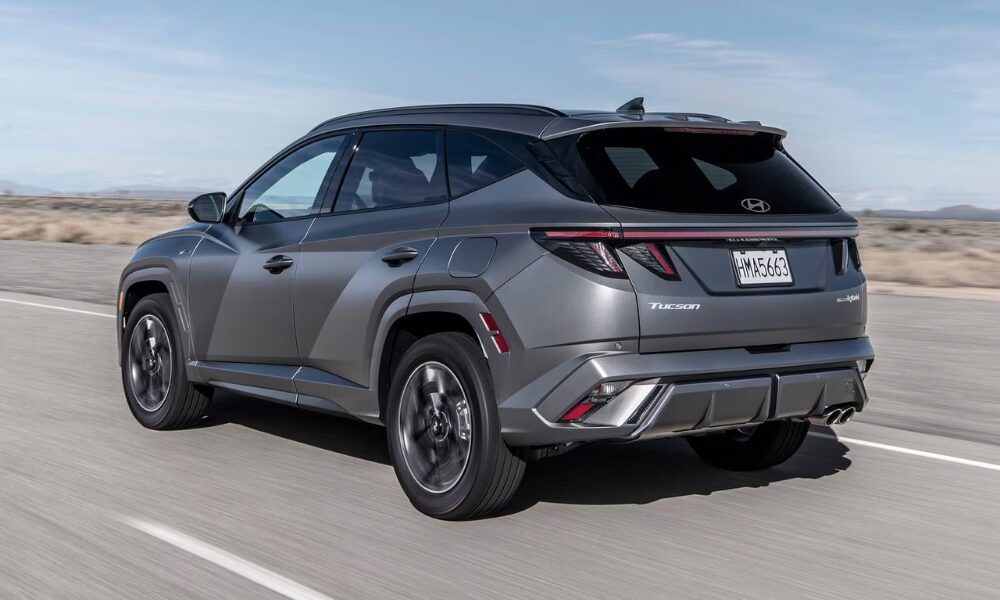
2025 Hyundai Tucson Trim Level Differences
The 2025 Hyundai Tucson lineup offers an impressively broad range of trims, each designed to cater to different driving styles, tech priorities, and budget levels. Hyundai structures the Tucson in a way that allows buyers to step into the features they want without unnecessary complexity, making the trim ladder easy to understand even for first-time SUV shoppers.
The SE, SEL, XRT, and Limited trims come equipped with a 187-horsepower 2.5-liter four-cylinder engine. This naturally aspirated engine is paired with an eight-speed automatic transmission and gives buyers the choice between front-wheel drive or all-wheel drive. It’s not engineered for high performance, but it delivers smooth and predictable power that suits daily commuting and family duties. These trims appeal to drivers who value comfort, affordability, and straightforward capability.
For shoppers seeking stronger acceleration and improved fuel efficiency, Hyundai offers a hybrid lineup that elevates the Tucson’s performance. The N Line Hybrid, Blue Hybrid, SEL Convenience Hybrid, and Limited Hybrid trims use a combined hybrid system that pairs a turbocharged gasoline engine with an electric motor for a total output of 231 horsepower. This setup delivers noticeably quicker acceleration than the gas-only engine and comes standard with all-wheel drive. A six-speed automatic transmission manages power delivery in the hybrid models, offering a more responsive character while still keeping efficiency in focus.
The Tucson Plug-in Hybrid, which adds a larger battery for extended electric-only driving capability, is reviewed separately on CarDrav. It’s positioned for buyers who want the benefits of electrification without fully committing to an EV, offering meaningful efficiency gains and stronger torque.
the Tucson trim structure gives buyers an easy path: affordable gas models, better-performing hybrids, and the efficiency-focused plug-in option. Whether your priority is price, features, or maximum fuel savings, there’s a Tucson configuration tailored to meet your needs.
Which Tucson Trim Does CarDrav Recommend?
CarDrav recommends the SEL trim equipped with the Convenience package as the best all-around choice for most shoppers. This combination hits the sweet spot between price and features, elevating the Tucson’s usability and comfort without pushing into higher-trim pricing.
The SEL with Convenience package adds several upgrades that significantly enhance the daily driving experience. Most importantly, it includes the brand-new dual-screen layout with the upgraded 12.3-inch touchscreen and wireless Apple CarPlay and Android Auto, bringing a modern and intuitive tech experience that rivals more expensive crossovers. You also get valuable additions such as improved driver assistance features, upgraded interior materials, and comfort-focused enhancements that give the cabin a more premium feel.
This trim balances cost, technology, comfort, and practicality better than any other configuration in the lineup. For buyers who want a Tucson that feels fully modern without stepping up to the Limited or hybrid trims, the SEL with the Convenience package delivers exceptional value and an excellent ownership experience.
FAQ
Is the Hyundai Tucson a good car?
Yes, the 2025 Hyundai Tucson is considered a strong choice in the compact SUV segment thanks to its spacious interior, refined ride quality, and excellent blend of features for the price. CarDrav’s expert testing highlights the Tucson’s comfortable suspension, impressive driver assistance technologies, and premium-feeling cabin materials.
For shoppers focused on practicality, the Tucson also offers 38.7 cubic feet of cargo space, placing it near the top of its class in everyday usability. Add Hyundai’s long-term warranty coverage and consistent reliability record, and the Tucson becomes a well-rounded option for families, commuters, and first-time SUV buyers alike. It isn’t the quickest SUV in the class, but its comfort, tech, and practicality make it a highly capable all-around performer.
What’s new in the 2025 Hyundai Tucson?
The 2025 model year brings several meaningful updates that enhance both the Tucson’s design and usability. According to CarDrav’s expert analysis, the latest Tucson receives:
- Updated exterior styling with a cleaner, more modern look
- A redesigned infotainment system featuring sharper graphics and smoother performance
- Revised interior controls for easier operation
- Expanded availability of Hyundai’s new dual 12.3-inch display setup
- Continued improvements within the fourth-generation platform introduced in 2022
These updates don’t radically transform the Tucson, but they refine areas that matter most—technology, layout, and everyday driving comfort.
Is the Hyundai Tucson reliable?
The Hyundai Tucson has a strong reputation for long-term dependability, and the 2025 model continues that trend. CarDrav’s owner feedback and reliability evaluations indicate that the Tucson performs well in real-world use, showing few recurring issues and earning consistently positive ratings from drivers.
Hyundai’s confidence in the Tucson is reflected in its industry-leading warranty, which includes:
- 5 years/60,000 miles of basic coverage
- 10 years/100,000 miles of powertrain coverage
These warranties significantly reduce long-term ownership costs and give buyers added peace of mind. As always, shoppers should compare reliability impressions with other segment leaders, but the Tucson ranks near the top for durability and overall value.
Is the 2025 Hyundai Tucson a good car to buy?
If you’re considering the 2025 Tucson, you’re looking at one of the more balanced and well-equipped compact SUVs available today. CarDrav’s testing team notes that the Tucson delivers solid fuel economy, excellent interior quality, and generous storage space. It also offers multiple powertrain choices—including gas, hybrid, and plug-in hybrid options—allowing buyers to choose the level of performance and efficiency they prefer.
While the base engine isn’t the most energetic in the segment, the Tucson’s comfort, tech, cargo capacity, and value make it a smart pick for a wide range of buyers. If you prioritize reliability, interior refinement, and a strong feature set for the money, the 2025 Tucson is absolutely worth considering.
How much should I pay for a 2025 Hyundai Tucson?
Pricing for the 2025 Hyundai Tucson varies widely depending on the trim level, drivetrain, and powertrain configuration, giving buyers flexibility to match their budget with the set of features they want. The entry point into the Tucson lineup is the SE 4dr SUV (2.5L four-cylinder, eight-speed automatic), which carries a Manufacturer’s Suggested Retail Price (MSRP) of about $28,705, including destination charges. This base model includes a solid roster of standard safety and technology features, making it a strong value for shoppers who want a modern compact SUV without stretching their budget.
From there, pricing scales upward as you move into trims with more equipment, advanced driver aids, premium materials, and upgraded technology. All-wheel drive adds roughly $1,500 to most gas trims. The SEL family, especially the Convenience variants, adds meaningful comfort and tech upgrades at a reasonable increase in price.
| Trim Level | Powertrain | Drivetrain | Starting Price |
|---|---|---|---|
| SE | 2.5L Gas | FWD | $28,705 |
| SE | 2.5L Gas | AWD | $30,205 |
| SEL | 2.5L Gas | FWD | $30,565 |
| SEL | 2.5L Gas | AWD | $32,065 |
| SEL Convenience | 2.5L Gas | FWD | $33,015 |
| SEL Convenience | 2.5L Gas | AWD | $34,515 |
| XRT | 2.5L Gas | FWD | $33,015 |
| XRT | 2.5L Gas | AWD | $34,515 |
| Limited | 2.5L Gas | FWD | $38,645 |
| Limited | 2.5L Gas | AWD | $40,145 |
| Blue Hybrid | 1.6L Turbo Hybrid | AWD | $33,465 |
| SEL Convenience Hybrid | 1.6L Turbo Hybrid | AWD | $36,465 |
| N Line Hybrid | 1.6L Turbo Hybrid | AWD | $38,215 |
| Limited Hybrid | 1.6L Turbo Hybrid | AWD | $41,295 |
the Tucson is priced competitively against segment rivals like the Honda CR-V, Toyota RAV4, Nissan Rogue, and Mazda CX-5. What sets the Tucson apart is how much feature content you get even at the lower end of the price spectrum, plus the advantage of Hyundai’s industry-leading warranty. Shoppers who want the best mix of value and refinement typically gravitate toward the SEL with Convenience package, as it offers premium technology without jumping into Limited-level pricing.
What are the different models of the 2025 Hyundai Tucson?
The 2025 Hyundai Tucson lineup offers one of the most diverse trim selections in the compact SUV segment. Hyundai structures the model range to fit a wide variety of buyer needs, from budget-friendly gas trims to more powerful hybrid options and an efficient plug-in hybrid for drivers who want electric capability without going fully EV. Below is a complete breakdown of every Tucson model available for 2025, organized to clearly show engine type, drivetrain, and overall positioning.
| Trim Level | Powertrain | Drivetrain |
|---|---|---|
| SE | 2.5L Gas | FWD / AWD |
| SEL | 2.5L Gas | FWD / AWD |
| SEL Convenience | 2.5L Gas | FWD / AWD |
| XRT | 2.5L Gas | FWD / AWD |
| Limited | 2.5L Gas | FWD / AWD |
| Blue Hybrid | 1.6L Turbo Hybrid | AWD |
| SEL Convenience Hybrid | 1.6L Turbo Hybrid | AWD |
| N Line Hybrid | 1.6L Turbo Hybrid | AWD |
| Limited Hybrid | 1.6L Turbo Hybrid | AWD |
| Plug-In Hybrid | 1.6L Turbo PHEV | AWD (Reviewed separately) |