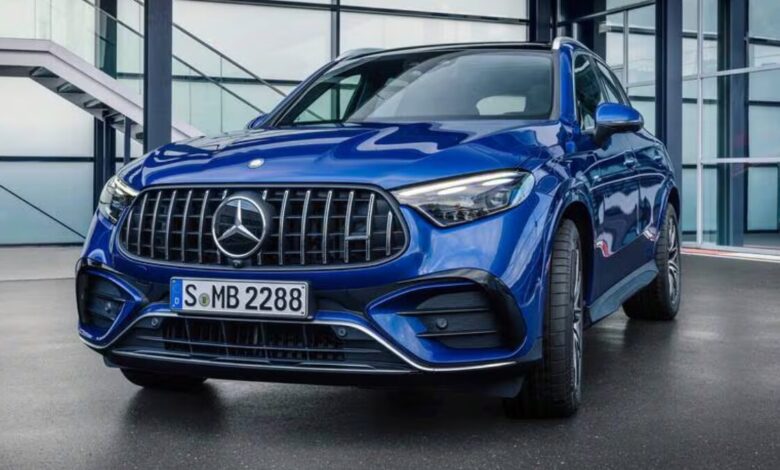
The 2026 Mercedes-Benz GLC enters the compact luxury SUV segment at a moment when expectations are higher than ever. Buyers in this class no longer settle for a premium badge alone. They want refinement, comfort, usable technology, and a driving experience that feels calm and confidence-inspiring every single day. On paper, the GLC can appear expensive when judged strictly by features-per-dollar. Some competitors offer more standard equipment or larger cargo figures for less money. But the GLC has never been about winning spreadsheet comparisons.
Instead, Mercedes-Benz has positioned the GLC as a luxury SUV that prioritizes how it feels to live with over time. This is a vehicle designed for people who care deeply about ride quality, interior silence, and the sense of solidity that only reveals itself after thousands of miles. It is aimed at drivers who spend a lot of time commuting, traveling, or navigating imperfect roads and want a vehicle that makes those moments feel effortless rather than demanding.
The GLC’s appeal lies in its restraint. The design is clean and upscale without being aggressive. The cabin avoids unnecessary gimmicks and focuses on materials, assembly quality, and an overall atmosphere that feels calm and premium. Technology is present, but it is designed to assist rather than dominate the experience. Everything works together to reduce fatigue and mental load, which becomes increasingly important the longer you own the vehicle.
From behind the wheel, the GLC reinforces this philosophy. The powertrain operates smoothly and quietly, the suspension filters out harshness without feeling disconnected, and the steering feels predictable and relaxed. This is not an SUV that encourages aggressive driving or constant interaction. Instead, it excels at making everyday driving feel smooth and controlled, whether you are navigating city traffic or cruising on the highway.
The 2026 model year brings continuity rather than reinvention. Mercedes-Benz has chosen to carry over the current GLC formula largely unchanged, signaling confidence in the vehicle’s strengths. While an all-electric GLC is on the horizon for the 2027 model year, it is important to understand that it will be a completely different vehicle built on a new platform. For now, the gasoline-powered GLC remains focused on delivering a refined, mature luxury experience.
For buyers who value comfort, quietness, and long-term satisfaction more than headline features or aggressive styling, the 2026 Mercedes-Benz GLC continues to justify its reputation as one of the most well-rounded compact luxury SUVs available.
2026 Mercedes-Benz GLC
Price Range: $49,550 – $67,550
Pros
- Quiet and well-isolated cabin with excellent noise suppression
- Smooth ride quality that handles rough roads and long trips with ease
- Exceptional interior build quality and premium materials
- Solid, durable feel throughout the cabin
- Wide range of powertrains offering a balance of performance and fuel efficiency
Cons
- Wireless charging pad is awkwardly placed and difficult to access
- Cargo capacity is lower than many direct competitors
- Price can feel high when evaluated strictly by features-per-dollar
What’s New
- No major changes for the 2026 model year
- Continues as part of the second-generation GLC introduced for 2023
- Core lineup carries over unchanged while an all-electric GLC is planned for 2027
Many Shades of Hybrid
The all-electric Mercedes-Benz GLC has not arrived yet, but that does not mean the current lineup ignores electrification. In fact, every 2026 GLC on sale today incorporates some form of hybrid assistance, making electrification a core part of the model’s identity rather than a future promise. What makes the GLC lineup particularly interesting is how varied these hybrid solutions are, each serving a very different type of buyer.
At the entry point, models like the GLC 300 and AMG GLC 43 use a mild-hybrid setup. In this configuration, a compact electric motor and small battery assist the gasoline engine during acceleration and low-load situations. The goal here is not electric driving, but smoother power delivery and improved efficiency. In daily use, the system operates quietly in the background, helping reduce engine strain and enhancing responsiveness without changing how the vehicle fundamentally feels to drive.
The AMG GLC 43 adds another layer of sophistication with an electrically assisted turbocharger. This technology reduces turbo lag by using electric power to spool the turbo more quickly, resulting in sharper throttle response. The result is a performance-oriented SUV that still maintains the refinement and smoothness expected from the GLC nameplate.
At the extreme end of the spectrum sits the AMG GLC 63 S E Performance, a model that takes electrification in a dramatically different direction. With a staggering combined output of 671 horsepower, this version uses a large plug-in hybrid battery and a powerful electric motor mounted on the rear axle. While it technically qualifies as a plug-in hybrid, efficiency is clearly not its primary mission. Instead, the electric components are used to deliver instant torque and extreme performance, turning the GLC into something closer to a super SUV than a practical daily driver.
The most balanced electrified option in the lineup is the GLC 350e plug-in hybrid. This version focuses squarely on efficiency and everyday usability rather than outright performance. With an EPA-estimated electric-only range of up to 54 miles, it allows many owners to complete daily commutes entirely on electricity. For drivers who want to reduce fuel consumption without giving up a gasoline engine for longer trips, the GLC 350e represents the most logical and lifestyle-friendly hybrid option in the range.
Together, these different powertrains show that Mercedes-Benz is not offering a single hybrid solution, but rather multiple interpretations of electrification. Whether the priority is smoothness, performance, or electric-only driving, the 2026 GLC lineup offers a version tailored to each approach.
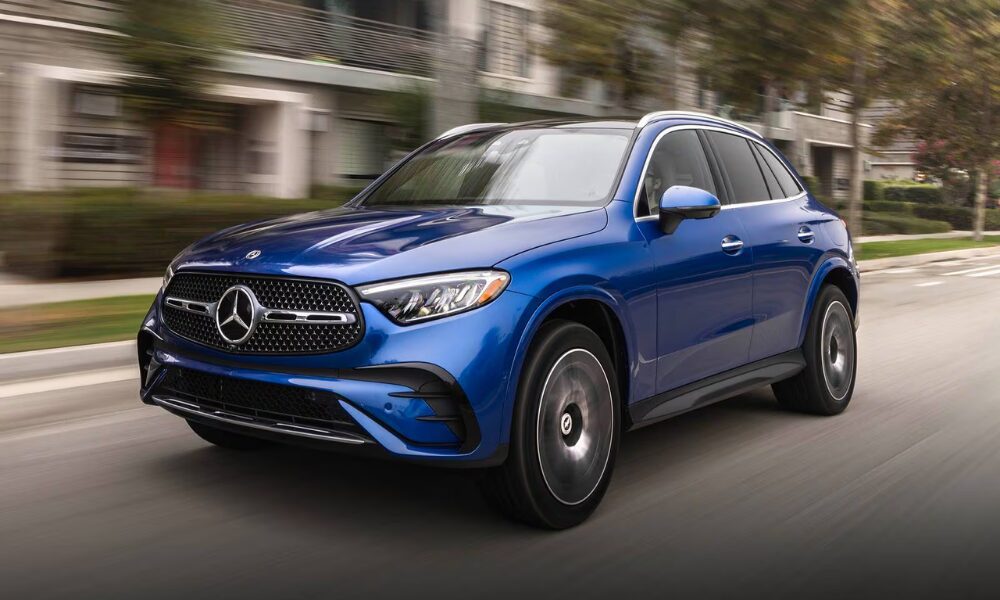
Competitors to Consider
The 2026 Mercedes-Benz GLC competes in one of the most competitive segments in the luxury SUV market, and its closest rivals approach the formula in noticeably different ways. According to CarDrav’s evaluation, buyers should carefully consider what they value most, as no competitor mirrors the GLC’s exact balance of refinement, technology, and powertrain diversity.
The Genesis GV70 stands out as one of the most compelling alternatives. It offers a richly styled interior, strong performance options, and an emphasis on comfort that aligns closely with the GLC’s strengths. Where Genesis differentiates itself is in value, as the GV70 often delivers a high level of standard equipment at a more competitive price point. However, its powertrain lineup does not yet match the GLC’s range of electrified options.
From Germany, the BMW X3 and Audi Q5 remain the GLC’s most direct rivals. Both were redesigned for the 2025 model year, but they took different paths. The X3 adopted a more radical design direction and offers a spacious interior, with an all-electric variant planned for the future. It leans more toward driving engagement, sometimes at the expense of ride comfort.
The Audi Q5’s update was more evolutionary than revolutionary, focusing on refreshed technology and incremental improvements rather than a full redesign. While there is no all-electric Q5, the Audi Q4 E-Tron fills a similar role for buyers looking for an electric Audi SUV. However, neither the X3 nor the Q5 currently offers a plug-in hybrid option, which may be a deciding factor for some shoppers.
For buyers specifically interested in plug-in hybrids, the Lexus NX 450h+ and Volvo XC60 T8 deserve serious consideration. Both provide meaningful electric-only driving capability combined with strong performance. The Lexus emphasizes reliability and efficiency, while the Volvo blends Scandinavian design with impressive hybrid power. These models directly compete with the GLC 350e in concept, though they deliver a different overall driving and interior experience.
In this crowded field, the GLC distinguishes itself by offering more powertrain variety than most competitors. Whether buyers prioritize comfort, performance, or electrified driving, the GLC lineup provides more tailored choices than nearly any rival in the segment.
And if you’re exploring more options across the 2025 and 2026 model years, there’s a wide selection of detailed reviews that might catch your attention. You can start with the performance-focused 2026 Acura MDX Type S or take a closer look at the stylish and practical 2025 Nissan Kicks. EV shoppers will appreciate in-depth coverage of models like 2025 Audi A6 Sportback e-tron, 2026 Tesla Model Y, and the compact electric newcomer 2026 Kia EV3.
For drivers seeking dependable everyday comfort, strong choices such as 2026 Honda Civic Sedan, 2025 Mitsubishi Outlander PHEV, and the refined 2026 Toyota RAV4 offer plenty to consider. Luxury enthusiasts can explore the craftsmanship behind 2025 Lexus RX, while those craving performance might gravitate toward the athletic 2026 BMW X6 M.
Additional highlights include the forward-thinking 2026 Toyota bZ, the value-friendly 2025 Chevrolet Trax, and the versatile 2026 Kia Telluride with its full trim breakdown. European-inspired options appear through models like 2025 Vauxhall Frontera Hybrid and the sophisticated 2025 Audi A3. You’ll also find unique perspectives on vehicles such as 2025 Vinfast VF 9, the compact-luxury 2025 Acura ADX, and the hydrogen-powered 2025 Toyota Mirai. Altogether, this collection offers a broad look at what today’s market has to offer, helping you discover the right fit for your driving needs.
Driving Experience
The way the 2026 Mercedes-Benz GLC drives reinforces its role as a refined luxury SUV rather than a performance statement piece. CarDrav tested the GLC 300, which is powered by a four-cylinder engine paired with a mild hybrid system, and the first impression is how effortlessly everything works together.
Acceleration feels smooth and well controlled rather than aggressive. The mild hybrid system quietly supports the gasoline engine, filling in gaps during takeoff and low-speed driving. As a result, the GLC moves off the line with a calm confidence that feels appropriate for daily use. Power delivery never feels strained or abrupt, and the automatic transmission responds quickly to throttle inputs, shifting cleanly and decisively without drawing attention to itself.
During CarDrav’s testing, the GLC 300 reached 60 mph in 6.1 seconds. This is an average result for a compact luxury SUV with a base engine, but numbers alone do not tell the full story. What matters more is how composed and predictable the GLC feels while building speed. There is no sense of urgency or mechanical stress, only steady and refined progress that suits the vehicle’s character.
Braking performance is another strong point. The brakes feel confident and reassuring under hard use, yet remain easy to modulate during everyday driving. Whether slowing down gently in traffic or coming to a firm stop from higher speeds, the pedal response is consistent and easy to control. This balance makes the GLC feel trustworthy in a wide range of situations.
The test vehicle was equipped with optional summer tires, which played a noticeable role in enhancing braking performance and cornering grip. With these tires fitted, the GLC felt planted and secure through turns, maintaining stability without excessive body movement. Even without the added grip of performance-oriented rubber, the underlying chassis tuning shines through. The GLC carries itself through corners with natural athleticism, staying composed rather than sporty for sport’s sake.
Ride quality meets expectations for a luxury SUV. The suspension absorbs bumps and uneven pavement effectively, striking a balance between comfort and control. While it may not be the absolute softest ride in the segment, it never feels harsh or unsettled. Instead, it delivers a controlled smoothness that remains comfortable over longer drives.
Visibility is generally good thanks to the open window design and clear sightlines, although the thick front pillars can slightly restrict forward angles at times. Thankfully, Mercedes addresses this with a comprehensive 360-degree camera system and advanced driver assistance features. These technologies make parking, tight maneuvers, and low-speed driving far easier, reducing stress in urban environments.
the driving experience of the 2026 Mercedes-Benz GLC aligns perfectly with its mission. It prioritizes smoothness, predictability, and confidence over excitement. For drivers who want a luxury SUV that feels easy to live with, composed on the road, and quietly capable in daily use, the GLC delivers exactly what it promises.
Comfort
The 2026 Mercedes-Benz GLC delivers a level of comfort that aligns well with expectations in the luxury compact SUV class, even if it does not aim to redefine the segment. From the moment you settle into the cabin, the focus is clearly on creating a calm, controlled environment rather than an overtly plush or indulgent one.
Front seat comfort is good, though not exceptional. The seats feature firm cushioning and solid support, which works well for maintaining posture during longer drives. However, they stop short of feeling truly special. There is no immediate sense of indulgence or standout softness that some rivals offer. Instead, the seats prioritize structure and consistency, which some drivers may appreciate more over extended ownership than during a short test drive.
Getting in and out of the GLC requires a slight step over the side rails, but it is never awkward or cumbersome. The driving position itself is easy to dial in thanks to generous seat and steering wheel adjustments. Most drivers will be able to find a comfortable position quickly, and the relationship between the pedals, steering wheel, and seat height feels natural and well thought out.
Rear-seat comfort is a pleasant surprise. The second row offers ample legroom and headroom, making it more accommodating for adult passengers than some competitors, including the Genesis GV70. While the rear seats do not feel luxurious in isolation, they are comfortable enough for longer journeys and reinforce the GLC’s role as a practical family-friendly luxury SUV.
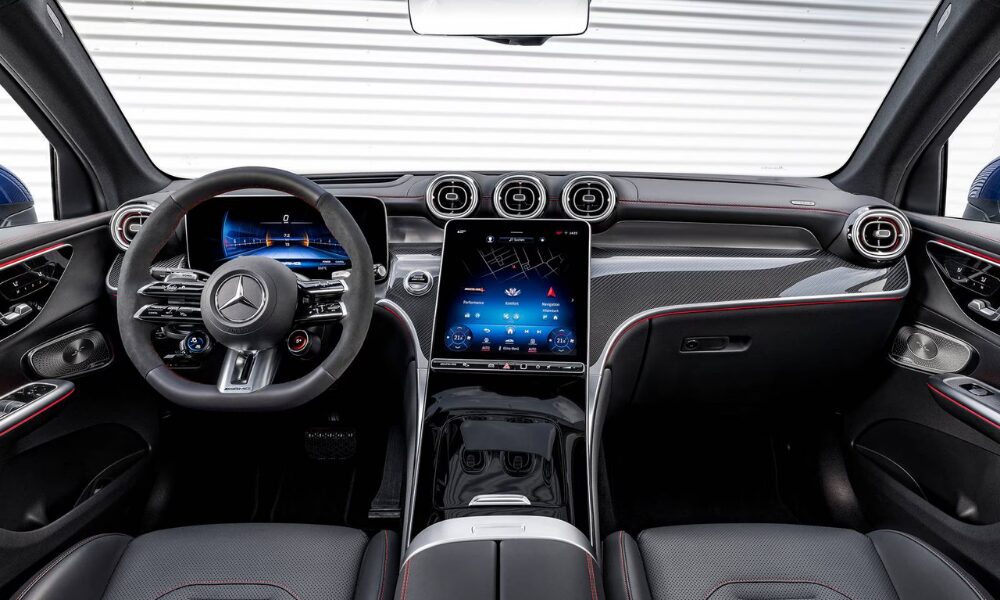
Control layout plays a role in overall comfort as well. Most functions are handled through the touchscreen interface, which can be a point of contention for some drivers. That said, Mercedes has done a reasonable job of minimizing frustration. Key features such as seat heating remain easily accessible through a fixed lower section of the screen, reducing the need for repeated menu navigation while driving.
Once underway, cabin comfort improves even further. The interior remains impressively quiet, particularly in models equipped with the mild hybrid system. During coasting and low-load situations, the vehicle glides smoothly and allows the engine to shut off, contributing to an almost serene driving atmosphere. This level of quietness enhances long-distance comfort and reduces fatigue.
When the engine restarts, some noise does enter the cabin. The sound is not harsh, but it lacks the refinement and smoothness typically associated with six-cylinder engines. While this does not undermine the overall comfort of the GLC, it is a reminder that refinement in this area is good rather than exceptional.
In-Cabin Tech
Technology has long been one of Mercedes-Benz’s strongest calling cards, and the 2026 GLC continues that tradition in a way that feels polished rather than overwhelming. From day-to-day use, the tech experience is clearly designed to support the driver and passengers instead of competing for attention.
At the center of the experience is the latest version of the MBUX infotainment system. In practice, it proves to be intuitive and logically structured, even if some secondary functions are buried a few layers deep within menus. While that initial learning curve exists, everything is ultimately easy to locate, and the system responds quickly to inputs. Over time, it becomes familiar rather than frustrating, which is exactly what you want from a daily-driven vehicle.
Navigation is a standout feature. The onboard system, enhanced with augmented reality turn-by-turn directions, is among the few factory setups that can genuinely rival popular smartphone navigation apps. Visual cues appear clearly within the driver’s field of view, making complex intersections and unfamiliar areas easier to navigate with less distraction. For drivers who prefer using built-in navigation instead of relying on their phone, this system is one of the strongest available in the segment.
That said, Mercedes-Benz also excels at smartphone integration. Wireless Apple CarPlay and Android Auto are among the best implementations CarDrav has experienced. Connections are fast, stable, and seamless, allowing drivers to switch between native MBUX functions and smartphone apps without hiccups. For those who live inside their phone ecosystem, the GLC accommodates that preference effortlessly.
Connectivity throughout the cabin is another strong point. The test GLC was equipped with six USB-C ports, ensuring that all occupants can charge devices simultaneously without compromise. This is a small detail that makes a meaningful difference for families and long trips, where multiple phones, tablets, and accessories are often in use.
Wireless charging is also included, though its execution is less ideal. The charging pad is tucked away in the center console, and accessing it can be awkward, especially when the cupholders are occupied. While the feature itself is convenient in theory, its placement slightly detracts from its everyday usability.
the in-cabin technology of the 2026 Mercedes-Benz GLC strikes a confident balance. It feels advanced without being intimidating, feature-rich without becoming cluttered, and genuinely useful in daily driving. Mercedes continues to set a high standard in this area, and the GLC benefits directly from that expertise.
Buying Tips for the 2026 Mercedes-Benz GLC
Buying a 2026 Mercedes-Benz GLC requires a slightly different strategy than shopping in more aggressively discounted segments. Whether you are considering a brand-new model or exploring the pre-owned market, understanding current inventory levels, pricing behavior, and financing trends can make a noticeable difference in the final deal.
For buyers targeting a new 2026 GLC, current market conditions are reasonably favorable. Discounts typically range between 4% and 6% off MSRP, translating to savings of roughly $2,400 to $3,063, depending on trim level and configuration. While this may not seem dramatic compared to mass-market vehicles, it is a solid discount for a luxury SUV that remains in strong demand.
Among the lineup, the GLC 300 stands out as the best value play. It currently offers an average discount of around 6.18% off MSRP, which is higher than what most other trims achieve. This makes it an especially attractive option for buyers who want the core GLC experience without stretching into higher-priced configurations.
Mercedes-Benz is not offering direct customer cash rebates at this time, but financing incentives can still deliver meaningful savings. Special APR offers as low as 3.99% for 36 months are available, representing approximately 2.5% below prevailing market rates. For buyers who plan to finance rather than pay cash, this reduced interest rate can offset the absence of rebates over the life of the loan.
Inventory levels are another important factor. New GLC availability is strong overall, with more than 8,200 units of the GLC 300 4MATIC currently in dealer stock. This healthy supply limits dealer leverage and gives buyers room to negotiate. In contrast, the GLC 350e 4MATIC plug-in hybrid is far more limited, with just 344 units available nationwide and a median 71 days on the lot. That slower turnover suggests dealers may be more flexible on pricing, particularly toward the end of the month.
Leasing remains a viable option for buyers who prefer lower monthly commitments. Current data shows a median lease payment of approximately $732 per month, with an average $5,727 due at signing. As always, lease terms can vary widely based on mileage allowances, residual values, and dealer-specific incentives, so careful comparison is essential.
For those considering a used Mercedes-Benz GLC, the market is more constrained. Dealer listings currently show a lowest advertised price of around $49,344, with only 48 used units available. While selection is limited, certain models offer negotiation opportunities. The GLC 350e 4MATIC again stands out, showing a higher days-to-turn figure of 64 days, which may give buyers additional leverage during price discussions.
buyers are best positioned by focusing on well-stocked trims like the GLC 300 for new purchases, or by targeting slower-moving variants such as the GLC 350e for deeper negotiation potential. Whether buying new or used, timing, trim selection, and financing strategy will play a larger role than simply waiting for headline incentives.
Storage & Cargo
Storage and cargo capacity have never been standout strengths of the Mercedes-Benz GLC, and while this latest generation shows improvement, it still reflects the brand’s preference for refinement over outright utility. Compared to the previous GLC, Mercedes-Benz has made modest gains in both interior storage and cargo usability, but the progress feels evolutionary rather than transformative.
Inside the cabin, small-item storage remains somewhat limited. There are usable door pockets and a functional center console, but the overall layout does not make especially clever use of available space. Compared with some competitors that prioritize hidden compartments and flexible storage solutions, the GLC feels more traditional and conservative in this area. For everyday items such as phones, wallets, and small bags, it gets the job done, but it does not go out of its way to impress.
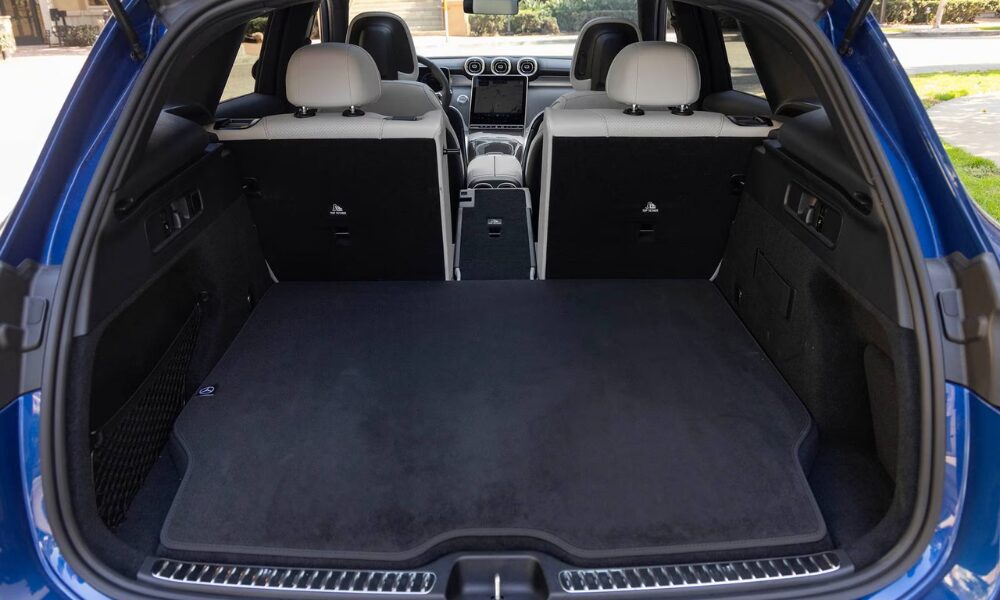
Cargo space behind the rear seats is officially rated at 21.9 cubic feet, which places the GLC below the segment average on paper. However, real-world usability tells a slightly more positive story. The shape of the cargo area is practical, and the loading floor is easy to access, making it suitable for groceries, luggage, or weekend gear without feeling overly constrained.
One of the more useful features is the 40/20/40 split-folding rear seatbacks, which can be lowered nearly flat using controls located directly in the cargo area. This adds flexibility when carrying longer items while still accommodating rear passengers. When the seats are folded, the GLC offers a more versatile space that supports occasional hauling duties without frustration.
Towing capability is another area where the GLC reveals its priorities. With a maximum towing capacity of 3,500 pounds, it is capable enough for small trailers or recreational equipment, but it trails rivals such as the Audi Q5 and BMW X3 by a noticeable margin. Buyers who plan to tow frequently or carry heavier loads may find this limitation worth considering.
the storage and cargo experience of the 2026 Mercedes-Benz GLC is adequate rather than class-leading. It supports daily use comfortably and offers enough flexibility for most lifestyles, but it does not cater to buyers who prioritize maximum space or towing capability. As with much of the GLC’s character, practicality is present, but always secondary to comfort and refinement.
Value
The 2026 Mercedes-Benz GLC presents an interesting value proposition that depends heavily on how you define “value” in the luxury SUV space. One of the GLC’s strongest qualities is that it never feels like a stripped-down or compromised product. Instead of coming across as an entry-level luxury model, it feels like a scaled-down version of Mercedes-Benz’s larger and more expensive SUVs. The materials, build quality, and overall sense of solidity give the impression that you are still buying into the brand’s flagship experience, just in a smaller footprint.
That sense of quality is consistent throughout the vehicle. The GLC feels well assembled, refined, and thoughtfully engineered in ways that go beyond surface-level impressions. Doors close with confidence, interior components feel durable, and the cabin maintains a premium atmosphere even after extended use. For buyers who associate value with craftsmanship, refinement, and long-term satisfaction, the GLC delivers in ways that are not always obvious on a spec sheet.
However, this approach comes at a cost. The GLC is one of the more expensive options in the compact luxury SUV segment across most trims and configurations. When compared purely on features-per-dollar, it often falls behind rivals that offer more standard equipment, larger cargo capacity, or longer warranties for the same money. Shoppers who prioritize maximum features or utility for their budget may find better value elsewhere.
Warranty coverage further complicates the value equation. Mercedes-Benz continues to trail much of the segment in this area. Both the basic and powertrain warranties are limited to four years or 50,000 miles, and roadside assistance is included only for that same period. There is also no complimentary scheduled maintenance, which adds to ownership costs over time. In a segment where some competitors offer longer warranties or included maintenance programs, this is a notable disadvantage.
the value of the 2026 Mercedes-Benz GLC depends on what matters most to the buyer. It is not the logical choice for someone shopping strictly by numbers or incentives. But for those who want a compact luxury SUV that feels genuinely premium, solidly built, and closely aligned with Mercedes-Benz’s higher-end models, the GLC justifies its price through quality and refinement rather than outright bargains.
MPG
Fuel economy is one of the quieter strengths of the 2026 Mercedes-Benz GLC, particularly in the GLC 300 4MATIC configuration. While efficiency may not be the primary reason most buyers consider a luxury SUV, the GLC manages to outperform expectations in this area without sacrificing refinement.
During CarDrav’s testing of the GLC 300 4MATIC, the vehicle returned an EPA-estimated 26 mpg combined in city and highway driving. This figure places it approximately 2 to 3 mpg ahead of most comparable luxury SUVs, giving it a noticeable advantage for drivers who cover a lot of miles throughout the year.
Real-world results further support those official numbers. On CarDrav’s standardized test route, the GLC achieved an impressive 27.9 mpg, reinforcing confidence that the EPA estimates are realistic rather than optimistic. This level of consistency between published ratings and actual driving is particularly reassuring for buyers who prioritize predictable ownership costs.
The mild hybrid system plays a meaningful role in these results. By assisting the gasoline engine during acceleration and allowing for smoother coasting behavior, the system helps reduce fuel consumption without altering the driving experience. The transitions between electric assistance and engine power are seamless, contributing to both efficiency and overall smoothness.
While plug-in hybrid variants in the GLC lineup can deliver even lower fuel usage for short trips, the standard GLC 300 strikes a strong balance. It offers efficiency that exceeds class norms while maintaining the simplicity and convenience of a traditional gasoline-powered SUV.
the fuel economy of the 2026 Mercedes-Benz GLC supports its reputation as a refined and well-rounded luxury SUV. It may not be marketed as an efficiency leader, but in everyday use, it proves to be both economical and easy to live with.
X Factor
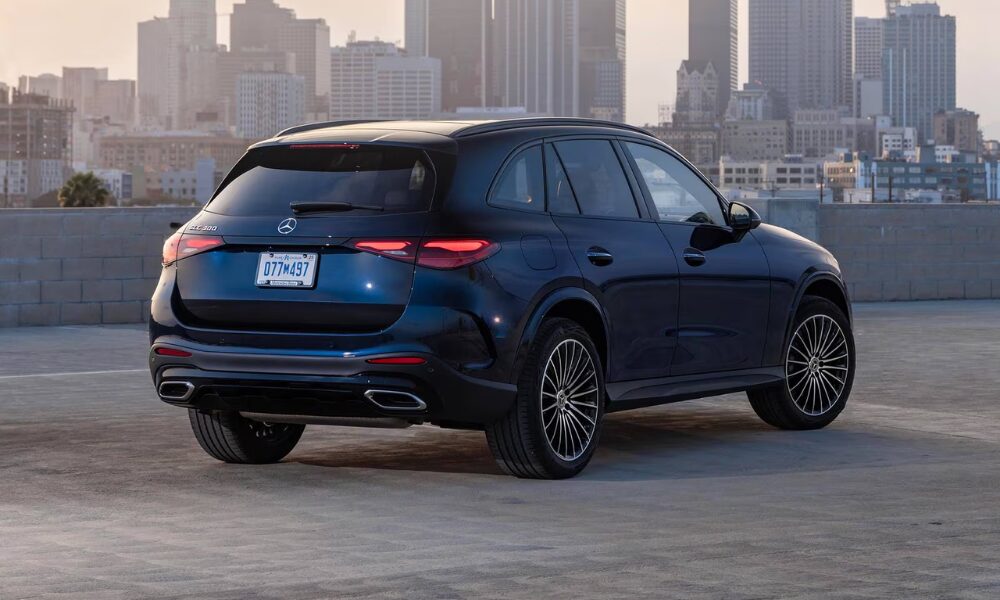
Understatement has long been a defining trait of Mercedes-Benz, and the 2026 GLC follows that philosophy almost to the letter. Its design is clean, familiar, and unmistakably Mercedes. There are no dramatic lines, no polarizing elements, and no visual risks taken. For some buyers, this restraint is exactly the appeal. The GLC looks timeless rather than trendy, and it is unlikely to feel dated any time soon.
However, that same restraint also defines the GLC’s limitations in terms of emotional appeal. The styling does not push boundaries or spark conversation. It blends in quietly among other luxury SUVs, projecting confidence through familiarity rather than excitement. In a segment where some rivals are experimenting with bolder designs or more expressive personalities, the GLC chooses the safest possible path.
This conservative approach might be easier to overlook if the driving experience delivered an extra layer of fun or engagement. Instead, the GLC remains consistently competent rather than memorable. It is smooth, predictable, and easy to drive every day. Everything works exactly as it should, but nothing surprises or delights in an unexpected way. There is no sense of playfulness or edge that encourages you to seek out a winding road just for the sake of it.
To be clear, this is not a criticism of the GLC’s abilities. It is genuinely pleasant to drive, relaxing in traffic, and confidence-inspiring on longer journeys. Many owners will appreciate exactly that. But at this price point, some buyers may reasonably expect a little more personality, a little more spark, or at least a stronger emotional connection behind the wheel.
The GLC’s X factor, then, is not excitement but reassurance. It is the kind of vehicle that fades into your daily routine in the best and worst ways. It never frustrates, never overwhelms, and never demands attention. Yet it also never challenges you or rewards enthusiasm in a meaningful way.
Safety
Safety is an area where the 2026 Mercedes-Benz GLC delivers a reassuring baseline rather than headline-grabbing innovation. The GLC comes equipped with a solid set of standard safety features designed to support the driver before, during, and after a potential incident, aligning well with expectations in the compact luxury SUV segment.
Core safety equipment includes a standard backup camera for low-speed maneuvering, blind spot monitoring to assist during lane changes, and a comprehensive stability control system that works quietly in the background. Tire pressure monitoring adds another layer of everyday reassurance, while the integrated alarm system contributes to vehicle security, particularly for urban ownership.
The GLC is also fitted with both pre-collision and post-collision safety systems. These technologies are designed to reduce the severity of an impact when a collision becomes unavoidable and to help prevent secondary accidents once an initial crash has occurred. Rather than feeling intrusive, these systems are calibrated to intervene only when necessary, maintaining the GLC’s calm and predictable driving character.
From an independent testing perspective, the Insurance Institute for Highway Safety (IIHS has evaluated several key aspects of the GLC’s crash performance, awarding the vehicle strong results in multiple crash test categories.
The vehicle earns Good ratings in the small overlap front driver-side test and the small overlap front passenger-side test, which are among the most demanding evaluations in modern crash testing. It also receives a Good rating in the original moderate overlap front test, reinforcing confidence in frontal impact protection.
In updated testing protocols, the GLC achieves a Good rating in the updated side impact test, indicating strong occupant protection in side collisions. Some areas, including the updated moderate overlap front test, roof strength evaluation, and rear crash protection for head restraints, have not yet been tested at the time of writing. This is not uncommon, especially when testing protocols evolve faster than model-year updates.
the safety profile of the 2026 Mercedes-Benz GLC reflects a well-engineered and thoughtfully protected vehicle. While not every test category has been evaluated yet, the results that are available suggest solid structural integrity and effective occupant protection. For buyers prioritizing calm, predictable safety performance supported by proven systems, the GLC offers a confidence-inspiring foundation rather than flashy promises.
2026 Mercedes-Benz GLC Trim Level Differences
The 2026 Mercedes-Benz GLC lineup is structured around powertrain choice rather than cosmetic or minor feature differences. Each trim is designed to appeal to a distinct type of buyer, from those prioritizing efficiency and everyday comfort to those seeking extreme performance. All versions are paired with a nine-speed automatic transmission, ensuring consistent refinement across the range.
The GLC 300 serves as the entry point into the lineup and represents the most traditional interpretation of the GLC formula. It is powered by a four-cylinder engine with mild hybrid assistance, delivering smooth acceleration and strong efficiency. Rear-wheel drive comes standard, which is increasingly rare in this segment, while Mercedes’ 4Matic all-wheel drive system is available as an option. This flexibility allows buyers to tailor the GLC 300 to their climate and driving needs without unnecessary cost.
The GLC 350e takes a more efficiency-focused approach as a plug-in hybrid. It combines a gasoline engine with a larger battery and electric motor, allowing for up to 54 miles of EPA-estimated electric-only driving. All-wheel drive is standard on this trim, and its ability to handle short daily trips without using gasoline makes it especially appealing for urban commuters or buyers with access to home charging. However, its higher purchase price and added complexity may not suit every owner.
Stepping into performance territory, the AMG GLC 43 blends sportier tuning with everyday usability. It features a more powerful engine and standard all-wheel drive, along with AMG-specific enhancements that sharpen throttle response and handling. While it delivers a noticeable increase in performance, it still retains much of the GLC’s comfort-oriented character, making it a middle ground between luxury and sport.
At the top of the range sits the AMG GLC 63 S E Performance, a radically different machine. This version uses a high-output plug-in hybrid system that combines a turbocharged engine with a powerful rear-axle electric motor, producing extreme performance figures. While technically electrified, this trim is focused on speed and capability rather than efficiency. It is the most expensive and most specialized version of the GLC, designed for buyers who want maximum performance regardless of cost or subtlety.
Across the lineup, the differences are clear and meaningful. Buyers are not simply choosing between trim badges, but between fundamentally different ownership experiences shaped by powertrain philosophy.
Which GLC Trim Does CarDrav Recommend?
While the GLC 350e plug-in hybrid is undeniably compelling thanks to its impressive electric-only range, CarDrav recommends the GLC 300 as the best overall choice for most buyers.
The primary reason comes down to balance. The GLC 300 delivers everything that defines the GLC’s appeal without introducing higher costs or added complexity. It offers smooth performance, strong efficiency, and a refined driving experience that feels well suited to everyday use. Despite being the base model, it never feels basic. Standard equipment is generous, the interior is genuinely premium, and the mild hybrid system ensures responsive and polished performance.
Cost also plays a significant role. The GLC 300 is noticeably more affordable than the GLC 350e and AMG variants, yet the day-to-day experience remains largely intact. For many buyers, the ability to drive short distances on electricity alone is appealing, but it may not justify the higher price and charging considerations of the plug-in hybrid.
The AMG models, while impressive, cater to a narrower audience. They add performance and character, but they also introduce higher purchase prices and running costs that may not align with what most GLC buyers are looking for.
the GLC 300 best captures what the Mercedes-Benz GLC does well. It is refined, comfortable, well equipped, and easy to live with. For buyers seeking a luxury compact SUV that delivers a premium experience without unnecessary expense or specialization, it remains the smartest and most well-rounded choice in the lineup.
How we review cars
CarDrav reviews are created to help readers make confident buying decisions. Each article is structured around real shopper questions: pricing, trims, efficiency, practicality, comfort, technology, safety, and ownership value. We compile information from official manufacturer materials and independent automotive data providers, then explain what it means in everyday use. Any numbers you see such as range, fuel economy, acceleration, cargo volume, charging times, warranty coverage, incentives, or pricingcan vary by trim level, equipment, location, weather, driving style, and market conditions. We aim to keep our information current, but we encourage readers to confirm key details with a local dealer or the manufacturer before purchase.
Sources
We use publicly available information from reputable references, including:
- Manufacturer specifications and official press information
- EPA estimates for fuel economy and electric range (U.S. market)
- IIHS and NHTSA safety ratings when available
- Published road tests and technical references from established automotive outlets and databases
When a model year is new and some results are not yet published (for example, updated crash tests), we clearly state that the data is pending.
FAQ
Is the Mercedes-Benz GLC a good car?
Yes, the 2026 Mercedes-Benz GLC is a solid and well-rounded luxury SUV, particularly for buyers who prioritize comfort, refinement, and build quality over outright value or sporty character. According to the GLC performs consistently well in everyday driving, offering a smooth ride, a quiet cabin, and a premium interior that feels more upscale than many rivals.
Cargo capacity measures 21.9 cubic feet behind the rear seats, which is below average for the segment, but the space is shaped well and remains usable in real-world situations.
What’s new in the 2026 Mercedes-Benz GLC?
There are no major changes for the 2026 model year. The GLC continues as part of the second-generation model introduced for 2023, carrying over its existing design, powertrain options, and technology. Mercedes-Benz has chosen to maintain continuity rather than introduce updates for this model year.
Is the Mercedes-Benz GLC reliable?
Reliability for the Mercedes-Benz GLC is generally in line with expectations for a modern luxury SUV. Based on owner feedback reviewed by CarDrav, most experiences highlight strong build quality, a comfortable daily driving experience, and dependable performance.
As with many premium vehicles, reliability can depend heavily on regular maintenance and driving conditions. Prospective buyers are encouraged to look for recurring owner complaints rather than isolated issues and to compare the GLC’s ownership experience against competitors in the same luxury class.
Is the 2026 Mercedes-Benz GLC worth buying?
Whether the 2026 Mercedes-Benz GLC is worth buying depends on what you value most. CarDrav’s assessment suggests it is a strong choice for buyers seeking a refined, quiet, and polished luxury SUV that feels like a smaller version of Mercedes-Benz’s flagship models.
Factors such as fuel economy, safety ratings, cargo space, warranty coverage, and feature availability should all be weighed carefully. Buyers who prioritize comfort and overall quality may find the GLC very appealing, while value-driven shoppers may want to cross-shop alternatives.
How much should I pay for a 2026 Mercedes-Benz GLC?
Pricing for the 2026 Mercedes-Benz GLC varies by trim and drivetrain. The least expensive version is the GLC 300 4dr SUV, powered by a 2.0-liter turbocharged four-cylinder engine with mild hybrid assistance and a nine-speed automatic transmission. Including destination charges, it carries an MSRP of approximately $49,550.
Other trims are priced as follows:
- The GLC 300 4dr SUV starts at $49,550.
- The GLC 300 4MATIC 4dr SUV AWD starts at $51,550.
- The GLC 350e 4MATIC plug-in hybrid starts at $60,300.
- The AMG GLC 43 4dr SUV AWD starts at $67,550.
Actual transaction prices may vary based on incentives, inventory, and regional market conditions.
What are the different models of the Mercedes-Benz GLC?
The 2026 Mercedes-Benz GLC lineup includes several distinct models, each defined primarily by its powertrain and drivetrain configuration. Available variants include the GLC 300, GLC 300 4MATIC, GLC 350e 4MATIC plug-in hybrid, and the performance-oriented AMG GLC 43.
All models are equipped with a turbocharged four-cylinder engine paired with hybrid assistance and a nine-speed automatic transmission, though performance output and electrification levels vary. Choosing the right model depends on priorities such as price, efficiency, performance, and whether all-wheel drive or plug-in capability is important for your lifestyle.