Mercedes EQS vs BMW iX (2025) Review: Late to the EV Party, But Better Than Ever

Mercedes EQS vs BMW iX (2025) Review: the German luxury establishment lived in a world of unshakable dominance. Mercedes-Benz, BMW, and Audi weren’t just carmakers they were cultural institutions, building machines that defined refinement, precision, and power. From autobahn-bred sedans to grand tourers and silky diesels, they had mastered combustion. The three-pointed star, the roundel, and the four rings symbolized engineering perfection.
Then, Silicon Valley cracked open the old world order.
When Tesla arrived, the Germans laughed. To them, this California upstart was a tech toy company, not a threat. They didn’t see an industry shift they saw a novelty. But within a decade, the smugness faded. Diesel scandals, software revolutions, and battery breakthroughs hit harder than anyone expected. Suddenly, the masters of mechanical excellence looked like students in a digital classroom. The industry’s center of gravity shifted from torque curves to touchscreens, from metallurgy to microchips.
And now, nearly a decade after Elon Musk’s Model S rewrote the rulebook, Mercedes and BMW have finally brought their answers. The Mercedes EQS and BMW iX are not experiments or conversions. They’re from-scratch electric flagships built to reclaim the ground Germany lost. They represent not just cars, but a national redemption project proof that the traditional titans can still innovate in an era defined by electrons, not octane.
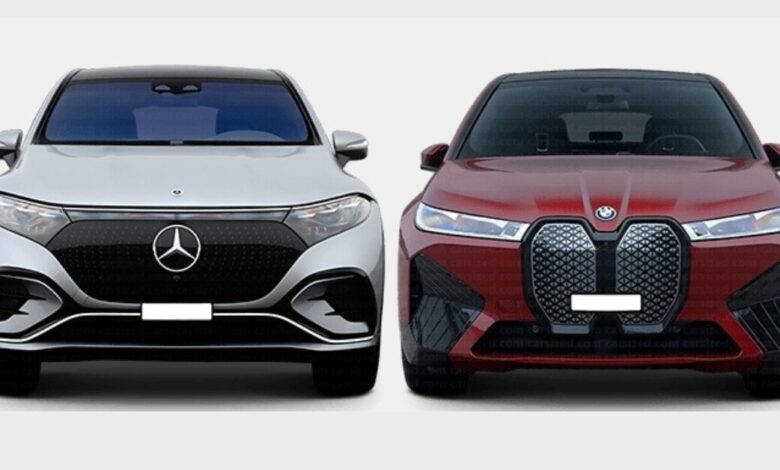
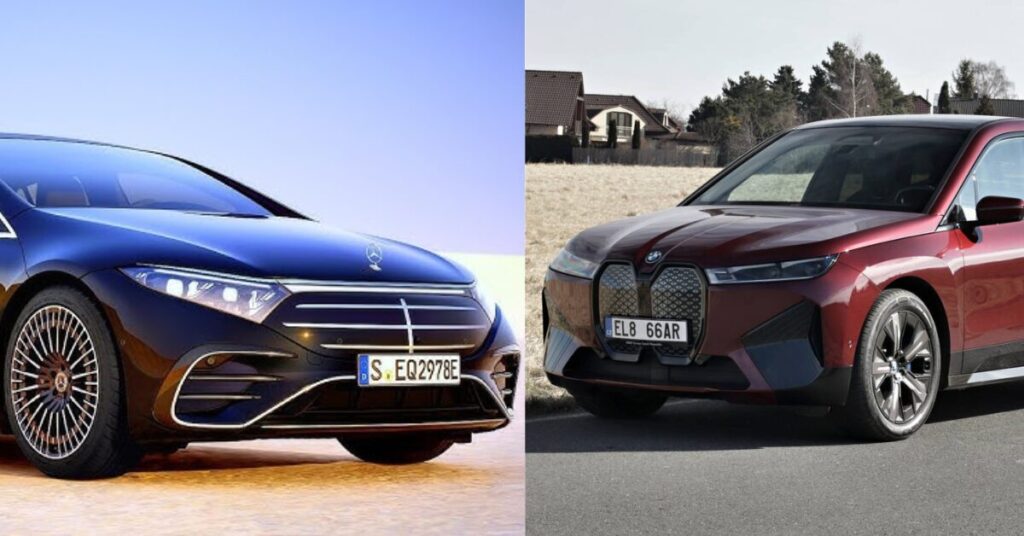
Yet, they couldn’t be more different in shape or spirit. The EQS is a low-slung luxury sedan the electric S-Class — smooth, silent, aerodynamic, and dripping with futuristic excess. The BMW iX, meanwhile, is a hulking SUV, upright and unapologetic, a statement of confidence disguised as a family hauler. Both cost well over a hundred grand, both claim to represent the best of German luxury in a post-Tesla world, and both are proof that being late doesn’t mean being unprepared.
But before we crown a winner, let’s set the scene.
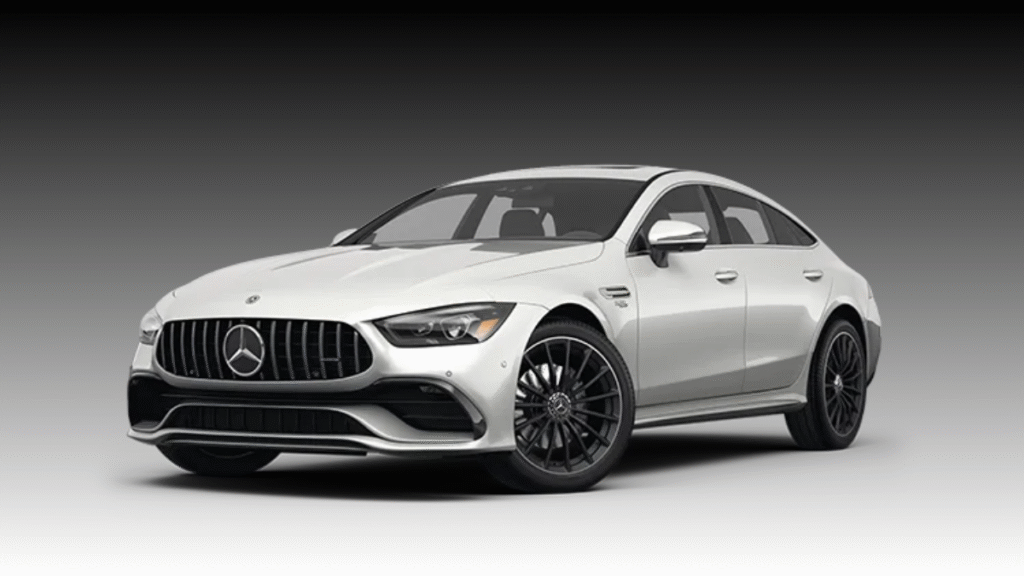
The EQS arrives as Mercedes’ first purpose-built EV platform. Not an adaptation, not a reworked E-Class, but a genuine electric flagship. It’s sleek, almost teardrop-shaped, with the world’s lowest drag coefficient at 0.20. In photos, it looks futuristic and fluid almost too smooth, like the surface of a bar of soap that’s been in the shower too long. It’s bold but not beautiful, futuristic but not timeless. The “grille” is no longer a grille at all it’s a black glass panel adorned with a backlit Mercedes star. The hood doesn’t open, the doors can open themselves, and the 107.8 kWh battery underneath promises a staggering 453 miles of range on paper.
Inside, it’s like stepping into a sci-fi lounge. The entire dashboard is a single sheet of curved glass the Hyperscreen stretching 55 inches across and housing three OLED displays under one slab. It’s equal parts theater and madness, dazzling but borderline overkill. The infotainment system (MBUX 2.0) is powerful, sharp, and voice-command capable, but even enthusiasts will need a week to master it. As always, Mercedes aims to overwhelm you with tech until you surrender and let the car do everything.
Underneath all that digital drama, however, lies the real Mercedes DNA: silence, composure, grace. The ride is pillow-soft, the steering precise, the body control impeccable. On the highway, the EQS is eerily quiet — so hushed that your own heartbeat becomes audible. There’s a level of serenity here that no Tesla has yet matched. It’s a car that doesn’t shout “future” it whispers it, in a tone as smooth as silk.
But the EQS is also a surveillance machine disguised as a sedan. With 350 sensors constantly monitoring your gaze, gestures, and driving habits, it learns your patterns. Look at the right mirror, and it highlights that side’s adjustment toggle. Look left, and it knows your intent. Step out in a parking lot, and it watches for scratches. It’s smart perhaps too smart reminding you that in the EV age, privacy is as much a luxury as horsepower once was.
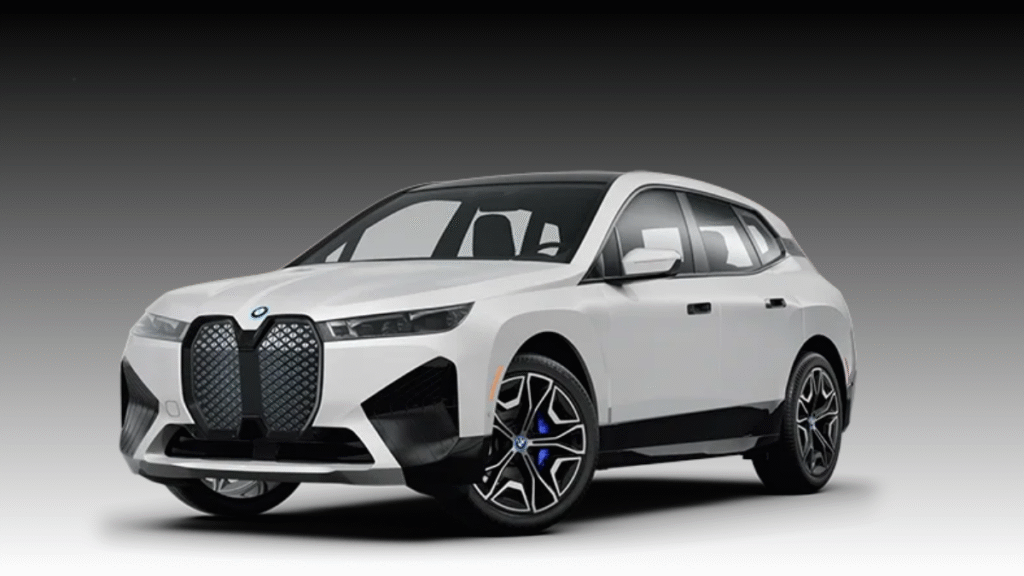
Across the ring, BMW’s response couldn’t be more different. The iX isn’t a sedan it’s a boxy, towering SUV that wears its design rebellion on its sleeve. If the EQS is a rolling teardrop, the iX is a clenched fist. It’s bold, unapologetic, and, depending on your taste, either futuristic or hideous. That polarizing “beaver tooth” grille oversized, vertical, and, ironically, not a grille at all hides a matrix of sensors beneath a self-healing polyurethane skin. Hit it with a rock, wait for the sun to warm it, and the scratches vanish like magic.
Beneath the skin, the iX is a structural masterpiece. Its chassis combines aluminum, steel, and carbon-fiber-reinforced plastic a nod to BMW’s lightweight heritage from the i3 and i8. You can actually see the exposed carbon weave when you open the doors. The 105.2 kWh battery is integrated into the floor, giving it a range of up to 380 miles in its most optimistic form. The model tested the xDrive50 sends 516 horsepower and 564 lb-ft of torque to all four wheels. Despite weighing over 2.5 tons, it can sprint to 60 mph in just 4.6 seconds. That’s the kind of absurdity only electric torque can deliver.
Yet the iX isn’t just about brute power. Its cabin feels warm and inviting, sculpted in a way that feels more “lounge” than “cockpit.” Gone are the old BMW buttons and dials; in their place is a minimalist interior built around sustainable materials open-pore wood, crystal glass controls, and soft recycled fabrics. It feels like a vision of luxury that doesn’t rely on chrome and leather but on calmness and light. The curved twin displays (14.9 inches for infotainment, 12.3 for the driver) are crisp and elegant, running BMW’s OS8 software. The interface can be intimidating at first, but it’s intuitive enough once you live with it. And yes, the sound effects acceleration tones and ambient themes were composed by Hans Zimmer. Only BMW would think of that.
Driving the iX feels different from any traditional BMW. It’s quicker, yes, but less mechanical, more digital. The steering is heavier, the throttle sharper, and the regenerative braking almost telepathic. Adaptive regen uses sensors and navigation data to predict when to coast and when to brake, turning every drive into a silent conversation between car and road. It’s not the most emotional machine at least not in the classic “Ultimate Driving Machine” sense but it’s deeply competent, eerily smooth, and surprisingly engaging for a two-and-a-half-ton SUV.
The irony? The EQS and iX, despite being wildly different in form, share the same philosophy: both are tech showcases before they are cars. Both represent brands once defined by mechanical perfection now reinventing themselves through software. And both, in their own ways, prove that Germany may have been late to the EV revolution but it hasn’t lost its touch.
When the Wheels Start Turning
Sliding into the Mercedes EQS feels like stepping into a vision of the future designed by people who have spent a lifetime perfecting comfort. It doesn’t shout for attention; it simply cocoons you. Everything about it is calm, from the soft close of the doors to the delicate pulse of ambient light that sweeps across the cabin. The seats are sculpted and perfectly padded, the silence almost absolute. Press the accelerator and the car glides forward with the kind of smoothness only a full EV can offer. No vibration, no delay, just instant motion wrapped in quiet authority.
Mercedes engineers wanted the EQS to feel like the electric embodiment of the S-Class, and they nailed it. The ride quality is pure velvet. Even over rough city pavement, the air suspension flattens imperfections like a magician hiding his tricks. At highway speeds, the car seems to detach from the physical world, floating effortlessly while the world outside fades into a hush. If serenity could be measured, the EQS would set the benchmark.
But that serenity comes with a strange sense of detachment. The steering is light and the brakes soft, tuned for ease rather than excitement. It’s a car that encourages you to relax instead of drive. That isn’t necessarily a flaw, because the EQS doesn’t want to be a performance car. It wants to be the most refined way to travel, a car that soothes rather than stimulates. Yet, in a way, that restraint makes it less memorable for those who still crave the emotional pull of driving.
The tech inside continues to blur the line between intelligence and indulgence. The Hyperscreen is mesmerizing, but it dominates the cabin so completely that it turns luxury into spectacle. It feels like a luxury suite built by a Silicon Valley designer who couldn’t resist showing off. For some, it will be a triumph of modernity. For others, it’s overkill, a glowing distraction that hides the craftsmanship behind layers of pixels.
Shift focus to the BMW iX and everything changes. It’s taller, heavier, and more extroverted in every sense. The seating position is commanding, the visibility superb. Push the start button and the displays awaken with soft tones composed by Hans Zimmer himself. It’s theater, but done with the typical BMW precision. The steering wheel, oddly hexagonal, feels strange at first but starts to make sense once you’re in motion. The iX moves with an assertive grace, every input precise and immediate. It’s the kind of confidence that makes you forget you’re piloting a two-and-a-half-ton SUV.
The iX’s dual motors make it far quicker than the EQS, and the torque hits with a sharpness that reminds you this is still a driver’s brand. Acceleration is effortless, overtaking instantaneous. Yet BMW has resisted the temptation to make it brutal. The power delivery is smooth, linear, and always under control. Where the EQS isolates you, the iX keeps you engaged. You feel connected to the car’s responses even when it’s whisper-quiet. That connection is subtle, more emotional than mechanical, but it’s there.
Over long stretches of road, both cars reveal their personalities. The EQS is a meditation on comfort, its suspension tuned for calm composure. The iX, in contrast, has a firmer edge, keeping body motion in check and maintaining composure even in quick lane changes. It rides beautifully but you’re always aware that it’s an SUV. Push it hard into corners and the weight shows. The Mercedes feels more balanced, flatter, and composed. It’s also quieter at speed, its slippery aerodynamics giving it an almost eerie stillness. The BMW counters with sharper steering and more responsive throttle behavior.
Inside the cabins, philosophy diverges again. Mercedes celebrates opulence, layering leather, metal, and glass with theatrical lighting. BMW chooses minimalism and tactility. The iX’s open-pore wood trim and crystal-glass controls feel refreshing. The layout is uncluttered, the tech less intrusive, and the sense of space more organic. It’s the difference between a high-end penthouse and a modern art studio. Both are luxurious, but one dazzles while the other calms.
Living with them day to day, the differences grow sharper. The EQS pampers but keeps its driver at arm’s length. It’s so good at isolating you that the world outside feels remote. The BMW, though, makes you part of the process. Even in mundane traffic, its immediacy keeps you involved. It’s not a sports car, but it has the soul of one hiding beneath its calm surface.
The EQS does fight back with one thing the BMW can’t match: total refinement. At highway speeds, it’s possibly the quietest production car on sale. Wind noise is practically nonexistent, tire roar minimal, and vibration zero. The iX is quiet, too, but its upright body lets in a whisper more wind, and its ride, while excellent, can’t quite match the liquid smoothness of the Mercedes.
Each car shows what its maker values most. Mercedes still chases the feeling ofperfection, every line of code written to make life easier, smoother, quieter. BMW aims for connection, creating a digital machine that still honors its old DNA. In their own ways, both succeed.
But under the surface, a subtle truth emerges. The EQS feels like a car designed for its passengers. The iX feels like a car built for its driver. And that difference says more about the future of German luxury than any spec sheet ever could.
The Verdict
By the time both cars have stretched their legs, the comparison feels less like a contest and more like a reflection of philosophy. Each one represents a different interpretation of the electric age, filtered through a century of heritage. The EQS and iX arrive at the same destination from completely different directions, and the result is fascinating.

1-The Mercedes EQS is a showcase of precision. It moves with quiet confidence, gliding through the world with an elegance that feels almost ceremonial. It is not just an electric sedan; it is a statement that Mercedes still defines luxury. Every movement, every vibration, every piece of information that reaches the driver is filtered until only calm remains. The EQS redefines what it means to travel in peace. At its best, it feels closer to a Rolls-Royce than to anything with a charging port. You don’t drive it so much as experience it.
2-The BMW iX approaches the same idea from a completely different angle. It does not want to isolate you from the road; it wants to translate it. There’s still a spark of the old BMW spirit buried under the electrons. The steering has genuine weight and precision, the chassis feels alive, and the power delivery makes the car feel smaller and lighter than its size suggests. You sense motion, control, and purpose. It may not have the EQS’s serenity, but it has personality, and that counts for a lot.
Technology defines both machines. The Mercedes is a digital cathedral, its Hyperscreen stretching across the cabin like a futuristic altar. It’s beautiful but overwhelming, a masterpiece of overengineering that will impress every guest who sits inside. The BMW’s tech is subtler and more natural, quietly serving the driver instead of demanding attention. Its operating system feels easier to live with, less of a learning curve and more of an assistant that quietly adjusts to your habits. Over time, that simplicity becomes its greatest strength.
On the road, their differences become even clearer. The EQS remains graceful no matter how hard you push. It absorbs the chaos of traffic and transforms it into composure. It’s the kind of car you could drive across an entire country and arrive without stress or fatigue. The iX, by contrast, thrives on involvement. It’s the car that makes every commute feel like something worth doing, even if it sacrifices a bit of the EQS’s silence. Its ride is firm but never harsh, its body control excellent, and its responses immediate. You feel like you’re part of the machine rather than a passenger in it.
There’s also a cultural contrast between them. The EQS represents the old-school idea of luxury, built around comfort, grandeur, and isolation. The iX reflects a new world where luxury means connection, sustainability, and digital sophistication. Mercedes sells you serenity. BMW sells you engagement. Both are valid visions of the future, and both feel entirely German in their execution: obsessive, deliberate, and deeply engineered.
From a pure performance standpoint, the BMW wins the numbers game. It’s quicker, more agile, and more responsive. But performance alone does not define the experience. The Mercedes feels special in ways that are harder to quantify. Its refinement, its silence, and its effortless grace make it feel almost alive in its calmness. It’s the car that gives you space to think. The BMW gives you reasons to smile. One soothes, the other stimulates.
Choosing between them is like choosing between two philosophies. The EQS feels like the natural evolution of the limousine, the perfectionist’s electric dream. The iX feels like the rebirth of the grand touring SUV, mixing technology with human touch. They stand at opposite ends of the same vision, proof that even in an era of algorithms and battery chemistry, personality still matters.
In the end, the Mercedes EQS takes the crown. It’s not because it’s faster or smarter, but because it delivers a complete experience. It brings together engineering discipline and emotional polish in a way few electric cars ever have. It reclaims the notion that true luxury lies in effortlessness. The BMW iX remains the driver’s choice, the car that keeps the heart of the brand alive while pushing it toward the future. If you want engagement, the iX is the one. If you want tranquility, the EQS stands alone.
What’s most impressive isn’t which one wins, but what both represent. Germany has finally caught up to the electric revolution it once dismissed. These cars are proof that innovation and tradition can coexist, that even the most established brands can reinvent themselves without losing their soul. The electric age hasn’t humbled Mercedes or BMW; it has challenged them to evolve. And as these two machines glide silently into the future, one thing becomes clear: the Germans may have been late to the EV party, but they have arrived with style, precision, and unmistakable purpose.
Final Verdict
First Place: Mercedes EQS
Second Place: BMW iX
The EQS wins this comparison for its refined comfort, outstanding range, and unmatched sense of luxury.
The BMW iX follows closely with stronger performance, a more dynamic driving feel, and a connection that appeals to those who still love to drive. Both stand as proof that German engineering has fully embraced the electric era, each with a different vision of what modern excellence means.
| Specification | Mercedes-Benz EQS 450+ | BMW iX xDrive50 |
|---|---|---|
| Price | £113,995 (as tested £121,990) | £99,140 (as tested £116,965) |
| Powertrain | 107.8 kWh battery, single electric motor, rear-wheel drive | 105.2 kWh battery, twin electric motors, all-wheel drive |
| Performance | 328 bhp, 419 lb-ft, 0–62 mph in 6.2 seconds, top speed 130 mph | 516 bhp, 564 lb-ft, 0–62 mph in 4.6 seconds, top speed 124 mph |
| Weight | 2,480 kg | 2,585 kg |
| Efficiency | 3.2–3.7 miles per kWh (official), 2.6 miles per kWh (tested) | 2.9–3.0 miles per kWh (official), 2.1 miles per kWh (tested) |
| Range | 453 miles (official), 363 miles (tested) | 380 miles (official), 266 miles (tested) |
| Emissions | 0 g/km CO₂ | 0 g/km CO₂ |
Cardrav Conclusion
If luxury means silence, grace, and polish, the EQS takes the crown without question. It is the most complete expression of electric refinement to come from Germany yet. If, however, you want a car that reminds you why driving still matters, the BMW iX makes a stronger emotional case. It’s faster, bolder, and more engaging, even if it can’t match the Mercedes for tranquility.
Either way, both cars stand as milestones. They mark the moment when the German giants finally embraced electricity not as an obligation, but as an art form.