Rimac Nevera Review: The AI Hypercar that Rewrites Physics

Rimac Nevera: I always believed it was impossible to surprise myself behind the wheel. Not emotionally or mentally, but physically. The body, I thought, always knows what’s coming when it gives the order. When you decide to accelerate, brake, or turn, your senses prepare for it. Your mind leads, and your body follows. It is the unwritten contract between the driver and the machine.
That was true for me, until I met the Rimac Nevera.
The Nevera isn’t just another electric hypercar. It’s a redefinition of movement itself, a machine that feels as though it negotiates with the laws of physics rather than obeying them. The first time I sat in its carbon-fiber cockpit and pressed the start button, there was a stillness in the air, a sort of quiet tension that whispered that something extraordinary was about to happen.
I’ve driven cars that roar, cars that whisper, cars that vibrate with mechanical emotion. None of that prepared me for what Rimac created. This isn’t acceleration as you know it. It’s an eruption, perfectly silent yet unimaginably powerful, as if the entire world suddenly decided to move around you instead of the other way around.
Even before that first launch, I thought I was ready. I knew the numbers: four electric motors producing a combined 1,888 horsepower and 2,360 newton-metres of torque. I knew the theory, the equations, the science. What I didn’t know was that all the preparation in the world cannot ready your body for the moment the Nevera moves.
Experiencing Acceleration Beyond Human Expectation
Engaging launch control in the Nevera is an experience that rewires your understanding of cause and effect. You release the brake, press the accelerator, and the world folds in on itself. There’s no hesitation, no gradual buildup, just immediate, absolute thrust. The power hits instantly, smooth but merciless, as if gravity has been inverted and you’re falling forward into the horizon.
At that instant, the human body stops being a reliable interpreter of motion. Your brain sends the command, but your organs don’t get the memo in time. You can feel your spine and stomach trying to relocate in opposite directions, a physiological protest against the violence of precision. I had to lift off the pedal before the car even reached its limit, not out of fear for the car but out of disbelief in what was happening to me.
The Nevera reaches one hundred kilometres per hour in just 1.81 seconds, but the sensation can’t be measured in numbers. It’s like pulling the trigger of a railgun aimed at the horizon. Your perception stumbles as the world blurs, and yet the car itself remains calm and composed.
I have driven a Formula One car before, one of Damon Hill’s old Arrows, and it felt primitive in comparison. That machine screamed for attention. The Nevera, by contrast, simply executes. No noise, no fuss, no vibration just silent, surgical power. It’s not chaos; it’s choreography.
The Mind of the Machine
What makes the Rimac Nevera so extraordinary is not just its raw speed, but its intelligence. Each of its four electric motors controls a wheel independently, adjusting torque and traction in real time through a network of sensors and algorithms. The car thinks, reacts, and adapts faster than any human could.
This is what Rimac calls AI torque vectoring the invisible genius that transforms impossible power into perfect control. The system reads the surface, grip, steering angle, and throttle input thousands of times per second, deciding how much force each wheel should receive. The result is motion that feels supernatural. There’s no tire squeal, no wasted energy, only seamless thrust.
In those moments, you realize the Nevera isn’t responding to you, it’s anticipating you. It feels alive, intuitive, almost telepathic. You turn, and the car has already prepared for it. You brake, and the regenerative system responds like a mind reading your intention. It’s not just driving; it’s collaboration.
The cabin mirrors this intelligence. Clean, minimalist displays deliver information without distraction. Every element feels sculpted around function and purpose. The steering feels light but decisive, and the car’s weight, though significant, disappears the moment it moves. Even at terrifying speeds, the Nevera remains balanced, composed, and eerily smooth.
When Technology Feels Human
The deeper magic of the Rimac Nevera lies in how it makes technology feel emotional. For all its algorithms and precision engineering, the car doesn’t feel robotic. It feels alive. You sense the rhythm of its powertrain, the grace in its grip, the awareness in its reactions.
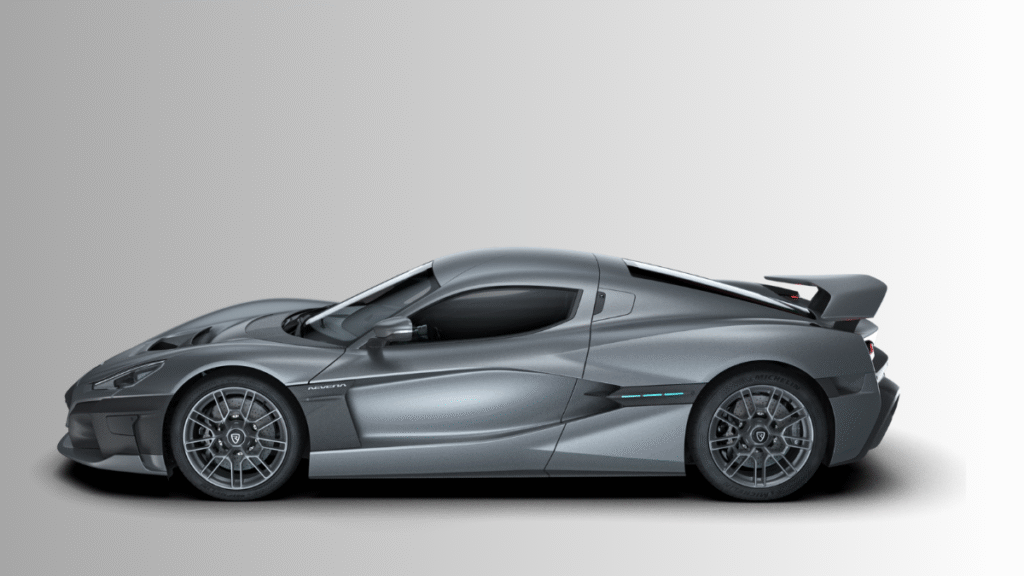
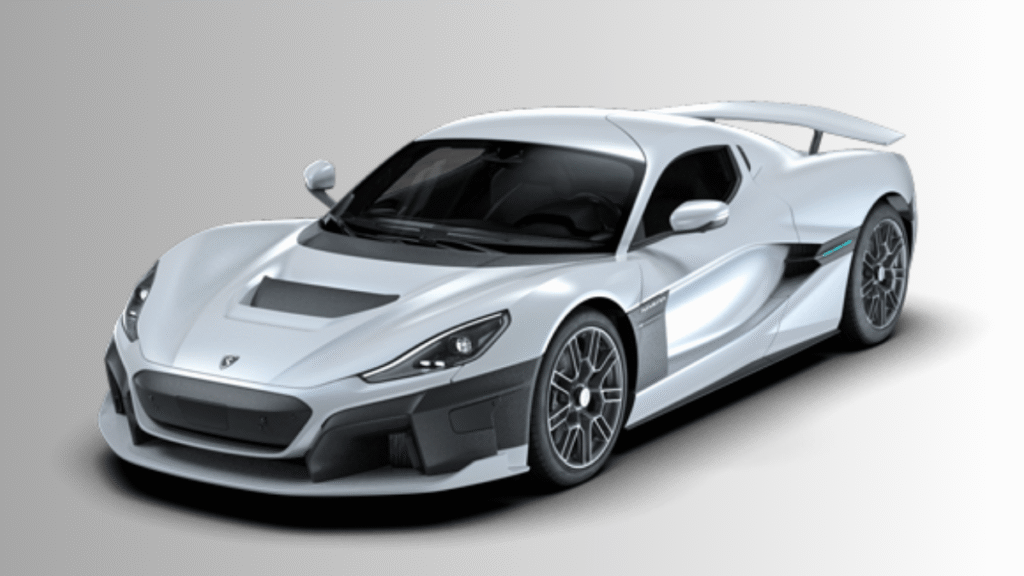
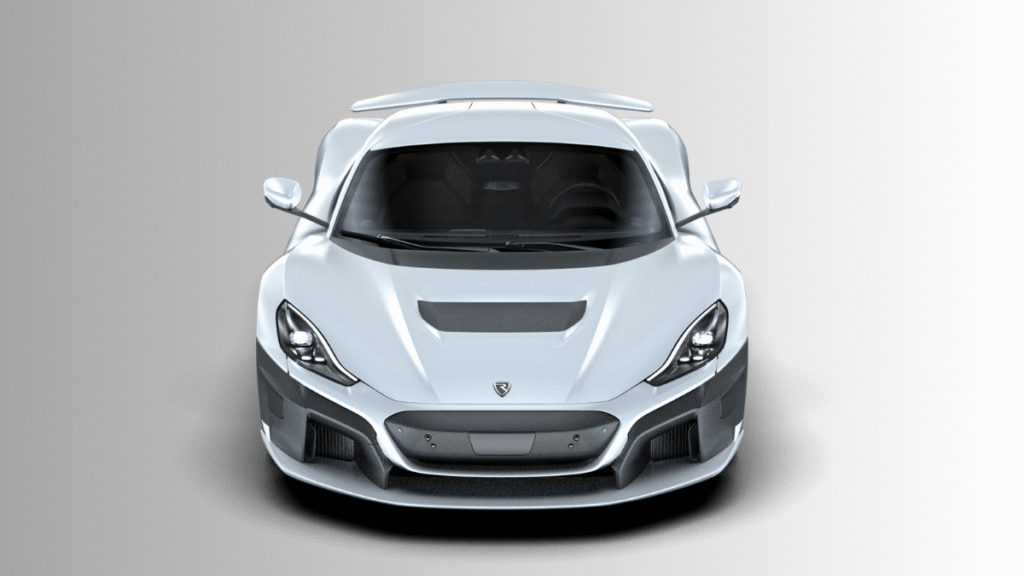
Even when standing still, it looks like motion frozen in time. Its design is fluid, every line cut with aerodynamic purpose. Light flows across its surfaces like electricity over water, and when you catch its reflection, you understand that this is not just an EV it’s a piece of kinetic art.
Driving it is like witnessing the future compress into the present. It’s the fusion of data, power, and beauty into something that makes your pulse race and your perspective shift. The Nevera proves that electric cars can have soul, that speed can be intelligent, and that silence can roar louder than any V12 ever could.
If all you ever did with this car was to feel that 1.81-second surge again and again, it would still be worth its two-million-euro price tag. Because in those seconds, you are not simply accelerating you are rewriting what you thought possible.
The Rimac Nevera doesn’t just defy physics, it defies expectation. It teaches you that true performance is not measured by numbers, but by the emotions you can’t quite describe when the future takes your breath away.
The Genius Beneath the Surface
What truly defines the Rimac Nevera isn’t just its savage acceleration or its ability to leave your body in disbelief; it’s the calm intelligence that lies underneath that chaos. Mate Rimac’s creation is not a car that merely breaks speed records. It is an engineering thesis written in carbon fiber and powered by electrons on how intelligence can coexist with brute strength.
Every supercar today boasts a carbon-fiber chassis, but Rimac treats this foundation as an art form. The Nevera’s monocoque structure is so rigid it twists only a single degree under an astonishing 70,000 newton-metres of torque. That number may sound abstract, but it represents something almost unheard of in automotive design: the stiffest production car chassis ever created, more than double the torsional rigidity of typical hypercars. Imagine carving a sculpture out of the Earth’s crust that’s what driving the Nevera feels like. It’s solid, unflinching, and absolutely predictable, even when the world around it blurs.
Beneath that rigidity lies Rimac’s real triumph: All-Wheel Torque Vectoring. This system is not a buzzword or a gimmick; it is the reason the Nevera feels alive rather than mechanical. Each wheel has its own motor and gearbox, two up front producing 296 horsepower each, and two in the rear delivering 644 horsepower apiece. Four separate powertrains, acting in perfect digital harmony, decide in real time how much force each tire should command.
Power with Precision
The result is uncanny control. The same car that can rearrange your internal organs in a straight line becomes a model of composure in the corners. No matter how sharp or fast the turn, you can bury the throttle with absolute confidence. The Nevera’s AI-driven torque vectoring system reads every millisecond of tire slip, steering angle, and grip level, then sends exactly the right amount of torque to exactly the right wheel. The effect is seamless not a twitch, not a struggle, only pure, unbroken motion.
It feels like the laws of traction have been rewritten in code. The Nevera doesn’t fight physics; it negotiates with it, bending reality just enough to keep you in control. To drive it hard through a set of curves is to realize how far software has evolved beyond human reflexes. It’s impossible not to admire the level of mastery at play here.
Consider this: the same machine capable of out-accelerating Formula One cars also manages to feel effortless in tight bends. That level of sophistication doesn’t happen by accident. It happens when more than half of your 2,000-plus employees are engineers and programmers obsessed with perfection. Rimac isn’t just building cars; it’s building algorithms that redefine what a hypercar can be.
Control Over Chaos
Of course, not everything about the Nevera is extreme for its own sake. When the torque vectoring system takes a step back, the car’s basic chassis tune favors mild understeer, a deliberate choice to ensure stability at the edge of performance. The tires Michelin Pilot Sport 4S, 275/35R20s in front and 315/35R20s in the rear may not have the sticky aggression of Pirelli’s Trofeo Corsas, but they offer a balance between composure and predictability, perfectly aligned with the Nevera’s mission to make 1,888 horsepower usable.
Even its aerodynamics follow the same philosophy of balance over bravado. The active elements constantly adapt, adjusting airflow for cooling and stability, but the total downforce hovers around 250 to 300 kilograms modest compared to wing-heavy track monsters like the McLaren Senna or Lamborghini Huracan Performante. Yet that’s the point. The Nevera isn’t designed to live exclusively on racetracks. It was built to be civilized speed, the kind of car that can dominate any road without punishing its driver.
It doesn’t need to scream its intentions through exaggerated wings or aggressive tire compounds. Its power is disciplined, its intelligence invisible, and its performance delivered with surgical calm. The Nevera is proof that the future of hypercars isn’t just about speed or theatrics, but about merging raw mechanical force with digital grace.
Mate Rimac once said his goal wasn’t to build the fastest car in the world, but the smartest. After driving the Nevera, that ambition no longer sounds theoretical. It feels real, tangible, and alive in every corner you take.
Beyond the Straight Line
If you’ve made it this far into the story of the Rimac Nevera, you might think it’s a car obsessed with straight-line heroics, a lightning bolt of acceleration but perhaps lacking grace when the road begins to twist. That assumption couldn’t be more wrong. This is not just another electric powerhouse chasing records; it’s a completely different kind of supercar one that blends digital precision with human thrill in ways no combustion engine ever could.
Proof? The Nevera recently conquered the legendary Goodwood Hillclimb, carving its name into automotive history. Yes, raw speed played a part, but the real victory came from control. Goodwood isn’t a drag strip; it’s a narrow, technical hill that tests balance, grip, and composure. What the Nevera achieved there was a display of engineering harmony torque, traction, and intelligence working as one.
Mate Rimac never wanted to build the loudest or flashiest car. His vision was to redefine performance itself. Long before the Nevera existed, he was a driver obsessed with experimentation. His first electric build a converted 1984 BMW 323i producing over 600 horsepower wasn’t made to go straight. It was built to drift. That sideways obsession became his engineering philosophy: if you can control chaos, you can master performance.
A Supercar That Can Dance
That same philosophy lives inside the Nevera. Among its multiple drive modes Range, Cruise, Sport, and Track there’s one setting that captures Mate Rimac’s spirit completely: Drift Mode. With the push of a button, the car’s AI redistributes its massive torque to favor the rear wheels, allowing a machine with nearly 1,900 horsepower to move like a dancer on ice.
I didn’t dare try it myself. With only a short window on Rimac’s private test track and a pristine, two-million-euro hypercar at my disposal, I chose self-preservation over showmanship. But according to the engineers and my intuition the Nevera will happily paint black art across the tarmac. With 1,740 pound-feet of torque available, most of it at the rear, the car could turn its 315-millimeter Michelins into vapor in less than a minute.
What’s truly remarkable, though, isn’t that the Nevera can drift. It’s that it makes such insanity manageable. Rimac’s software engineers who make up more than half of the company’s workforce have tuned the AI torque-vectoring system so precisely that it translates chaos into choreography. Flooring 2,360 newton-metres of torque mid-corner doesn’t unsettle the car. It steadies it. That’s not just power that’s digital intuition.
More Than a Power Number
Beneath all this drama and intelligence lies another quiet revolution. The Nevera’s 120-kilowatt-hour battery is not just a reservoir of energy; it’s the most advanced charging system ever fitted to an EV. Using a 500-kW charger, the car can replenish 80 percent of its charge in just nineteen minutes an astonishing average rate of 300 kilowatts. That’s nearly double what most flagship EVs, from Tesla to Porsche, can manage today.
This speed of recharge transforms the Nevera from a track weapon into a real-world companion. It’s a machine that refuses to compromise between power and practicality. While it may cost as much as a private jet, it’s also one of the most technically complete vehicles on the planet a car that embodies the evolution of electric mobility from novelty to supremacy.
When Mate Rimac designed the Nevera, he wasn’t trying to build the loudest car on the road. He was trying to build the most intelligent one. Every piece of this machine from its carbon-fiber structure to its neural torque control speaks to a vision where human instinct meets machine precision.
The result is a hypercar that doesn’t just accelerate faster than anything else on four wheels. It thinks faster, learns faster, and reacts faster. And that, perhaps more than its records or statistics, is what makes the Rimac Nevera one of the most extraordinary cars ever created.
Engineering Beyond the Nevera
What might be most impressive about Rimac isn’t just the car itself, but what comes next. The Nevera isn’t an end in itself; it’s a blueprint for the future of electric mobility. Every volt, every data point, and every line of code that powers this hypercar has become a foundation for something far greater a new era of electric propulsion built by Rimac for the world.
Behind the shimmering carbon shell of the Nevera lies a company quietly reshaping the automotive landscape. The same team that engineered a 1,888-horsepower masterpiece is now channeling its expertise into developing electric motors, battery systems, and performance software for other manufacturers. This is where Rimac truly stands apart. It’s not just a carmaker it’s an engineering powerhouse.
Right now, that innovation fuels the dreams of elite brands like Pininfarina and Koenigsegg, whose hypercars share DNA with the Nevera’s heart and brain. But the horizon is widening. Partnerships with major automakers such as BMW and Hyundai are already forming, signaling a future where Rimac’s technology could power everything from handcrafted hypercars to high-performance sedans.
It’s a fascinating evolution. The company that once shocked the world with its raw speed is now teaching the world how to move smarter. The same precision software that controls four independent electric motors in the Nevera could soon be managing torque in millions of everyday vehicles. The same high-density battery packs that charge to 80 percent in nineteen minutes could redefine efficiency and sustainability for mainstream EVs.
Rimac’s genius lies in turning its obsession with perfection into an open source of progress for the industry. The Nevera was the proof of concept a living demonstration of what happens when artificial intelligence, physics, and design converge without compromise. Now that knowledge is being multiplied, refined, and distributed.
Maybe the next generation of electric BMWs or Hyundais won’t make your stomach twist like the Nevera does when it launches, but they will carry its spirit precision, control, and the relentless pursuit of better. That might be Rimac’s greatest legacy: not just building the fastest electric car in the world, but teaching the world how to build better ones.