AI in Automotive: Driving the Future of Smart Mobility

Discover how AI in the automotive industry is transforming vehicle design, manufacturing, and driving intelligence. From predictive maintenance to next-generation electric propulsion, explore how artificial intelligence is redefining mobility, efficiency, and performance.
The Dawn of a Smarter Automotive Era
Artificial Intelligence (AI) is no longer a futuristic add-on to the automotive industry it has become its heartbeat. Across every stage of the vehicle lifecycle, from design conception to after-sales diagnostics, AI-driven systems are unlocking efficiencies, enhancing safety, and reshaping how humans interact with mobility. What was once considered experimental self-learning machines, data-driven diagnostics, and predictive control is now embedded in production lines, electric powertrains, and even the in-vehicle experience.
The AI revolution in the automotive industry is not about replacing human expertise it’s about augmenting it. Engineers, designers, and manufacturers are leveraging massive data sets, advanced machine learning algorithms, and deep learning architectures to simulate, predict, and optimize in ways never before possible. The result? Cars that think, factories that learn, and driving experiences that adapt in real time.
What AI Really Means for the Automotive Sector
When we talk about AI in the automotive industry, we’re referring to a spectrum of smart technologies machine learning, computer vision, deep learning, neural networks, and natural language processingworking in harmony to enhance how vehicles are designed, built, and operated. Each layer of this intelligent ecosystem translates raw sensor data, user behavior, and environmental conditions into actionable insights. These insights drive innovation across safety, efficiency, and performance.
In manufacturing plants, AI optimizes workflows, reduces downtime, and predicts equipment failures before they happen. On the road, AI powers Advanced Driver Assistance Systems (ADAS), processing millions of inputs per second to keep drivers safe and confident. Meanwhile, at the strategic level, automakers use AI to forecast market trends, personalize user experiences, and manage the increasingly complex supply chain that fuels global production.
This convergence of intelligence marks a turning point. The car is no longer just a machine it’s a cognitive entity. The factory is no longer an assembly line it’s a digital ecosystem. The customer is no longer just a buyer but an active participant in a data-driven, AI-powered feedback loop that continuously refines the automotive experience.
Predictive Powertrains and the Rise of Intelligent Propulsion
Nowhere is AI’s impact more evident than in the development of electric powertrains. As the world accelerates toward full electrification, efficiency, safety, and performance are paramount. Here, predictive thermal management a once-complex engineering problem is being redefined by AI.
Take ZF’s TempAI, for instance. This groundbreaking solution uses machine learning models to predict temperature fluctuations within electric motors with remarkable precision boosting forecast accuracy by over 15%. That accuracy translates into a tangible 6% increase in peak power output, proving that when AI meets engineering, the results are not theoretical they’re measurable.
By integrating TempAI’s insights, automakers can refine range calculations, optimize torque delivery, and extend battery life. Data scientists can overlay these predictions with real-world telematics to further enhance system resilience. For suppliers, embedding AI in subsystems like cooling circuits, converters, and control modules becomes a powerful differentiator positioning them at the forefront of AI-driven propulsion innovation.
A Leap in Battery Intelligence
Beyond powertrains, AI-enabled battery platforms are revolutionizing how energy storage systems are developed and deployed. Traditional R&D approaches based on trial, error, and prolonged physical testing are giving way to hybrid modeling techniques that combine physics-based simulations with machine learning.
Factorial’s Gammatron exemplifies this shift. Using advanced algorithms, it simulates battery outcomes in days instead of months, helping engineers identify the perfect balance between fast charging and long-term durability. By integrating data from chemistry, thermal behavior, and performance metrics, Gammatron can predict degradation patterns with uncanny accuracy. The result? Up to twice the cycle life and higher energy density without increasing weight.
In an industry racing to improve EV range, safety, and affordability, these advancements are revolutionary. AI doesn’t just optimize the battery cell; it transforms the entire ecosystem from sourcing lithium and cobalt, to minimizing production scrap, to recycling end-of-life cells efficiently. It’s a holistic reinvention of the battery lifecycle driven by artificial intelligence.
This intelligent orchestration allows OEMs and suppliers to move faster, design smarter, and innovate sustainably. And in highly competitive markets like China, where AI-backed EV startups iterate at unprecedented speeds, established automakers are now compelled to adopt similar strategies or risk falling behind.
The Digital Twin Revolution
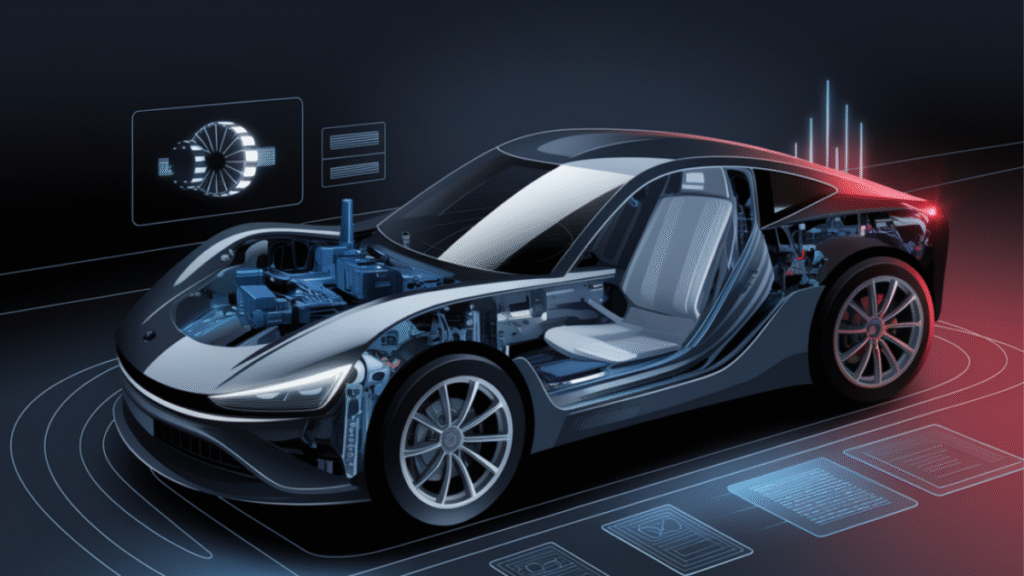
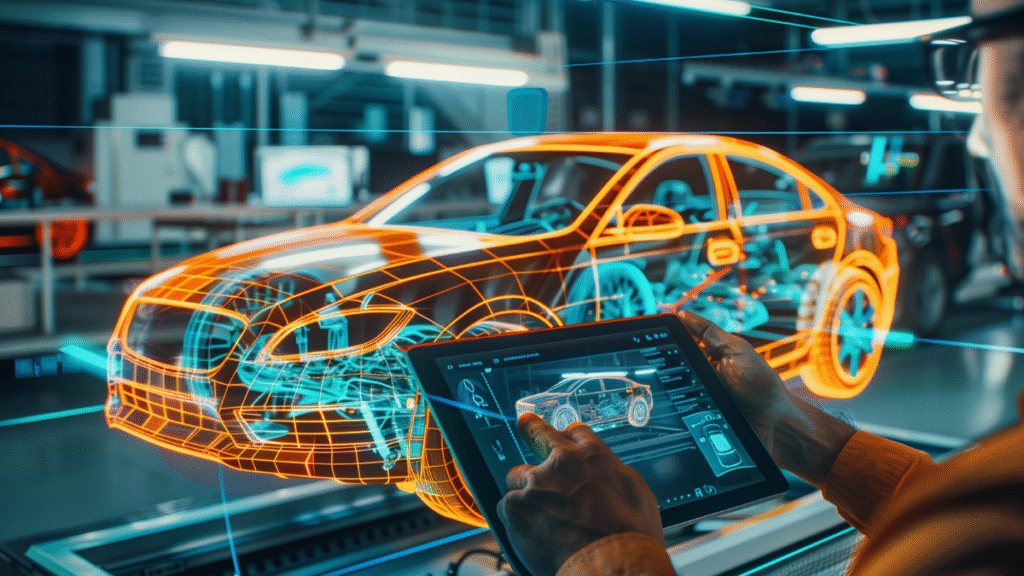
The next frontier of automotive AI lies in digital twins virtual replicas of vehicles, components, or even entire factories that evolve alongside their real-world counterparts. By feeding these twins with real-time data, manufacturers can simulate countless “what-if” scenarios, optimizing designs before physical prototypes are even built.
AI-driven generative simulation takes this a step further. Instead of simply validating existing models, it autonomously proposes new design solutions, optimizing geometry, materials, and aerodynamics for maximum performance and efficiency. This capability shortens development cycles, cuts costs, and reduces emissions by minimizing waste and rework.
For OEMs, digital twins aren’t just an R&D tool they’re a competitive weapon. They allow continuous learning across the product lifecycle, from concept to after-sales service. When paired with predictive analytics, they also feed into maintenance programs that anticipate failures before they occur, keeping vehicles safer and customers happier.
AI Across the Automotive Value Chain
Artificial intelligence is not confined to a single stage of the automotive process, it is woven across every link of the value chain, influencing how vehicles are researched, built, sold, and maintained. The transformation begins in research and development, flows through manufacturing and logistics, and reaches the customer through personalized digital touchpoints and intelligent service models. This interconnected system forms the foundation of what experts now call the cognitive automotive ecosystem, a continuously learning network that improves itself with every mile driven and every part produced.
R&D and Simulation
Research and development have always been the soul of automotive innovation, but AI has turned this once-linear process into a dynamic feedback loop. Machine learning and deep reinforcement learning models now allow engineers to run thousands of virtual tests simultaneously, exploring design possibilities that would have taken years of manual simulation. Edge computing enables real-time processing of these complex datasets, providing instant insights that guide material selection, thermal management, and mechanical optimization.
Platforms like Factorial’s Gammatron demonstrate this shift vividly. By integrating predictive modeling with real-world data, engineers can forecast battery performance with impressive precision. Instead of relying on slow physical validation, they can correlate digital outcomes with field data to continuously refine accuracy. This creates a seamless bridge between the laboratory and the road, where every vehicle becomes a living test bench feeding information back into AI systems that never stop learning.
Generative AI has added another dimension to R&D by acting as a creative partner rather than a mere analytical tool. It proposes innovative aerodynamic structures, optimized drive-train geometries, and even sustainable material compositions that balance strength, weight, and recyclability. The outcome is not only faster development cycles but also cleaner, safer, and more efficient vehicles.
Manufacturing and Supply Chain Intelligence
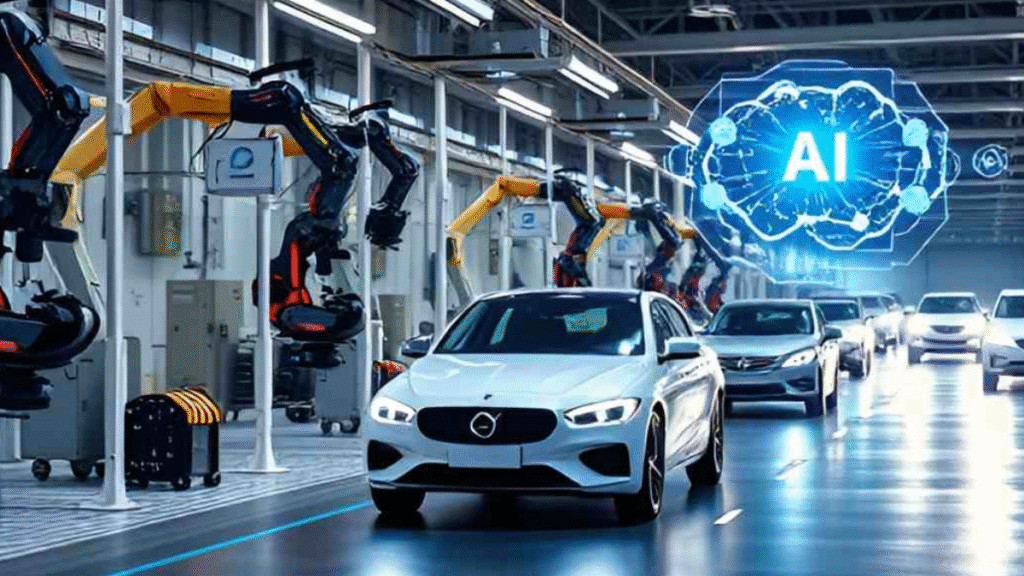
The impact of AI on manufacturing is perhaps the most tangible. Inside modern plants, computer vision systems inspect components at microscopic precision, spotting defects that human inspectors could easily miss. Predictive analytics engines monitor production lines to forecast maintenance needs, preventing costly downtime and optimizing throughput. Robots, powered by AI-driven control systems, adapt to variations in real-time, ensuring consistent quality and flexible production without human intervention.
AI’s influence extends deep into supply chain logistics as well. By analyzing massive volumes of procurement, shipping, and inventory data, AI systems can predict fluctuations in demand, anticipate disruptions, and suggest corrective actions automatically. This predictive intelligence allows manufacturers to operate leaner and more resiliently, reducing waste and ensuring that parts and materials arrive exactly when and where they are needed.
For suppliers, this shift to smart manufacturing ecosystems represents an opportunity to differentiate. Those who integrate AI into their production modules can offer analytics-as-a-service models, providing OEMs with insights into yield rates, equipment performance, and sustainability metrics. OEMs, in turn, gain end-to-end visibility across the value chain, aligning their operational strategies with real-time intelligence that directly enhances competitiveness.
Sales, Marketing, and Customer Engagement
Artificial intelligence is transforming the commercial side of the automotive industry as dramatically as it has changed engineering and production. AI-powered systems now drive marketing, sales, and customer service operations with precision that was unthinkable only a few years ago. Machine learning algorithms analyze consumer data to identify intent patterns, enabling dynamic pricing strategies and personalized recommendations that boost conversion rates. Chatbots and conversational agents handle customer queries instantly, maintaining 24/7 engagement that strengthens brand loyalty.
For dealerships, this means less guesswork and more insight-driven decision-making. Predictive lead scoring identifies potential buyers at the right moment, while natural language models assist sales teams with real-time data on vehicle specs, financing options, and competitor comparisons. The result is a smoother, more efficient sales process that feels personalized to each customer. AI also helps predict maintenance needs and integrates with CRM platforms to trigger proactive service alerts, improving satisfaction and retention.
At the strategic level, OEMs are leveraging AI analytics to measure campaign performance, optimize media spend, and refine messaging based on real-time customer behavior. The fusion of data-driven marketing with emotional storytellinghas become a new art form, one that merges human creativity with algorithmic precision to build lasting customer relationships.
Diagnostics, Maintenance, and Vehicle Intelligence
Once vehicles hit the road, AI continues to play a pivotal role. Modern cars are essentially computers on wheels, equipped with hundreds of sensors generating gigabytes of data every hour. AI algorithms process this information to monitor component health, predict potential failures, and initiate maintenance before breakdowns occur. This concept, known as predictive maintenance, is reshaping service models by turning reactive repairs into proactive optimization.
For example, machine learning systems can detect slight deviations in vibration or temperature that indicate wear in electric motors or brakes long before traditional methods would notice a problem. Service centers can then receive automated alerts, order parts in advance, and schedule maintenance at the most convenient time for the owner. This not only improves vehicle uptime but also reduces warranty claims and strengthens trust between customers and manufacturers.
AI also enhances onboard intelligence through adaptive control systems that learn from driving patterns. Vehicles can now adjust suspension settings, torque distribution, and braking sensitivity based on driver behavior and environmental conditions. In-cabin AI, meanwhile, personalizes infotainment, navigation, and climate control settings, turning each ride into an experience uniquely tailored to its user. Voice, touch, and gesture recognition technologies make interactions more natural, bridging the gap between human intuition and machine logic.
Architectural and Regulatory Transformation
As vehicles evolve into digital platforms, their internal architectures are undergoing a fundamental redesign. The traditional decentralized model where each function is controlled by its own ECU—is giving way to centralized, high-performance computing units that manage complex software ecosystems. These systems support advanced AI workloads, enabling seamless communication between autonomous driving modules, infotainment systems, and connectivity features.
However, this transformation also introduces new regulatory and cybersecurity challenges. With vehicles constantly exchanging data, compliance with global standards like GDPR, ISO 26262, and WP.29 becomes critical. Protecting sensitive information, securing over-the-air updates, and managing ethical AI behavior are now core responsibilities of automakers. The industry is responding by investing heavily in encryption, anonymization, and digital auditing systems that ensure transparency and accountability.
Cybersecurity threats continue to evolve, and AI plays both offense and defense. On the one hand, intelligent algorithms detect intrusion patterns and block malicious access in real time; on the other, attackers are beginning to use AI to probe vulnerabilities. As a result, manufacturers must constantly update their defenses, creating an arms race of intelligence where only the most adaptive systems will prevail.
Strategic Benefits of AI Adoption
The integration of artificial intelligence across the automotive ecosystem has evolved from being a competitive advantage to becoming a fundamental necessity. Every tier of the industry, from global OEMs to small suppliers, now relies on AI-driven insights to remain agile in a world defined by electrification, automation, and digitalization. The strategic benefits of this adoption extend far beyond technical efficiency, they redefine how vehicles are conceived, produced, marketed, and experienced.
Smarter, Faster Manufacturing
AI-powered automation has brought unprecedented precision and speed to automotive production. Predictive algorithms monitor assembly lines continuously, identifying inefficiencies and correcting them autonomously. Robotic arms equipped with machine vision can adjust alignment within milliseconds, ensuring flawless assembly even under high-volume conditions. These systems not only boost productivity but also reduce scrap rates, energy consumption, and warranty costs.
In the context of quality control, AI has become an indispensable co-pilot. High-resolution cameras paired with deep learning models can detect microscopic surface anomalies, weld inconsistencies, or coating defects that human inspectors would miss. As a result, manufacturers achieve higher consistency and deliver products that meet increasingly strict global standards. This shift strengthens competitiveness while fostering sustainability, as less waste means fewer resources consumed and fewer emissions released into the atmosphere.
Connected Vehicles and Safer Driving
Connected cars are the ultimate manifestation of AI’s promise in the automotive industry. Through sensor fusion, advanced driver-assistance systems interpret radar, lidar, and camera data in real time to identify objects, predict trajectories, and make split-second decisions that enhance safety. These systems are continuously learning, adapting to new driving environments and unforeseen road conditions.
But safety is just the beginning. In-vehicle AI now powers adaptive infotainment systems that learn driver preferences, adjust playlists, suggest routes, and even monitor driver alertness through facial recognition. When combined with voice interaction and gesture-based controls, this intelligence transforms the car into a responsive companion that feels intuitive rather than mechanical.
Beyond the cabin, AI connects vehicles to the cloud, enabling fleet management platforms to collect operational data that informs predictive maintenance and fuel optimization. This connectivity also supports vehicle-to-everything (V2X) communication, where cars share data with traffic lights, road sensors, and other vehicles to reduce congestion and prevent accidents. The result is a more coordinated, safer, and efficient mobility network powered by continuous intelligence.
Sharper Supply Chain Decisions
AI’s analytical power extends into one of the most complex challenges the automotive sector faces: supply chain volatility. Predictive forecasting models can analyze historical demand patterns, market trends, and external factors such as weather, geopolitical risk, and consumer sentiment to predict future disruptions with remarkable accuracy. This enables manufacturers to preempt shortages, reroute logistics, and maintain production stability even in uncertain times.
Through reinforcement learning, AI systems refine these forecasts continuously, comparing projected outcomes with real-world results to improve over time. Suppliers can leverage this data to optimize procurement cycles, minimize excess inventory, and negotiate better contracts. For OEMs, the insights translate into reduced operational costs and higher profitability, turning what was once reactive supply management into a strategic intelligence operation.
A New Standard for Customer Experience
The customer experience is rapidly being redefined by AI, creating interactions that feel more human and personalized. Virtual assistants answer technical questions, recommend service intervals, and even coordinate dealership appointments automatically. Predictive alerts notify users of maintenance needs before issues arise, reducing frustration and downtime. AI-based personalization engines analyze driver behavior, adjusting features and services to match preferences and usage patterns.
Marketing, too, is becoming more dynamic. Machine learning models assess customer intent, enabling targeted campaigns that reach the right audience with the right message at the right time. Automakers can measure ROI precisely, fine-tuning strategies in real time. In an age where attention spans are fleeting, this hyper-personalization builds brand loyalty and emotional resonance.
AI also introduces opportunities for continuous engagement beyond the point of sale. Connected vehicles act as platforms for over-the-air updates, software upgrades, and subscription-based features. This ongoing relationship between customer and manufacturer transforms the ownership model, making vehicles living products that evolve and improve over time.
Workforce Transformation and Sustainability
As AI takes over routine and repetitive tasks, it simultaneously opens new roles in data analysis, robotics engineering, and software development. The automotive workforce is transforming, becoming more digital, adaptive, and insight-driven. OEMs that invest in upskilling programs and measure their effectiveness through performance metrics are the ones most likely to retain talent and maintain operational excellence.
Sustainability is another major dimension of this transformation. By optimizing resource allocation, improving energy efficiency, and enabling circular manufacturing models, AI supports the global shift toward greener mobility. Advanced analytics track emissions throughout the production lifecycle, while AI-assisted recycling technologies recover valuable materials from end-of-life vehicles and batteries. The result is a more responsible industry, aligned with environmental goals and consumer expectations alike.
Challenges and Risks of AI Implementation
Despite its promise, the journey toward AI-driven transformation is not without obstacles. The automotive sector faces unique challenges in data governance, organizational alignment, and cybersecurity. As vehicles generate and process enormous volumes of data, managing that information securely and ethically becomes essential.
Data quality is paramount because AI is only as good as the data it learns from. Poor or biased data can lead to unreliable outcomes, safety issues, or even regulatory noncompliance. Automakers are responding by building robust governance frameworks that include frequent audits, data anonymization, and encryption protocols that comply with standards like ISO 26262, WP.29, and GDPR.
Organizational complexity also poses challenges. In large automotive corporations, siloed decision-making often slows down innovation. Breaking down these silos requires cultural transformation as much as technical capability. Partnerships between OEMs, suppliers, and analytics providers like S&P Global Mobility are crucial to ensure AI adoption remains coherent and strategically aligned.
Cybersecurity is another pressing issue. As vehicles become hyper-connected, they also become potential targets for cyberattacks. AI-driven intrusion detection systems monitor network traffic, identify anomalies, and respond in real time. Manufacturers that maintain transparent compliance frameworks and openly publish security standards gain an edge in consumer trust. Moreover, ethical AI systems with traceability tools establish accountability chains that protect both businesses and end users.
Finally, the high upfront investment required to develop and deploy AI systems remains a hurdle for smaller players. However, the long-term benefits increased efficiency, enhanced safety, and sustained innovation far outweigh the initial cost. By leveraging ROI models informed by real-world case studies, companies can justify this investment and set realistic expectations for performance improvement.
The Future Outlook
Looking ahead, AI will continue to evolve from being a supportive technology to a core enabler of every mobility ecosystem. The convergence of AI with 5G, edge computing, and quantum simulation will enable real-time decision-making that redefines the concept of autonomy. Vehicles will not only drive themselves but also learn, collaborate, and optimize entire transport systems.
Predictive maintenance will merge with self-healing software, creating vehicles capable of diagnosing and correcting issues independently. Manufacturing plants will evolve into intelligent hubs where digital twins interact autonomously to design, produce, and validate vehicles continuously. Meanwhile, customers will experience seamless integration between digital life and mobility, blurring the boundaries between technology, transportation, and lifestyle.
As AI reshapes every dimension of automotive innovation, one thing is clear: the future of mobility is intelligent, adaptive, and profoundly human-centered.
Expert Insight from Motexa One
At Motexa One, we view artificial intelligence as the defining force behind the next century of automotive evolution. It is not just a tool for automation but a philosophy of transformation, guiding how data becomes insight, how machines become partners, and how mobility becomes a connected, intelligent experience.
The automotive industry’s leaders will not simply be those who adopt AI first but those who integrate it most wisely, merging technological precision with human intuition. From the predictive algorithms in electric drivetrains to generative design models that inspire engineers to think differently, AI is rewriting the DNA of automotive progress.
As electrification, connectivity, and autonomy converge, the brands that master AI’s full potential will set the standards for innovation, sustainability, and performance. In this unfolding era, the line between technology and emotion fades, leaving only intelligent design powered by human ambition and guided by artificial intelligence.
Conclusion
Artificial intelligence is not just reshaping the automotive industry, it is redefining what mobility means to humanity. Every algorithm, every sensor, and every predictive model brings us closer to vehicles that think, learn, and evolve alongside their drivers. As innovation and emotion converge, AI becomes more than a tool it becomes a bridge between technology and purpose. The future of driving will not only be autonomous, it will be intelligent, connected, and deeply human.