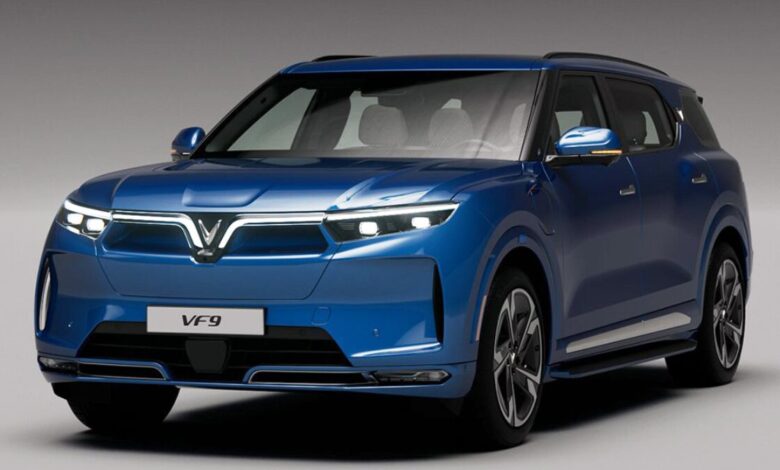
The launch of the Vinfast VF 8 was, to put it mildly, a rocky one. The automotive industry rarely unites in its criticism of a single model, yet the VF 8 managed to attract it all. It struggled to compete in range, refinement, and value, leaving many skeptical about Vinfast’s long-term vision. Now comes the 2025 Vinfast VF 9, a three-row electric SUV that aims to correct those missteps and reposition the Vietnamese automaker as a serious contender in the global EV market.
The VF 9 immediately feels more mature. Vinfast took its time developing this flagship, and the results show. It’s better thought-out, better assembled, and far more cohesive than the VF 8 ever was. Unfortunately, its price places it directly against strong, established rivals like the Kia EV9 and Hyundai Ioniq 9, and that comparison doesn’t always work in Vinfast’s favor.
What’s New for 2025
For 2025, the VF 9 enters the market with a straightforward lineup: two trims called Eco and Plus. Both versions come standard with dual-motor all-wheel drive, offering a familiar EV setup designed for traction and balance.
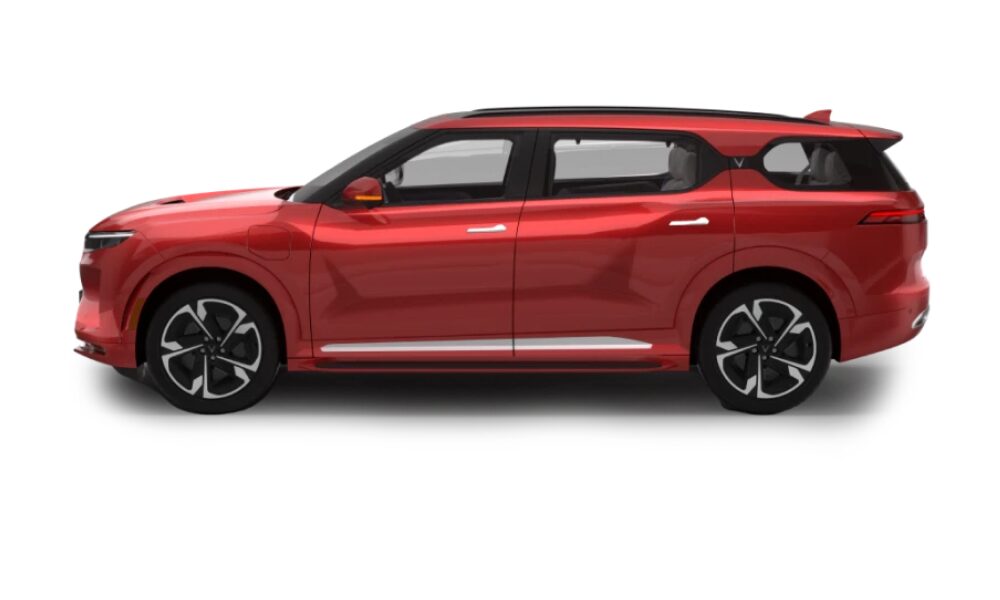
Physically, the VF 9 is a big vehicle. Measuring 201.6 inches (5,120 millimeters) in length and riding on a 124.0-inch (3,150-mm) wheelbase, it’s longer than both the Kia EV9 and Hyundai Ioniq 9. Inside, it adopts a 2-3-2 seating configuration, providing three rows of comfort, while optional second-row captain’s chairs turn it into a premium six-seater. It’s a proper full-size SUV designed for family travel, with dimensions that command presence on the road.
Exterior Style
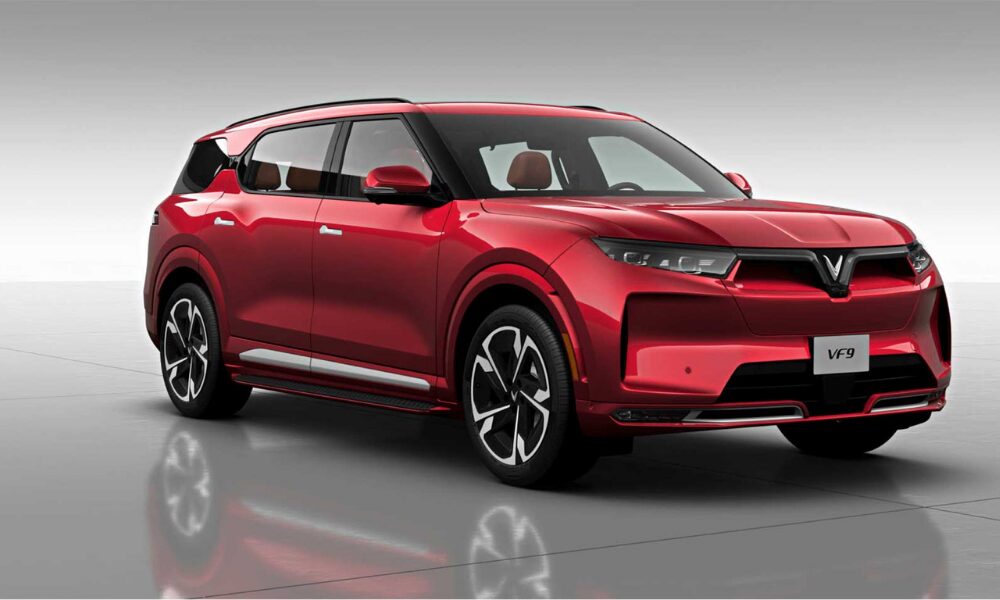
If Vinfast has done one thing right, it’s design. The VF 9 looks modern and striking from every angle. Long, wide, and low-slung, it doesn’t bother pretending to be an off-roader. Instead, it embraces a sleek, road-oriented silhouette that prioritizes aerodynamics and presence.
Crafted by Pininfarina, the Italian design studio famous for shaping some of the world’s most beautiful cars, the VF 9’s bodywork is clean, muscular, and distinctive. The V-shaped light signatures at the front and rear are unmistakably Vinfast, while the continuous LED strip gives the SUV a futuristic glow at night. The C-pillar window line features an elegant crossover detail that adds personality without excess.
The most intriguing part of the exterior is the pair of twin air pass-throughs on the front fascia. Instead of blocking off the nose like most electric vehicles, these vents channel air through a large hood duct, improving airflow and stability at higher speeds. It’s a clever, almost exotic touch for a large electric family mover. This test model rode on sharp 21-inch alloy wheels, though a more complex 22-inch design is available for those who prefer extra visual drama.
Powertrain and Fuel Economy
Every VF 9, regardless of trim, is powered by a 123.0-kilowatt-hour battery pack feeding dual electric motors for full-time all-wheel drive. Combined output stands at 402 horsepower and 457 pound-feet of torque. Despite these solid figures, the VF 9’s considerable mass, tipping the scales at over 6,300 pounds (2,858 kilograms), limits its performance. The Plus trim accelerates from zero to 62 mph (100 km/h) in approximately 6.5 seconds. That is slower than many of its rivals, but still quick enough for a large electric SUV designed primarily for family comfort rather than outright speed.
Where the VF 9 stumbles slightly is in its driving calibration. The throttle response feels oddly inconsistent, with a two-step power delivery that almost mimics the gear shifts of a conventional automatic transmission. It robs the experience of the smooth, linear feel most drivers expect from an EV. The regenerative braking system is also inconsistent, with varying levels of strength even when left on a single setting. At least the conventional brakes themselves offer a reassuring and consistent pedal feel.
Range is respectable but not class-leading. The VF 9 Plus delivers an estimated 287 miles (462 kilometers) of range, though real-world efficiency proved slightly better during testing. Official consumption sits at 50 kWh per 100 miles (30.9 kWh per 100 km), yet the VF 9 managed to outperform those figures under moderate driving conditions. DC fast charging peaks at 160 kW, which is decent, but it cannot match the rapid charging speeds of the 800-volt systems found in the Kia and Hyundai alternatives. As a result, charging sessions take longer than some competitors, though still manageable for daily use.
Overall, the 2025 Vinfast VF 9 represents meaningful progress for the brand. It looks refined, feels more premium, and drives with greater confidence than the VF 8 ever did. Yet despite these improvements, it still struggles to fully match the benchmark set by more established rivals. The VF 9’s style and size make it appealing, but to truly compete on the global stage, Vinfast must continue refining its technology and driving dynamics.
The VF 9 is not a failure, it is a promising sign that Vinfast is evolving, learning, and beginning to find its place in the rapidly expanding EV landscape.
Handling and Drivability
From the moment you sit behind the wheel of the Vinfast VF 9, you realize that sportiness was never part of its DNA, and that’s completely acceptable for what this vehicle is. The VF 9 is a heavy machine, and you can feel that mass when you ask it to change direction quickly, yet it carries its weight with surprising grace. The large battery pack mounted beneath the floor gives the SUV a low center of gravity, anchoring it to the road in a way that feels confident and controlled. It’s not light on its feet, but it’s far from clumsy. Through long sweeping turns, the VF 9 feels settled, stable, and planted, allowing the driver to relax instead of wrestle with the wheel.
There’s a certain calmness to how the VF 9 moves, but you’re always aware of its size. It takes a deliberate approach to tight spaces, especially in parking lots or urban streets. The steering itself is nicely weighted, neither too light nor overly firm, with just enough precision to make lane placement easy. But when it comes time to maneuver at low speeds, reality sets in. The turning circle is massive closer to a full-size pickup than a family SUV which means tight corners or underground garages become small challenges that test your patience.
Vinfast’s decision to use self-canceling turn signal stalks, similar to those found in older BMWs, doesn’t help either. The system feels inconsistent, with activation points that seem to shift each time. You try to cancel a signal early, and the opposite one turns on instead. The same goes for the wiper controls, which can be frustrating when you’re trying to find the right speed in light rain. These small details might not sound like much, but they chip away at the sense of refinement and precision the VF 9’s handsome design promises.
Still, there’s a redeeming quality to the drive. Once you leave the city and get on open roads, the VF 9 becomes easier to appreciate. It’s quiet, composed, and unbothered by rough pavement. The steering steadies up nicely, and the chassis feels solid under stress. It’s a car that rewards smooth inputs — the calmer you are behind the wheel, the better it feels. No, it won’t thrill you in the corners, but it provides something far more valuable for a family EV: consistency and confidence.
Ride Quality and Comfort
Where the VF 9 truly shines is in its ability to deliver comfort, which is what a vehicle of this type should prioritize. Once on the highway, it settles into a relaxed rhythm. The suspension, supported by an adaptive air setup, does an excellent job at isolating passengers from bumps and road imperfections. Even on rough asphalt, the ride feels composed and forgiving, with only a faint echo of vibration through the chassis. The only drawback comes from those stylish 21-inch wheels, which transmit more tire noise than ideal, though the rest of the cabin remains well-insulated.
Inside, the VF 9 projects a sense of modern calm. The panoramic glass roof floods the cabin with light, giving it an open and airy feel without letting in excessive heat. The air conditioning system manages temperature impressively, even on hot days. The materials feel soft to the touch, and there’s a sense that Vinfast has learned from its earlier missteps.
The front seats look the part broad, supportive, and finished in detailed quilted faux leather but they fall short on long-haul comfort. The cushions are too flat, denying the lower back and thighs the support they deserve over extended drives. The middle-row seats tell a similar story. They’re comfortable for short or medium trips, but the seatbacks are thick, eating into legroom for passengers behind them. The third row is the most disappointing area of the cabin. Despite the VF 9’s large footprint, the seats are mounted low, forcing adults into an awkward, knees-up position. It’s fine for kids, but anyone taller than average will struggle to find comfort back there.
The second-row captain’s chairs redeem things slightly. They tilt and slide forward easily, creating a wide path to the third row. But if you’ve got a child seat installed, that convenience disappears fast. The running boards along the side also add to the frustration they look rugged, but because the VF 9 sits relatively low, they serve no real purpose. Instead of helping with entry and exit, they get in the way, and after a few days of testing, you start to notice small bruises from bumping into them every time you step out.
Despite these quirks, the VF 9 succeeds in the area that matters most: overall comfort. It’s serene at highway speeds, composed over rough surfaces, and stable even when fully loaded with passengers. It’s not a car that invites spirited driving, but rather one that encourages you to take things easy. And in that calm, predictable nature, the VF 9 finds its strength. It’s a reminder that not every electric SUV has to chase performance numbers some are just built to make the journey smoother.
Interior Style and Quality
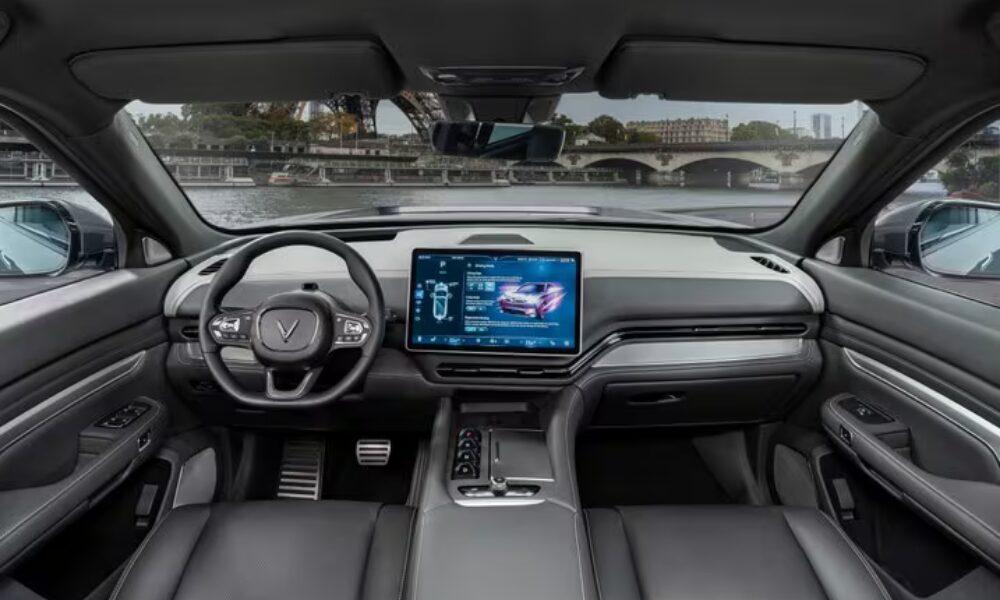
After the bold and expressive exterior, the interior of the Vinfast VF 9 feels noticeably less special. The dashboard design is clean but lacks personality, sticking to the same big-tablet layout that Tesla popularized years ago. It works fine for functionality, but it doesn’t inspire much excitement. The upper dashboard and door panels feature soft-touch materials that look good at first glance, but explore a little further and you will find hard, hollow plastics that remind you this is still a brand finding its footing. Some vehicles at half the VF 9’s price offer cabins with better material consistency and craftsmanship.
Vinfast’s push-button shifter is another misstep. It doesn’t save any usable space compared to a traditional gear lever and feels awkward in operation. Selecting Park requires an unusually firm press to ensure the vehicle stays put when stopped on an incline or during parallel parking. It’s one of those small details that can become irritating over time.
Tech and Safety
The 15.6-inch touchscreen is bright and sharp, handling nearly every major function inside the VF 9. However, cramming so many features into a single screen has its downsides. The menus are not always intuitive, and finding certain settings requires unnecessary digging. Once you spend a few days with it, operation becomes more natural, but the initial learning curve is steeper than it should be. Wireless Apple CarPlay and Android Auto work seamlessly though, something that even a few established automakers still haven’t perfected.
Unfortunately, the rest of the tech doesn’t match that same polish. The exterior cameras produce low-resolution, laggy images that make parking in tight spaces more stressful than it should be. The 14-speaker sound system is decent but lacks depth and clarity. The front and second-row massaging seats are a nice luxury touch, though they operate with a distracting mechanical hum.
Even stranger, the second-row passenger can control the driver’s seat ventilation, heating, and massage functions. It’s an amusing but impractical oversight that seems destined to cause a few jokes on long drives. Seat positions can be saved under a driver profile, but if someone changes them manually afterward, there’s no quick way to restore the memory setting another detail that highlights Vinfast’s inexperience in fine interior software integration.
There is at least a useful head-up display, which helps compensate for the absence of a traditional instrument cluster. Still, forcing drivers to glance sideways at the center screen for essential information like speed feels counterintuitive and not particularly safe.
Value Dollars and Sense
If the VF 9 were priced well below its competition, many of these quirks might be easier to overlook. Unfortunately, that’s not the case.
In the United States, the VF 9 is sold exclusively in the Plus trim at a starting price of 64,100 dollars including destination. In Canada, the same model starts at 81,190 CAD, with the Eco trim reducing that by about 4,000 CAD. The test model featured optional second-row captain’s chairs priced at 1,250 dollars in the U.S. and 1,550 CAD in Canada, as well as Deep Ocean paint for 1,500 dollars or 1,750 CAD. The total price landed at 66,850 dollars in the U.S. and 84,490 CAD in Canada.
Those numbers put the VF 9 in direct competition with the Hyundai Ioniq 9 Limited, a model that feels more refined and offers faster charging, better materials, and a stronger reputation. In Canada, the pricing is even more difficult to justify since the VF 9 costs more than the top Calligraphy trim of Hyundai’s flagship. To stay competitive, Vinfast Canada is already offering up to 10,000 CAD in incentives for new buyers, a clear indicator of the uphill battle the VF 9 faces in value perception.
For a new brand still working to establish credibility, pricing at this level is risky. Buyers willing to spend luxury-level money expect luxury-level execution. The VF 9 delivers progress, no doubt, but not yet the polish required to fully earn its price tag.
Final Thoughts: 2025 Vinfast VF 9 Review
The 2025 Vinfast VF 9 represents clear progress for a young automaker still finding its footing in the global electric vehicle market. Taken on its own, it’s a capable, composed, and confident three-row SUV that performs most of its duties well enough. It looks the part, drives with a sense of stability, and delivers a usable range for daily commuting and long trips alike. Yet, when placed alongside more established rivals, the VF 9’s shortcomings quickly come into focus.
Its design is undoubtedly its strongest asset. The exterior styling is sharp, proportionally balanced, and undeniably distinctive. Pininfarina’s hand in the design gives it a touch of European sophistication, helping the VF 9 stand out in a crowded segment filled with similar silhouettes. It looks premium from every angle and makes a statement that Vinfast can create vehicles with genuine aesthetic appeal. The problem begins once you step inside, where the cabin struggles to live up to the same visual promise. The dashboard design is simple and functional, but the materials feel inconsistent and lack the refinement expected at this price point. It’s comfortable and spacious, but not luxurious.
On the road, the VF 9 delivers a steady and predictable driving experience. The dual-motor setup provides more than enough power for a large electric SUV, while the air suspension ensures a calm and composed ride. It’s not a sporty vehicle, and it doesn’t try to be one, but it maintains composure and confidence even on uneven roads. The steering is well weighted, though the large turning circle makes tight maneuvering cumbersome. At highway speeds, it settles into a comfortable rhythm, quiet and smooth, perfectly suited to long family drives.
Range and charging performance are decent but not groundbreaking. Its 123-kilowatt-hour battery offers a respectable distance between charges, but the 160-kilowatt DC fast-charging capability lags behind competitors using 800-volt systems. Still, real-world efficiency often exceeds the official numbers, which is encouraging for daily use.
Ultimately, the VF 9’s biggest challenge isn’t what it does wrong—it’s what others do better. The Kia EV9 and Hyundai Ioniq 9 offer more refined interiors, faster charging, and stronger brand trust at nearly identical prices. For Vinfast, that’s a tough fight to win.
The VF 9 is proof that Vinfast is improving rapidly, learning from its missteps, and building vehicles that can compete beyond its home market. It’s a solid start for what could become a serious contender in the years ahead. For now, though, the VF 9 remains an admirable effort that shows promise but still falls short of greatness.