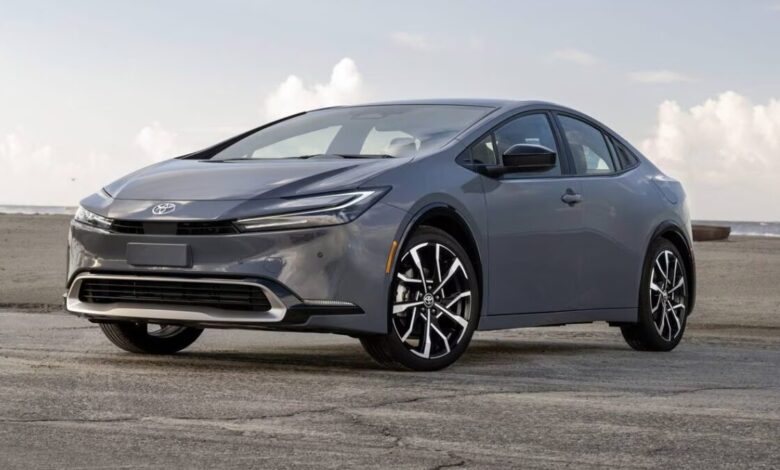
The 2025 Toyota Prius Plug-in Hybrid represents one of the most convincing evolutions in the modern hybrid market. What was once a car chosen primarily for efficiency has transformed into something far more desirable. The sleek styling immediately sets it apart, signaling that this is no longer a vehicle bought solely for fuel savings, but one chosen because it genuinely looks and feels good to own.
Under the surface, the Prius Plug-in Hybrid delivers exactly what efficiency-minded drivers want. Its extended all-electric driving range allows many daily commutes to happen without burning a single drop of gasoline. For owners who charge regularly, trips to the gas station can become surprisingly infrequent, sometimes stretching weeks apart depending on driving habits. When the battery is depleted, the Prius seamlessly transitions into hybrid operation, continuing to deliver excellent fuel economy that remains among the best in its class.
The driving experience is another pleasant surprise. The Prius Plug-in Hybrid feels composed and responsive, with smooth acceleration and confident road manners that make it easy to live with in both city traffic and highway cruising. It no longer feels like a compromise for eco-conscious drivers. Instead, it delivers a well-rounded experience that balances efficiency, comfort, and everyday usability.
That said, practicality deserves careful consideration. While the Prius works well for individuals and couples, families should take a close look at rear-seat space and cargo capacity before committing. The hatchback design offers versatility, but it may not satisfy those who frequently carry bulky gear or need generous rear passenger room.
the 2025 Toyota Prius Plug-in Hybrid succeeds by blending striking design, impressive electric range, and outstanding fuel economy into a package that feels modern and rewarding. It proves that choosing efficiency no longer means sacrificing enjoyment, as long as your space needs align with what this compact hybrid hatchback offers.
2025 Toyota Prius Plug-In Hybrid
Price Range: $33,375 – $40,070
Pros
- Attractive, modern design
Confirms that efficiency no longer means dull styling, with a sleek shape that stands out on the road. - Strong balance of power and efficiency
Delivers confident everyday performance while maintaining excellent fuel economy. - Long all-electric driving range
Capable of covering more than 40 miles on electric power alone, ideal for daily commuting. - Easy-to-use infotainment system
Clean menus and responsive controls make the system simple and intuitive.
Cons
- Limited passenger and cargo space
The sleek profile reduces rear-seat room and cargo capacity, which may affect families. - Partially obstructed gauge cluster
Steering wheel positioning can block the instrument display for some drivers. - Noticeable engine noise when it engages
The gasoline engine becomes more audible during hard acceleration.
What’s New for This Model Year?
- Updated model name
The Prius Prime name has been replaced with Prius Plug-in Hybrid, aligning it more clearly with Toyota’s electrified lineup. - No major updates for 2025
Aside from the name change, the 2025 model carries over largely unchanged. - Part of the current generation
This version remains part of the fifth-generation Prius, which debuted for the 2023 model year with major upgrades in design, performance, and technology.
Overview
For nearly a decade, Toyota used the “Prime” badge to identify the plug-in version of the Prius. That naming strategy comes to an end for 2025. Moving forward, the plug-in model is simply called the Toyota Prius Plug-in Hybrid, a change that brings clearer alignment with Toyota’s broader electrified lineup. Beyond the revised name and rear badging, however, this model remains fundamentally unchanged from the previous Prius Prime, and that is not a bad thing.
At its core, the Prius Plug-in Hybrid continues to offer one of the most usable plug-in hybrid experiences on the market. Its ability to deliver up to 44 miles of all-electric driving allows many owners to complete daily commutes, errands, and short trips without using gasoline at all. When the battery is depleted, the system transitions seamlessly into standard hybrid operation, maintaining excellent fuel efficiency and eliminating the anxiety associated with limited electric range.
This dual-personality approach makes the car especially appealing as a transition vehicle. Drivers who are curious about electric driving but hesitant to commit fully to an EV will appreciate the flexibility. Frequent charging allows the car to behave much like an electric vehicle during the week, while the gasoline engine ensures long-distance travel remains effortless and familiar.
The current generation, introduced for the 2023 model year, marked a major leap forward for the Prius lineup. Styling became more aggressive and athletic, performance improved noticeably, and the overall driving experience gained a level of polish that older models lacked. Those improvements carry over intact for 2025, helping the Prius Plug-in Hybrid feel modern, composed, and genuinely enjoyable to drive.
While it does not chase outright performance or luxury, the Prius Plug-in Hybrid succeeds by delivering balance. It blends efficiency, practicality, and everyday comfort into a compact package that feels thoughtfully engineered. For drivers who value low running costs, reduced emissions, and flexibility without major compromises, this remains one of the most compelling plug-in hybrids available.
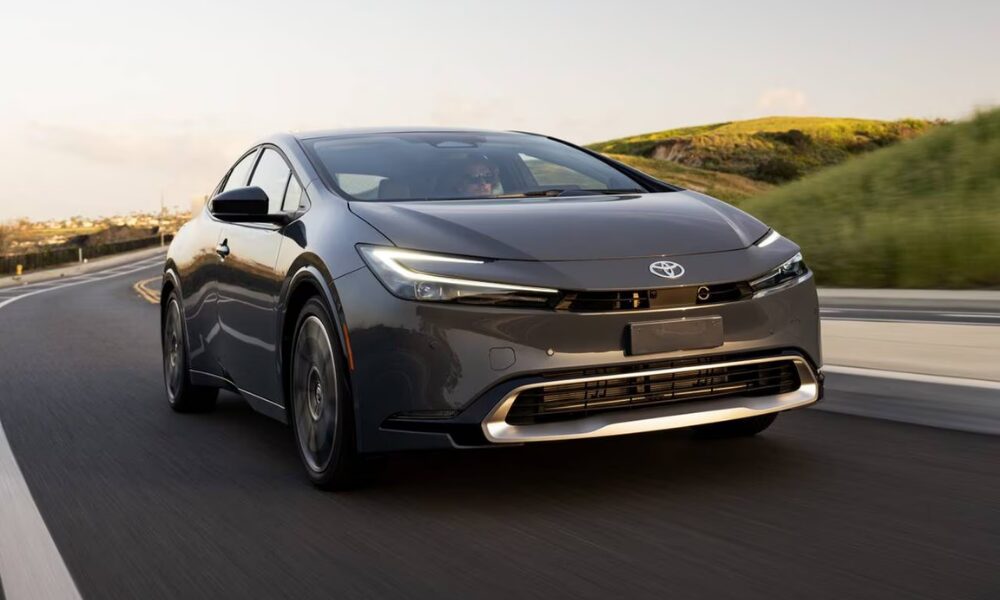
Burning Gas Only When Needed
One of the biggest advantages of the Prius Plug-in Hybrid is its significantly larger battery compared to the regular Prius. This allows owners to recharge directly using a charging cable and drive on electric power alone for up to 44 miles before the gasoline engine is required. For many drivers, that distance comfortably covers daily commuting and routine errands.
If you have easy access to home or workplace charging, the experience can feel remarkably close to owning an electric vehicle. Gas station visits become rare, and most weekday driving can happen silently and efficiently on electric power. When longer trips come up, the gasoline engine steps in seamlessly, eliminating the need to plan around charging infrastructure.
However, this setup works best when charging is consistent. If regular charging is not part of your routine, the plug-in version loses much of its advantage. The added weight of the larger battery can actually reduce fuel economy once the car is running primarily on gasoline. In that scenario, the standard Prius may be the more sensible and efficient choice.
Competitors to Consider
The 2025 Toyota Prius Plug-in Hybrid occupies a fairly unique position in the compact car segment, as it is essentially the only plug-in hybrid hatchback in its class. Its closest competitor in spirit is the Kia Niro Plug-in Hybrid, though that vehicle takes the form of a small crossover rather than a traditional hatchback.
Compared to the Niro Plug-in Hybrid, the Prius offers stronger performance and a longer all-electric driving range. The Kia counters with a roomier cabin, more rear-seat comfort, and similar real-world fuel economy when both vehicles are operating as hybrids. Pricing between the two is broadly comparable, making buyer priorities the deciding factor.
Stepping up in size brings additional alternatives such as the Kia Sportage Plug-in Hybrid, Hyundai Tucson Plug-in Hybrid, and Toyota RAV4 Plug-in Hybrid. These options provide more interior space and added versatility, but they come with higher prices and lower overall efficiency. For shoppers focused on maximum electric range, compact dimensions, and fuel savings, the Prius Plug-in Hybrid remains the most efficient and focused choice.
And if you’re exploring more options across the 2025 and 2026 model years, there’s a wide selection of detailed reviews that might catch your attention. You can start with the performance-focused 2026 Acura MDX Type S or take a closer look at the stylish and practical 2025 Nissan Kicks. EV shoppers will appreciate in-depth coverage of models like 2025 Audi A6 Sportback e-tron, 2026 Tesla Model Y, and the compact electric newcomer 2026 Kia EV3.
For drivers seeking dependable everyday comfort, strong choices such as 2026 Honda Civic Sedan, 2025 Mitsubishi Outlander PHEV, and the refined 2026 Toyota RAV4 offer plenty to consider. Luxury enthusiasts can explore the craftsmanship behind 2025 Lexus RX, while those craving performance might gravitate toward the athletic 2026 BMW X6 M.
Additional highlights include the forward-thinking 2026 Toyota bZ, the value-friendly 2025 Chevrolet Trax, and the versatile 2026 Kia Telluride with its full trim breakdown. European-inspired options appear through models like 2025 Vauxhall Frontera Hybrid and the sophisticated 2025 Audi A3. You’ll also find unique perspectives on vehicles such as 2025 Vinfast VF 9, the compact-luxury 2025 Acura ADX, and the hydrogen-powered 2025 Toyota Mirai. Altogether, this collection offers a broad look at what today’s market has to offer, helping you discover the right fit for your driving needs.
Driving Experience
Behind the wheel, the 2025 Toyota Prius Plug-in Hybrid often feels closer to a full electric vehicle than a traditional hybrid, especially in urban driving. Instant electric torque gives it a smooth, responsive character off the line, making stop-and-go traffic feel effortless. Around town, acceleration is quiet and immediate, and the car feels light on its feet despite the added weight of the larger battery.
One of the more impressive traits is how confidently it operates in EV mode. The Prius Plug-in Hybrid can reach highway speeds without waking the gasoline engine, and even full-throttle acceleration does not automatically trigger it. This allows drivers to take full advantage of electric driving in situations where many plug-in hybrids would already switch to gas power. The result is a more authentic EV-like experience during everyday use.
That said, performance noticeably improves when the gasoline engine and electric motor work together. With both systems engaged, the car feels quicker and more assertive, particularly during highway merging or passing. CarDrav testing shows the Prius Plug-in Hybrid accelerating from 0 to 60 mph in just 6.9 seconds, a meaningful improvement over the standard Prius, which completes the same sprint in about 7.7 seconds. This added punch makes the plug-in version feel more confident and capable in real-world driving.
Chassis and suspension updates introduced with the current generation also play a significant role in how the car drives. Structural improvements and revised suspension tuning help the Prius Plug-in Hybrid feel more composed over uneven pavement and during quick direction changes. Body motions are well controlled, and the car maintains stability without feeling overly stiff.
Steering feedback remains muted, which may disappoint enthusiastic drivers, but accuracy is solid. Turn-in is sharp enough for confident cornering, and the car tracks straight and predictably at highway speeds with minimal effort. Overall, the driving experience prioritizes smoothness, confidence, and efficiency over outright sportiness, and it succeeds in delivering a calm, polished feel that suits its mission perfectly.
Comfort 2025 Toyota Prius Plug-In Hybrid
The 2025 Toyota Prius Plug-in Hybrid delivers a comfort-focused experience that works well for daily driving and longer trips alike. Up front, the seats provide enough cushioning and support to remain comfortable over extended periods behind the wheel. Driving posture is natural, and the seats do a good job of reducing fatigue during highway cruising.
Rear-seat passengers are also well accommodated in terms of seat comfort. The cushions offer adequate support, and the seating position feels relaxed for a compact hatchback. While space is not class-leading, the overall comfort level remains respectable for adults on shorter to medium-length journeys.
Ride quality is one of the car’s stronger traits. The suspension smooths out rough pavement, potholes, and broken city streets with ease, creating a composed and stable feel. On the highway, the Prius Plug-in Hybrid settles into a calm rhythm, absorbing imperfections without transmitting harshness into the cabin.
Where comfort takes a step back is in overall cabin quietness. Under gentle driving, the interior remains reasonably calm, especially in electric mode. However, during hard acceleration or when the gasoline engine engages, tire noise, wind noise, and engine sound become more noticeable than expected. This prevents the car from delivering the fully serene experience some drivers may expect from a plug-in hybrid.
Climate control is another area where simplicity comes with trade-offs. The system is limited to a single-zone setup, and some finer adjustments found in earlier Prius models are no longer available. Features such as isolating airflow to the driver only, which helped maximize efficiency, have been removed. While the system functions well overall, drivers who value granular climate customization may find this step backward noticeable.
Interior and Build Quality
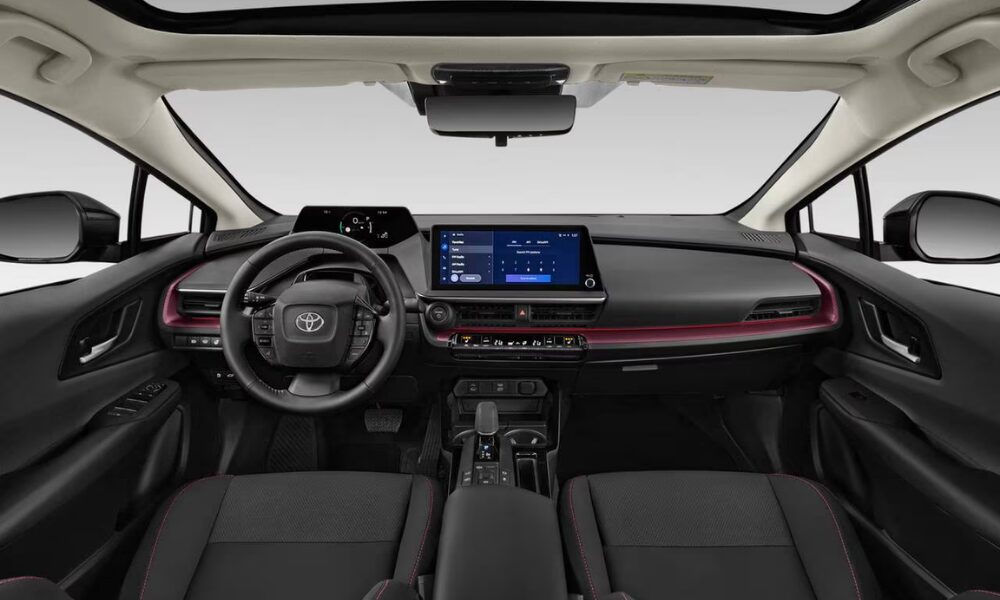
Inside, the Prius Plug-in Hybrid takes a straightforward and functional approach to cabin design. The dashboard layout is conventional and easy to understand, with controls positioned logically and within comfortable reach of the driver. Core functions are intuitive, allowing drivers to focus on the road rather than hunting through menus or awkwardly placed buttons. From a usability standpoint, the cabin does its job well.
Material quality reflects the car’s practical mission. While it does not aim for a premium feel, surfaces are well assembled and durable enough for long-term ownership. Fit and finish are consistent throughout the cabin, and there are no obvious weak points that undermine confidence in daily use. The overall impression is one of efficiency and purpose rather than luxury.
The digital instrument cluster, however, stands out as a weak spot. It attempts to present too much information at once, resulting in a busy and cluttered appearance. Its shape and positioning also work against it. When the seat and steering wheel are adjusted to a comfortable driving position, the top of the steering wheel can partially block the display. For many drivers, this creates an ongoing visibility issue that never fully disappears.
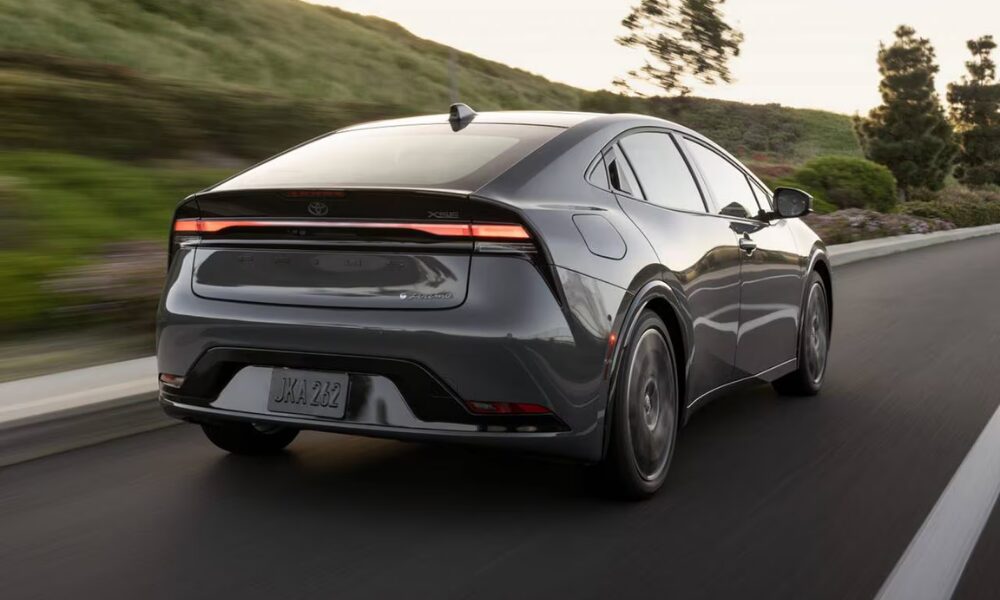
Design priorities have also affected rear-seat accessibility and space. The sloping roofline requires passengers to duck noticeably when entering the back seats, which can feel awkward in everyday use. Once inside, headroom is limited, particularly for taller adults, making longer journeys less comfortable for rear occupants.
Visibility from the rear further highlights the compromises of the sleek exterior design. The small, sharply angled rear window and thick roof pillars restrict the driver’s view, especially when reversing or changing lanes. While driver-assistance systems help compensate, the reduced natural visibility is something drivers will notice immediately.
the interior favors functionality and modern design over outright spaciousness. It works well for front-seat occupants and daily driving, but the trade-offs in rear comfort and visibility are clear reminders that style and aerodynamics played a major role in shaping this cabin.
Buying Tips for the 2025 Toyota Prius Plug-In Hybrid
The 2025 Toyota Prius Plug-In Hybrid continues to attract strong interest thanks to its combination of advanced electrified technology, excellent efficiency, and everyday usability. For buyers shopping in December, current market conditions create a favorable window to secure a competitive deal, especially for those who are flexible on trim selection and financing structure.
On average, buyers can expect transaction prices to land roughly 5.3% below MSRP, translating to savings of about $1,900 off the sticker price. While this may not sound dramatic, it represents solid value for a model that remains in high demand and is not heavily discounted year-round. Negotiation leverage improves further toward the end of the month as dealers work to meet sales targets.
Toyota is also offering targeted incentives that can sweeten the deal for eligible buyers. Military personnel and recent college graduates may qualify for an additional $500 incentive, which can be stacked with negotiated discounts to reduce out-of-pocket costs even further.
Financing options are particularly appealing right now. A special APR of 3.75% is available across multiple loan terms, including 36, 48, 60, and 72 months. Compared to prevailing market rates, this promotion can result in meaningful savings over the life of the loan, especially for buyers planning to finance rather than lease.
Inventory levels are relatively healthy, with close to 100 new units available nationwide. Notably, the XSE Premium trim has been slower to sell, which may provide buyers with additional bargaining power. Shoppers focused on value rather than top-tier features may find better deals by targeting this trim.
Leasing remains an option as well. Current lease offers for the XSE trim show median monthly payments around $345, with approximately $2,850 due at signing on a 36-month lease with 12,000 miles per year. This setup may appeal to drivers who prefer lower monthly payments and plan to upgrade within a few years.
On the used market, prices start at approximately $31,600, with a limited selection of around 36 units nationwide. Used Prius Plug-In Hybrid models are selling extremely quickly, often spending just one day on dealer lots, which significantly limits negotiation opportunities. Buyers considering a used example should be prepared to act fast and may find better overall value in a new model with current incentives.
In-Cabin Technology
The 2025 Toyota Prius Plug-in Hybrid delivers a modern tech experience that largely succeeds in making everyday driving easier and more intuitive. Our XSE test vehicle was equipped with the available 12.3-inch center touchscreen, which immediately stands out for its clean layout and sharp graphics. Toyota’s latest multimedia system is responsive and easy to navigate, and the Google-powered navigation adds a layer of polish with accurate routing and natural voice commands.
Wireless Apple CarPlay and Android Auto come standard, eliminating the need to plug in a phone for basic connectivity. Higher trims also include a wireless charging pad, which adds convenience but comes with a drawback. Because the pad is not cooled, phones tend to heat up during longer drives, sometimes becoming uncomfortably warm after extended use. For those who prefer a more traditional setup, multiple USB-C ports are positioned throughout the cabin, making wired charging a reliable alternative.
Driver-assistance technology is another strong point. The lane keeping assistance system does an effective job of centering the car within its lane, and adaptive cruise control delivers smooth, natural acceleration and braking in traffic. These systems work together seamlessly, reducing driver workload without feeling intrusive.
Proactive Driving Assist is one of the more subtle yet thoughtful features. Rather than taking full control, it gently guides the driver in common situations. When traffic slows ahead, the car applies light braking as you lift off the accelerator, signaling that it is time to reduce speed. It also uses a slim LED strip on the dashboard to alert the driver when traffic in front begins moving again. The system strikes a careful balance, offering helpful cues without becoming distracting or overbearing.
Traffic Jam Assist, however, is less successful. Designed for hands-free operation at speeds under 25 mph, it relies on an infrared camera to monitor driver attention. While the concept is sound, the execution feels overly sensitive. The camera continues monitoring even when the feature is inactive, frequently triggering warnings if the driver briefly looks away to adjust controls. Drivers who rest a hand high on the steering wheel may also receive alerts instructing them to sit upright, as the system struggles to maintain a clear view of the driver’s face. In practice, this makes Traffic Jam Assist more frustrating than relaxing.
Storage and Practicality
The Prius Plug-in Hybrid offers a practical cargo setup, though it comes with clear compromises compared to older versions of the model. Opening the hatch reveals 20.3 cubic feet of cargo space behind the rear seats, a figure that matches the standard Prius. This provides more usable space than a similarly sized sedan’s trunk and benefits from the flexibility of a hatchback design.
However, overall cargo usability has taken a step back compared to previous Prius generations. The cargo area is shallower and narrower than before, which limits its ability to handle longer or bulkier items. During real-world use, fitting items such as golf clubs lengthwise across the back proves difficult. While the raised cargo floor may suggest hidden storage beneath, there is no underfloor compartment available, which feels like a missed opportunity for better organization.
Despite these limitations, the hatchback layout still offers everyday versatility. Folding the rear seats opens up additional room for larger loads, making it easier to transport groceries, luggage, or smaller furniture items when needed.
Up front, cabin storage is thoughtfully arranged. The center console bin is narrow but deep, offering a secure spot for personal items. A rubberized storage area beneath the dashboard provides a convenient place for phones, wallets, or keys, helping keep the cabin tidy. The available wireless charging pad is positioned next to the gear selector, making it easy to access while driving.
Cupholders are slightly larger than average and accommodate most reusable water bottles without issue. While the Prius Plug-in Hybrid does not lead the segment in cargo capacity, its interior storage solutions remain practical enough for daily use, as long as buyers understand the limitations imposed by the car’s sleeker design.
Safety 2025 Toyota Prius Plug-In Hybrid
Safety is a core strength of the Prius Plug-In Hybrid, with Toyota equipping it with a comprehensive set of standard driver-assistance and protection technologies. These systems are designed to help prevent accidents in everyday driving while also providing solid protection if a collision does occur.
Key Safety Features
Standard safety equipment includes a backup camera for improved rear visibility, along with blind-spot monitoring to help detect vehicles in adjacent lanes. Lane departure warning alerts the driver if the car begins to drift unintentionally, while stability control and tire pressure monitoring work quietly in the background to maintain safe operation in varying conditions.
The Prius Plug-In Hybrid is also equipped with a pre-collision safety system, which can detect potential frontal impacts and assist with braking or mitigation when necessary. In the event of an accident, a post-collision safety system is designed to help reduce the risk of secondary impacts. An integrated alarm system further enhances vehicle security when parked.
IIHS Crash Test Ratings
The Insurance Institute of Highway Safety (IIHS) evaluates vehicle safety through a series of rigorous crash tests. The Prius Plug-In Hybrid has performed well in the tests that have been completed so far.
- Small Overlap Front (Driver-Side): Good
- Small Overlap Front (Passenger-Side): Good
- Moderate Overlap Front (Original Test): Good
Several updated or additional tests, including the updated moderate overlap front test, side impact tests, roof strength, and rear crash protection, have not yet been conducted or published for this model at the time of evaluation.
Overall Safety Impression
Based on available data, the Prius Plug-In Hybrid demonstrates strong structural integrity in frontal crash scenarios and benefits from an extensive list of standard active safety features. While additional test results would provide a more complete picture, the current ratings and technology package suggest that safety-conscious buyers can feel confident in its overall protection and preventive capabilities.
MPG
Efficiency remains one of the strongest arguments in favor of the Prius Plug-in Hybrid. According to EPA estimates, the model delivers up to 44 miles of all-electric range in SE trim and around 40 miles in XSE trims. These figures place it among the most capable plug-in hybrids when it comes to usable electric driving, allowing many owners to complete daily commutes without engaging the gasoline engine at all.
In real-world driving, results can vary depending on speed, temperature, and driving style. During CarDrav testing, our XSE test vehicle fell short of the official electric range estimate, traveling approximately 33.7 miles before the battery was depleted and the gasoline engine stepped in. While this is below the EPA figure, it still represents meaningful electric-only capability for a compact plug-in hybrid.
Once operating as a conventional hybrid, efficiency remains impressive. Over our standardized test route, the Prius Plug-in Hybrid returned an observed 50.9 mpg, confirming that fuel economy stays strong even after the battery is depleted. This makes it an excellent choice for drivers who frequently mix electric commuting with longer highway trips.
Charging times are reasonable for the class. Toyota estimates that the 13.6-kWh battery pack can be fully recharged in about four hours using a 240-volt Level 2 charger. While charging on a standard household outlet takes longer, overnight charging is still feasible for most owners. With consistent charging habits, many drivers will find themselves relying on gasoline far less often than expected.
the Prius Plug-in Hybrid delivers a compelling blend of electric range and hybrid efficiency. Even when real-world electric driving falls short of official estimates, the car remains one of the most fuel-efficient options available, regardless of how it is driven.
Value 2025 Toyota Prius Plug-In Hybrid
The Prius Plug-in Hybrid delivers strong long-term value, especially for buyers focused on efficiency and ownership costs rather than upfront price alone. Toyota backs the car with a three-year or 36,000-mile basic warranty and a five-year or 60,000-mile powertrain warranty, which are competitive for the segment. For electrified models, coverage becomes even more reassuring. Hybrid-related components are protected for eight years or 100,000 miles, while the battery itself is covered for up to 10 years or 150,000 miles, providing long-term peace of mind for owners planning to keep the car well beyond the warranty period.
Toyota also includes two years of complimentary maintenance, a benefit that is still relatively uncommon outside of luxury brands. This helps reduce early ownership costs and reinforces the Prius Plug-in Hybrid’s reputation as a low-stress, budget-friendly vehicle to live with over time.
Pricing has steadily increased compared to older Prius generations, but the plug-in version justifies much of that increase through its enhanced electric capability. The added electric range allows owners to rely less on gasoline, and for drivers who charge regularly, fuel savings can accumulate quickly. Over several years of ownership, those reduced fuel costs can help offset the higher initial purchase price.
Interior quality has also improved with the current generation. Materials feel more refined than before, and the overall presentation is cleaner and more modern. That said, cost-conscious design choices are still evident. Hard plastic surfaces remain in several areas of the cabin, and the doors lack the solid, substantial feel found in more premium vehicles, producing a slightly hollow sound when closed.
the Prius Plug-in Hybrid offers a compelling value proposition. It may not feel luxurious, but it compensates with excellent efficiency, strong warranty coverage, and low running costs. For buyers who prioritize long-term savings and reliability over premium touches, it represents a smart and financially sound choice.
Wildcard
The Prius has undergone one of the most dramatic image turnarounds in the automotive world. What was once a frequent target of “ugliest car” jokes has evolved into something genuinely sleek, cohesive, and confident. The Plug-in Hybrid builds on that transformation in a meaningful way, adding expanded electric range and stronger performance to an already improved foundation.
More importantly, this no longer feels like a hybrid that merely dabbles in electric driving. In daily use, it delivers an experience that often mirrors that of a full EV, especially for drivers who charge consistently. Quiet operation, instant response, and smooth urban driving define much of the experience. When the battery eventually runs low, the transition to gasoline power is seamless, and fuel economy remains excellent, still hovering above 50 mpg combined.
This dual nature is what gives the Prius Plug-in Hybrid its extra appeal over the standard Prius. It blends efficiency with genuine enjoyment, offering a more engaging drive without sacrificing the practicality that made the Prius popular in the first place. The result is a car that feels modern, thoughtful, and better aligned with how people actually drive today.
Rather than being a niche option, the Plug-in Hybrid feels like the most complete expression of the Prius formula. It adds value not through luxury or excess, but by delivering flexibility, efficiency, and a surprisingly satisfying driving experience in one cohesive package.
Trim Level Differences
The 2025 Toyota Prius Plug-In Hybrid is offered in three trim levels: SE, XSE, and XSE Premium. All trims share the same plug-in hybrid powertrain, which combines a 2.0-liter four-cylinder engine with dual electric motors and a 13.6-kWh battery pack. This setup produces 220 horsepower and allows the car to travel up to 44 miles on electric power alone before the gasoline engine steps in. Unlike the regular Prius, which can be equipped with all-wheel drive, all Plug-in Hybrid models are front-wheel drive only.
SE
The SE serves as the most affordable entry point into the Prius Plug-In Hybrid lineup, but it is far from barebones. Standard equipment includes a full suite of driver-assistance features, a digital instrument display, wireless Apple CarPlay and Android Auto, and fabric-trimmed seats. It also delivers the maximum electric range in the lineup thanks to its lighter configuration. For buyers focused on efficiency and value, the SE covers all the essentials without unnecessary extras.
XSE
Stepping up to the XSE adds a sportier look and a more upscale feel. This trim introduces larger wheels, upgraded exterior styling details, and enhanced interior materials. Inside, buyers get a more premium cabin presentation along with available upgrades such as the larger center touchscreen and wireless charging pad. The XSE strikes a balance between added features and cost, appealing to drivers who want a more refined appearance without going all the way to the top trim.
XSE Premium
The XSE Premium sits at the top of the range and focuses on comfort and technology. This trim comes standard with the larger 12.3-inch touchscreen, upgraded audio, and additional convenience features that elevate the driving experience. Interior materials feel more polished, and the feature list is more complete right out of the box. While it is the most expensive option, it delivers the most tech-forward and comfortable version of the Prius Plug-In Hybrid.
Which Trim Does CarDrav Recommend?
CarDrav recommends the XSE trim as the best all-around choice for most buyers. It strikes the right balance between price, features, and everyday comfort. Standard equipment such as heated front seats, front and rear parking sensors, and a wireless smartphone charging pad adds meaningful convenience without pushing the price into luxury territory. For shoppers who want a more polished look and a better-equipped interior, the XSE delivers strong value.
That said, buyers focused purely on efficiency should take a close look at the SE trim. Its lighter configuration allows it to achieve the longest all-electric driving range and the best overall fuel economy in the lineup. For drivers who plan to charge frequently and prioritize maximum savings at the pump, the SE remains the most cost-effective option.
the XSE makes the most sense for the majority of shoppers, while the SE is the smart pick for efficiency-focused buyers who want to extract every mile of electric driving possible.
FAQ
Is the 2025 Toyota Prius Plug-In Hybrid a good car?
Yes, the Toyota Prius Plug-In Hybrid is considered a very strong choice within the plug-in hybrid segment, especially for drivers focused on efficiency, modern technology, and long-term ownership value. the 2025 model stands out for its smooth on-road behavior, confident performance when combining electric and gasoline power, and its ability to operate like an electric vehicle for many daily trips.
Owner feedback also reflects high satisfaction, particularly with the car’s all-electric driving capability, low fuel consumption, and ease of living with it day to day. The hatchback layout adds practicality, offering 20.3 cubic feet of cargo space, which is more usable than a traditional sedan trunk and sufficient for groceries, luggage, and everyday needs.
Safety and reliability further strengthen its appeal. The Prius Plug-In Hybrid comes standard with a wide range of advanced driver-assistance systems, and crash-test results from organizations such as the IIHS show solid performance in key frontal impact tests. Combined with Toyota’s long-standing reputation for reliability and extended warranty coverage for hybrid components and the battery, the Prius Plug-In Hybrid is widely viewed as a dependable and reassuring vehicle to own.
What’s new in the 2025 Toyota Prius Plug-In Hybrid?
For the 2025 model year, changes to the Toyota Prius Plug-In Hybrid are minimal, with the most noticeable update being a revised name. Toyota has officially dropped the long-used Prius Prime badge, and the plug-in model is now simply called the Prius Plug-In Hybrid. The change is largely about clarity, aligning the name more closely with Toyota’s broader electrified lineup rather than signaling a mechanical update.
Beyond the new naming convention, the 2025 Prius Plug-In Hybrid carries over unchanged. It remains part of the fifth-generation Prius, which was introduced for the 2023 model year and brought major improvements in design, performance, and overall driving refinement. Those upgrades, including the stronger powertrain, improved electric range, and more modern styling, continue intact for 2025.
buyers should view the 2025 Prius Plug-In Hybrid as a continuation of the current generation rather than a refresh. The lack of major changes may actually be a positive, as it means Toyota is sticking with a well-proven formula that already delivers strong efficiency, usable electric range, and a more engaging driving experience than past Prius models.
Is the Toyota Prius Plug-In Hybrid reliable?
Yes, the Toyota Prius Plug-In Hybrid is widely regarded as a reliable vehicle, building on the long-standing reputation of the Prius nameplate. Based on CarDrav analysis and long-term ownership data, the plug-in version benefits from proven hybrid engineering that Toyota has refined over multiple generations.
Owner feedback consistently points to strong dependability, particularly when it comes to the hybrid system and battery performance. Common themes in owner experiences highlight trouble-free daily use, low unexpected repair rates, and confidence in the car’s ability to hold up over time. Importantly, no recurring or widespread mechanical issues stand out as red flags.
Reliability is further reinforced by Toyota’s extensive warranty coverage. Hybrid-related components are covered for extended periods, and the battery itself is protected for up to ten years in many markets. This level of coverage reflects Toyota’s confidence in the durability of its electrified systems and helps reduce ownership anxiety over the long term.
When compared with other plug-in hybrids in the same price range, the Prius Plug-In Hybrid consistently ranks among the most dependable options. For buyers who value peace of mind, predictable ownership costs, and a track record of proven technology, it stands out as one of the safest bets in the segment.
Is the 2025 Toyota Prius Plug-In Hybrid a good car?
Yes, the 2025 Toyota Prius Plug-In Hybrid is a strong and well-rounded car, particularly for drivers who prioritize efficiency, modern technology, and long-term value. In CarDrav evaluations, the latest Prius Plug-In Hybrid demonstrates a balanced personality that combines usable electric driving, excellent fuel economy, and a refined on-road experience.
Safety plays a key role in its appeal. The car comes standard with a wide range of advanced driver-assistance systems, and available crash-test data from independent safety organizations shows solid performance in key frontal impact tests. This makes it a reassuring choice for daily commuting and family use alike.
Fuel economy is another major highlight. With a meaningful all-electric driving range and strong hybrid efficiency once the battery is depleted, the Prius Plug-In Hybrid helps reduce fuel costs significantly, especially for drivers who can charge regularly. Over time, these savings can make a noticeable difference in overall ownership expenses.
Practicality also factors into its overall value. The hatchback layout provides useful cargo space for everyday needs, and the feature set across the lineup covers the essentials most buyers expect, from connectivity and driver aids to comfort and convenience features.
Taken together, the 2025 Prius Plug-In Hybrid stands out as a smart choice rather than an emotional one. It may not be the most exciting car in its class, but it excels at what matters most to many buyers: efficiency, reliability, safety, and ease of ownership. For shoppers looking for a dependable and forward-thinking plug-in hybrid, it is unquestionably a good car.
How much should I pay for a 2025 Toyota Prius Plug-In Hybrid?
Pricing for the 2025 Toyota Prius Plug-In Hybrid varies depending on trim level, but overall it remains competitive within the plug-in hybrid segment, especially considering its electric range and efficiency. The most affordable version is the SE trim, which carries a Manufacturer’s Suggested Retail Price of around $33,375, including destination charges. This trim offers the longest all-electric range in the lineup and covers the essentials most efficiency-focused buyers want.
Stepping up to the XSE trim increases the starting price to approximately $36,625. The higher cost reflects added comfort and convenience features, along with a more upscale appearance. For many shoppers, this trim represents a sweet spot, balancing added equipment with a still-manageable price.
At the top of the range, the XSE Premium starts at about $40,070. This version includes the most advanced technology and comfort features available on the Prius Plug-In Hybrid, making it the most refined but also the most expensive option.
In real-world transactions, buyers may be able to negotiate below MSRP depending on market conditions, inventory levels, and available incentives. Financing promotions or manufacturer offers can also influence the final price paid. As a result, shoppers should compare trims carefully and consider how much value the added features provide relative to the price increase. For many buyers, the SE or XSE trims deliver the strongest overall value.
What are the different models of Toyota Prius Plug-In Hybrid?
The Toyota Prius Plug-In Hybrid is offered in a focused lineup that keeps choices simple while covering a range of buyer needs. All versions share the same plug-in hybrid powertrain, which pairs a 2.0-liter four-cylinder engine with electric motors and a CVT transmission, but they differ in features, styling, and overall level of equipment.
The lineup begins with the SE 4dr Hatchback, which serves as the most affordable and efficiency-focused option. It includes the core technology and safety features most drivers expect, while also delivering the longest all-electric driving range in the range due to its lighter configuration. This trim is ideal for buyers who want maximum value and minimal complexity.
Next is the XSE 4dr Hatchback, which adds a sportier appearance and a more refined interior. It builds on the SE with upgraded design elements and additional comfort and convenience features, making it a strong middle-ground choice for drivers who want a more upscale feel without moving to the top trim.
At the top of the lineup sits the XSE Premium 4dr Hatchback. This model comes standard with the most advanced technology and comfort features available on the Prius Plug-In Hybrid, offering a more polished and feature-rich experience. It is best suited for buyers who want the fullest version of Toyota’s plug-in hybrid hatchback with minimal compromises.
Together, these three trims give shoppers clear options, ranging from efficiency-first to fully loaded, while maintaining the same core strengths in electric capability, fuel economy, and everyday usability.